
Immersity AI Unlocks Spatial Intelligence for ML Professionals
Why Immersity AI matters now: a concise framing for ML professionals
In 2026, artificial intelligence is everywhere. Businesses are using AI more and more to help them do things better and faster. Actually, over 75% of companies now report using AI in some part of their business operations, showing how quickly this technology has grown, according to recent reports AI Adoption Statistics (2026). For people who work with machine learning, staying updated is super important.

This is where new companies like Immersity AI come into play.
Immersity AI is an exciting new name in the world of immersive and spatial AI. What does that mean? It means they focus on making AI that can understand and interact with real or virtual 3D spaces, much like how we do. Think about creating virtual worlds that feel real, or robots that can move and understand their surroundings much better. Immersity AI aims to make these kinds of experiences more advanced and easier to build for everyone.
Technical leaders and product teams should really look at Immersity AI right now. Why? Because the way we interact with technology is changing. People want more natural, engaging experiences. Whether it’s making new kinds of training simulations, better ways to design things, or even improving how we connect in virtual meetings, immersive AI is key. Companies that get ahead in this area will lead the way. Immersity AI offers tools and ideas that can help businesses create these next-level experiences. It’s a chance to build things that feel truly new and helpful, pushing past what other ai startups are doing with just text or images. For a better understanding of the larger AI world, check out our AI overview 2026.
If you are a professional in the field, keeping up with the fast pace of AI innovation is a constant challenge. You might already be using tools like Slack AI or exploring what the big AI labs are creating. But the next big leap could come from specialized ai startups focusing on unique areas like immersive AI. Evaluating companies like Immersity AI helps product teams see what’s possible and how they can use these new technologies to build truly special products for their customers.
Stay informed about the latest developments and breakthroughs in the AI world every day. Get clear daily AI updates by subscribing to The AI Newsletter Worth Reading.

Product and market overview: what Immersity AI builds
So, what exactly does Immersity AI make? At its heart, Immersity AI creates special tools and platforms that help AI understand and work with 3D spaces. This is called "spatial AI." Think about how your brain knows where things are in a room or how far away they are. Immersity AI wants to give computers that same kind of smart understanding for both real and made-up worlds.
The company’s roots come from Leia Inc., which focused on special software for spatial AI and screens that could change what they show. Now, Immersity AI offers a platform that makes it easier to build experiences that feel real on everyday devices. This includes cool features like turning regular 2D pictures or videos into 3D scenes. This kind of technology is what they are bringing to the market.
Immersity AI’s main goal is to help businesses create things that go beyond just looking at a screen.

They want to make AI that can see depth, shapes, and movement just like people do. This is a big step forward in how AI works, sometimes called "spatial intelligence" or "world models." It’s different from older AI that just dealt with text or simple images. Researchers agree that building AI with this kind of spatial intelligence is the future. For example, some experts say that spatial intelligence will lead the next big step in AI, allowing computers to understand and interact with complex worlds, whether virtual or real Spatial Intelligence: The Future of AI.
Their products are for companies that want to build cutting-edge experiences.
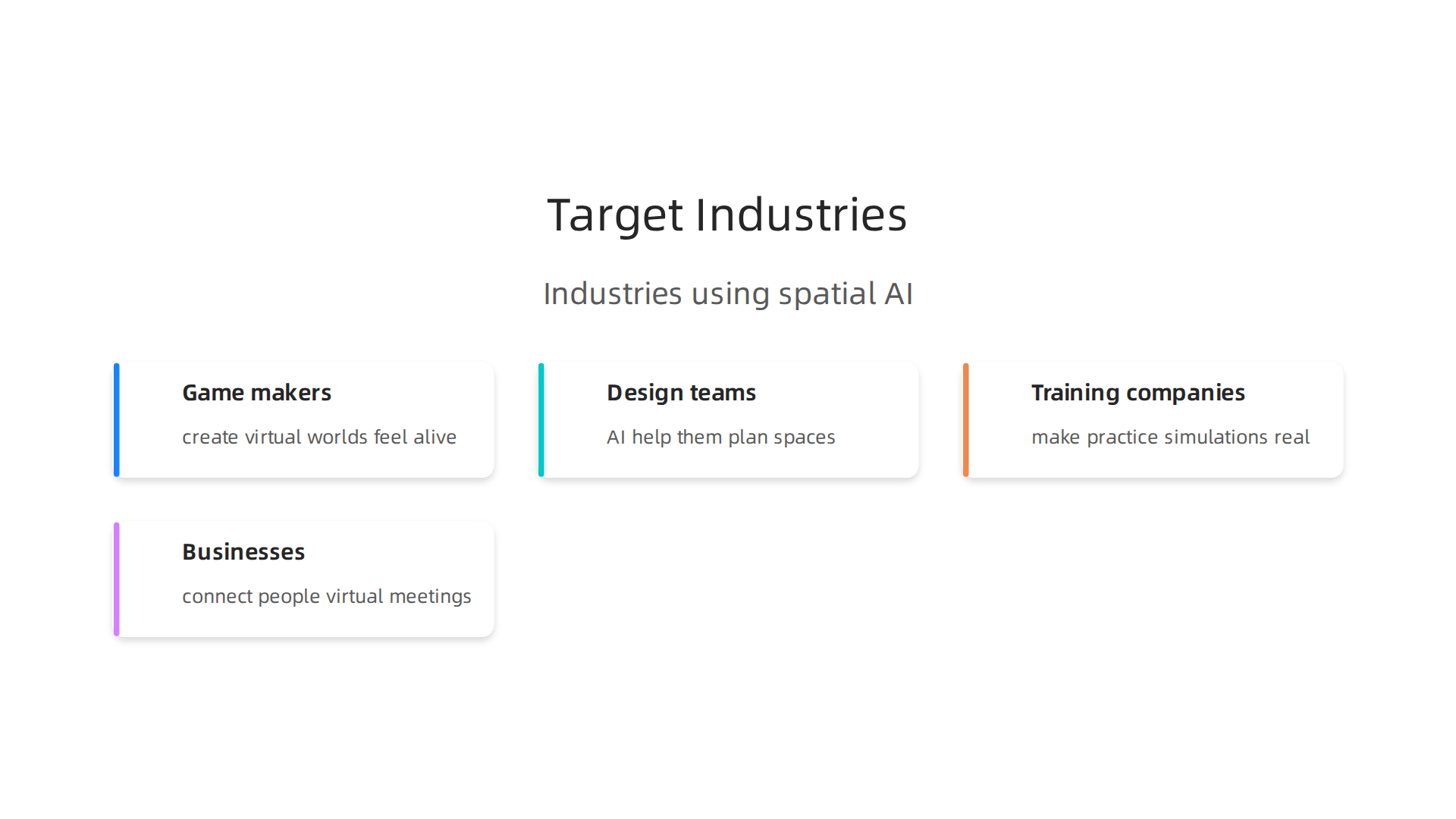
This includes:
- Game makers who want to create virtual worlds that feel truly alive.
- Design teams who use computer-aided design (CAD) and need AI to help them plan spaces.
- Training companies that want to make practice simulations so real you almost forget it’s not the actual thing.
- Businesses looking for new ways to connect people in virtual meetings that feel more natural and engaging.
Unlike general AI tools you might use every day, like certain features in Slack AI, or broad AI models from big ai labs, Immersity AI focuses on this very specific and advanced area of spatial computing. They are one of the ai startups pushing the boundaries here. This means their customers are often technical leaders and product teams who want to make their products stand out by offering these deeper, more interactive experiences. If you want to dive deeper into how AI agents work, which are key to interacting in these spatial environments, you can learn more about how to Unlock AI Agents Definition Types And Real World Examples For Ml Teams.
Immersity AI fits into the market as a leader in helping to make the world of "mixed reality" and "extended reality" much more powerful. While other companies might focus on making AI helpers or clever text tools, immersity ai provides the building blocks for AI to truly understand and interact within 3D environments, making experiences much more immersive and useful.
Company profile: team, funding, and strategic positioning
Now that we know what Immersity AI builds, let’s look at the people and money behind this exciting company. Good ideas need strong teams and enough support to grow. Immersity AI has a history that shows its deep roots in smart technology and a clear path forward.
The company was first started as Leia Inc. in 2014 by Dr. David Fattal. He is a famous physicist with a special degree from Stanford University. Before this, he worked at HP Labs. He is now the Founder and CTO, helping to guide Immersity AI’s technical direction and innovation in areas like spatial intelligence Spatial intelligence | Newsroom – Immersity AI.
Immersity AI brings together a large team of over 200 experts from around the world. These experts work from main offices in Silicon Valley, but also in places like the Netherlands and China. This shows the company has a global reach and lots of talent working on advanced machine learning and product engineering Leia | The Company Behind Immersity and Spatial …. Recently, Leia Inc. also made its board of directors stronger by adding global technology leaders to help the company grow even more in the world of spatial AI Leia Inc. Strengthens Board with Global Technology Leaders to Help Scale the Next Era of Spatial AI.
Immersity AI has also gained a lot of financial support to help reach its goals.

Since it started in 2014, the company, through Leia Inc., has raised a total of $290 million in funding. This money comes from important investors like Aon, Sputnik ATX, MicroVentures, and Nour Nouf Ventures. This strong funding history shows that investors believe in Immersity AI’s vision and its ability to lead in the spatial computing space. The company is currently in a "Growth stage," meaning it is actively expanding its products and reach Immersity AI Funding, Revenue & Investors – Leia Inc. – ToolJunction.
This funding and leadership help Immersity AI keep its special place in the market. While other well-known AI tools, like Slack AI, focus on making daily tasks easier, or some big ai labs create general AI models, Immersity AI stands out by focusing on very advanced spatial AI. This means they are not just another one of the many ai startups, but a leader in a specific and difficult field. Their strategic position is all about making AI understand the world in 3D, which is much more complex than what many other AI systems do. This kind of focus needs a clear AI development roadmap for 2026 that combines research, development, and careful planning.
For those interested in staying up-to-date with similar groundbreaking innovations in AI, make sure to get all the important daily news.
The AI Newsletter Worth Reading
To achieve this deep understanding of the world in 3D, Immersity AI gives developers special tools.

These tools help people create new experiences where AI can see and act in a 3D space, just like we do. This means anyone building new apps or programs can use Immersity AI’s core features to make their creations much more real and interactive.
Core Features, APIs, and Developer Experience
At its heart, Immersity AI offers powerful Software Development Kits (SDKs) and Application Programming Interfaces (APIs). Think of an SDK as a toolbox full of special parts and instructions that help you build something specific. Immersity AI’s SDK helps developers easily build immersive spatial experiences. You can find out more by visiting the Immersity for Developers portal.
The API is like a special messenger that allows different computer programs to talk to each other. With the Immersity AI API, developers can make their own programs work with Immersity AI’s powerful 3D technology.
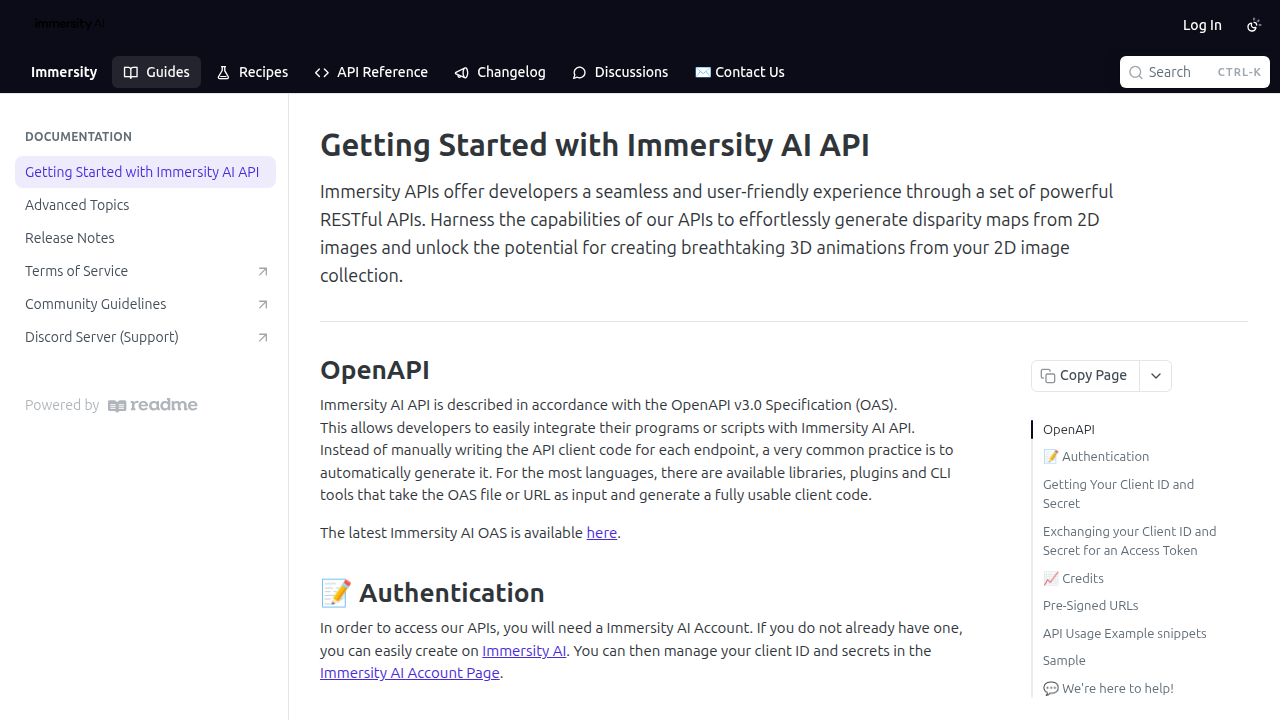
This means programs can send in regular 2D pictures or videos and get back amazing 3D content, adding depth and movement. It’s like taking a flat drawing and instantly making it a 3D model that the AI can understand. This kind of technology helps bridge how we see the world and how AI can understand it, which is a big step for spatial AI agents From Perception to Action: Spatial AI Agents and World Models.
These tools are built for ease of use. This helps many different "ai startups" or existing "ai labs" create new ideas faster. Immersity AI focuses on practical applications of spatial intelligence, which is different from general AI models or simpler AI tools like "slack ai" that help with daily tasks. It is also different from other complex models like "replicant ai" that focus on digital human creation. Immersity AI is all about letting AI truly understand and interact with 3D environments Building World Models with Spatial Intelligence.
Integration Surface: Supported Platforms and Deployment
Immersity AI’s tools are made to work on many platforms. If you are building something for a Windows computer, there are specific SDKs to help you create immersive apps for special displays like Acer SpatialLabs. But it goes beyond just Windows. Immersity AI is also designed to work well with major extended reality (XR) platforms. This includes things like Meta Horizon OS, which powers popular virtual reality (VR) and mixed reality headsets. For example, there are many Meta Horizon OS Developer Resources that show how to build apps for these devices. Developers can use Immersity AI to create applications that run directly on these devices, bringing advanced 3D AI understanding to virtual worlds and mixed reality experiences.
This wide range of support means developers can create amazing spatial AI apps for many different users and devices. The goal is to make it easy for anyone to add advanced 3D understanding to their projects, no matter if they are working on simple "ai startups" or big projects in established "ai labs." This extensibility allows for many new and creative uses of Immersity AI’s unique capabilities.
Immersity AI is able to work across many platforms because the technology behind it is very strong and well-tested. This means the core models, the data they learn from, and how well they are evaluated are all top-notch.
Technology Maturity: Models, Datasets, and Evaluation Practices
The smart brains inside Immersity AI are built on solid research. They are not just guesses; they come from deep studies into how AI can understand space, much like humans do. This area is often called "spatial intelligence" or "world models." For example, new research in 2026 explores how AI agents can move from just seeing things to actually acting in 3D spaces, using these world models From Perception to Action: Spatial AI Agents and World Models – arXiv. Immersity AI takes these advanced ideas and makes them useful for everyday applications. This helps many different "ai startups" and "ai labs" create new things faster.
To make sure these models work as expected, Immersity AI also uses careful ways to check them. This is like putting a new invention through many tests to be sure it is reliable. For example, researchers are always trying to find better ways to test if AI can truly understand and reason about spaces from all angles CVPR 2026 Open Access Repository. This helps ensure that the results from Immersity AI are consistent and can be trusted. It’s important for businesses to know that the AI they use is based on methods that can be repeated and checked for accuracy.
The power of Immersity AI also comes from the vast amounts of data it uses to learn. Imagine teaching a child about the world; they need to see many different things. Immersity AI’s models learn from special datasets that contain a lot of 3D information. This data helps the AI understand sizes, shapes, and how things move in real environments. Without good data, even the smartest AI models wouldn’t be very useful. The goal is to make AI that can build detailed "world models" for understanding complex environments Spatial Intelligence: The Future of AI.
However, there are always new things to learn. Even with advanced models and data, understanding everything about space is a big challenge. For instance, sometimes AI might struggle with new or unexpected situations, or with very quick changes in a scene. But the constant work on new methods helps improve this. For anyone interested in how AI agents work and what they can do, you can dive deeper into Unlock AI Agents: Definition, Types, and Real-World Examples for ML Teams.
Keeping up with these fast changes in AI technology is important for all developers and businesses. If you want to get regular updates on the latest in AI, consider subscribing to a dedicated newsletter.
Get clear daily AI updates from The AI Newsletter Worth Reading.
Business model and go-to-market: pricing, partners, and target customers
To make its special spatial AI useful, Immersity AI has smart ways of working with different businesses. They offer various ways for companies to use their technology, making it easy for both big and small "ai startups" and "ai labs" to get started.
One way is through licensing. This means companies can pay a fee to use the core Immersity AI technology in their own products or services. It’s like buying the rights to use a special tool. Another popular option is SaaS, which stands for "Software as a Service." With SaaS, companies pay a regular fee, like a monthly subscription, to use Immersity AI’s features over the internet. This is great for businesses that don’t want to build everything from scratch.
For very large companies, Immersity AI offers enterprise contracts. These are custom deals made for big businesses with unique needs. They might include special support and features. And for developers or smaller teams, there are developer tiers. These tiers let people try out the technology or use it for smaller projects, often with different price points based on how much they use. This helps many kinds of businesses, even smaller "ai startups," access powerful tools.
Immersity AI also has a clear plan for how it reaches its customers. This is called its "go-to-market" strategy. They build strong partnership programs with other companies. These partners might help sell Immersity AI’s products or use its technology to make their own offerings better. For instance, a company that makes special screens might partner with Immersity AI to show off amazing 3D content.
They also work with pilot customers. These are early businesses that try out Immersity AI’s tools and give feedback. This helps Immersity AI make its products even better and shows other potential customers how well the technology works in real life. You can often see examples of how these partnerships lead to new experiences at events like CES 2026, where immersive technologies are showcased CES 2026: What We Saw, What’s Shifting, and Where Immersive Experiences Are Headed.
Immersity AI focuses on specific industry focuses where its spatial AI can make the biggest difference. This includes areas like entertainment, education, and professional design, where understanding 3D space is key. The company’s goal is to help these industries create more engaging and realistic experiences. For example, Immersity AI can convert regular 2D photos and videos into amazing 3D experiences, which is useful for games or training programs Immersity adds 2D-to-3D Video Conversion.
As of 2026, more businesses are using AI than ever before, with global spending on AI systems expected to go over $300 billion this year, and about 72% of companies already using AI in some way 67 AI Adoption Statistics for 2026 — Enterprise & SMB Data. This growing adoption means there’s a big need for solutions like what Immersity AI offers. Understanding these trends helps businesses make smart choices for the future. You can learn more about what experts think is coming next in the world of smart tech by reading about AI Predictions 2026: What Business Leaders Need to Know.
After understanding Immersity AI’s business model and how it works with different companies, it’s helpful to look at how its technology is actually used and what companies need to think about when putting it into action. This includes looking at real-world examples and making sure the technology runs smoothly.
Practical Examples and How Immersity AI Helps
Immersity AI is helping businesses create new and exciting 3D experiences. For instance, the Immersity Platform was a big topic at AWE 2026, where discussions focused on how it helps change existing content into immersive experiences for everyday devices AWE 2026: The Shift Toward Immersive Experiences on Everyday Devices. This means that whether you’re a big company or a small "ai startup," Immersity AI can help make your digital content feel more real and engaging.
Developers can dive right in to build these next-generation experiences. Immersity AI provides a special kit called an SDK (Software Development Kit) and plug-ins. These tools let developers integrate Immersity AI into their own projects, making it easier to create stunning visuals for immersive displays like the Acer SpatialLabs and Samsung Odyssey 3D Immersity for Developers | our SDK and Plug-ins. This kind of direct access is key for "ai labs" and creative teams looking to push the boundaries of spatial computing.
For example, companies are using immersive AI in many ways. While specific numbers can vary, the goal is always to make user experiences better. Imagine how training programs become more effective when learners can interact with 3D models, or how entertainment becomes more captivating when you feel truly inside the story.
What to Consider When Using Immersity AI
When businesses decide to use a powerful tool like Immersity AI, they need to think about a few important things to make sure it works well.
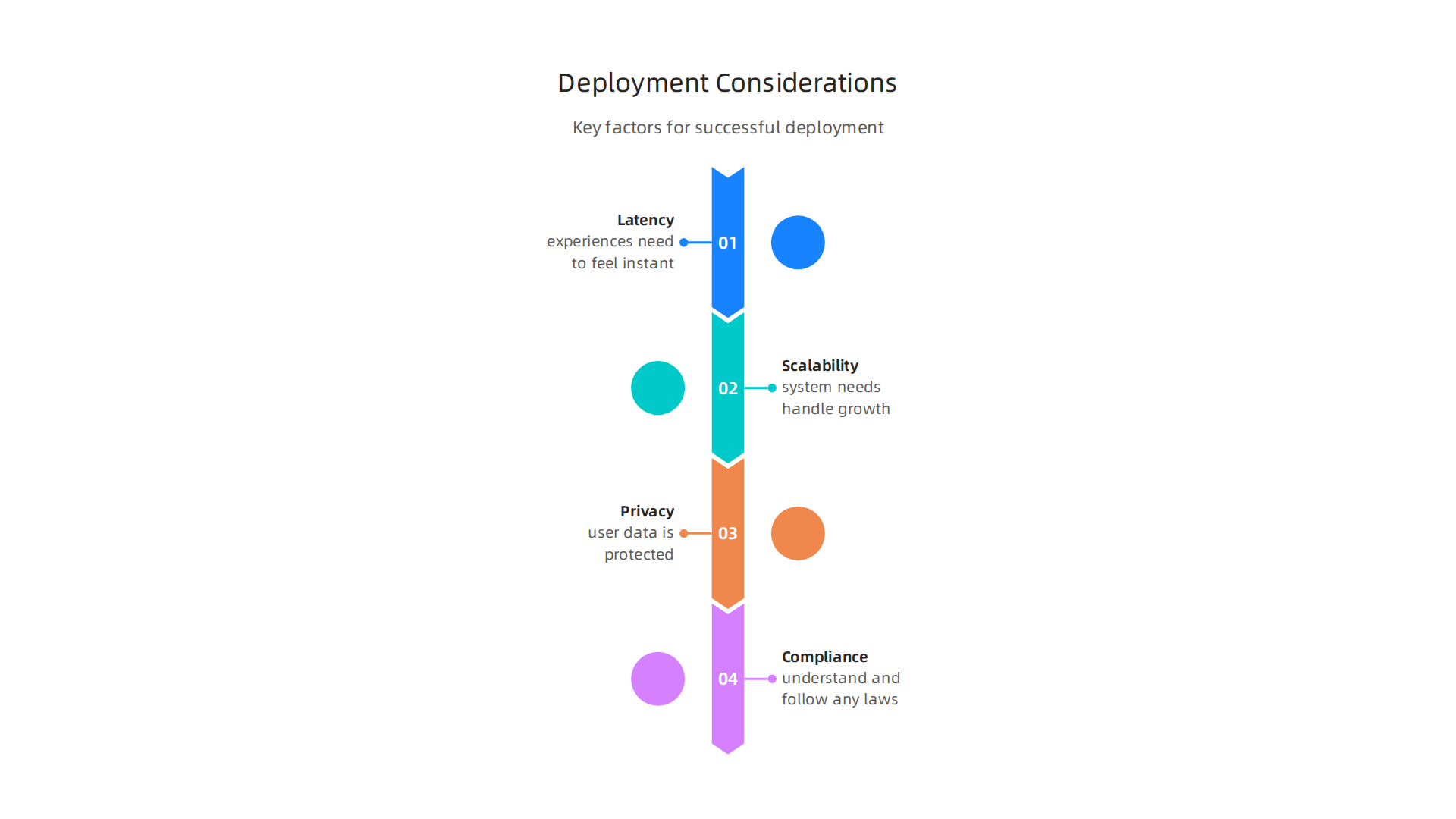
- Speed (Latency): Immersive experiences need to feel instant. If there’s a delay between what you do and what you see in 3D, it can feel unnatural. So, Immersity AI needs to be fast enough to keep up with real-time interactions.
- Growing with Demand (Scalability): As more people use a product or service powered by Immersity AI, the system needs to handle that growth without slowing down. It must be able to manage lots of users and a large amount of data at once. This is a big concern for any "ai startup" hoping to reach many customers.
- Keeping Information Private (Privacy): When dealing with immersive experiences, especially those that might involve personal data or how people interact, privacy is very important. Companies must make sure that user data is protected and handled safely.
- Following the Rules (Regulatory Risks): New technologies often come with new rules. Businesses using spatial AI need to understand and follow any laws about data, content, or how AI is used. This helps avoid legal problems and builds trust with customers.
Thinking about these operational parts helps businesses make smart choices when deploying AI systems. If you’re looking for more guidance on planning out your AI projects, a good place to start is to read up on an AI development roadmap for 2026.
For those who want to stay on top of the latest in AI, make sure you don’t miss out on important updates. Get clear daily AI updates from The AI Newsletter Worth Reading.
Summary
This article explains why Immersity AI is an important emerging player in spatial and immersive artificial intelligence and what machine learning professionals should know about it in 2026. It covers Immersity’s core mission—giving AI the ability to perceive and act in 3D spaces—along with product offerings like SDKs and APIs that convert 2D media into interactive 3D content. The piece outlines the company’s technical pedigree, team size, and funding history to show maturity and market positioning, then describes supported platforms (from desktop spatial displays to XR headsets) and developer workflows. It also summarizes model maturity, datasets, and evaluation practices that underpin reliable spatial intelligence, and explains Immersity’s go-to-market routes including licensing, SaaS, enterprise contracts, and partnerships. The article closes with practical considerations—latency, scalability, privacy, and regulatory risk—and examples of how the technology is already being used for games, training, and design. After reading this, product leads and ML practitioners will understand when Immersity’s tools make sense, how to get started, and what operational risks to plan for.