K12 AI Implementation Strategies for Ethical and Effective School Use

Why K12 AI Matters Now: scope, stakes, and what this guide will deliver
Today, in 2026, artificial intelligence (AI) is changing a lot of things. One big area where it’s making a difference is in K12 schools. When we talk about k12 ai, we mean all the ways AI tools are used to help students learn, make teachers’ jobs easier, and run schools better. This can be things like smart computer programs that help kids with their homework, systems that help school staff with daily tasks, or even big ideas about how schools should use new technology.
Many schools are already using AI. For example, a report from 2024 found that more than half of schools, about 57%, use AI to create learning materials like study guides and quizzes. This shows how much k12 ai is becoming a part of school life INSIGHTS BORN FROM DATA.
For the people who make big technology decisions for schools, there’s a lot to think about.

It’s not just about getting the newest tool. You need to think about how complex it will be to put new AI systems into schools and make sure they work well with what’s already there. The main goal is always to help students learn better and get good results. But you also have to think about important questions like fairness and safety, which fall under school ethics. And don’t forget about how schools will buy these new tools and what rules are needed, which is part of procurement. Making smart choices about k12 ai today will shape how students learn and grow for many years to come.
Understanding how AI fits into school policy and how to buy the right tools is key. If you want to dive deeper into how these bigger questions are handled, you might find our guide on AI in government policy helpful.
This guide will help you understand all these parts of k12 ai. We’ll look at the tools, the rules, and the important choices school leaders have to make. We’ll help you see the full picture of how AI is changing schools right now.
Get clear daily AI updates from The AI Newsletter Worth Reading.
Using AI in schools isn’t just a big idea anymore. It’s happening in classrooms and school offices every day in 2026.

Let’s look at the main ways k12 ai is being used and how these tools actually work.
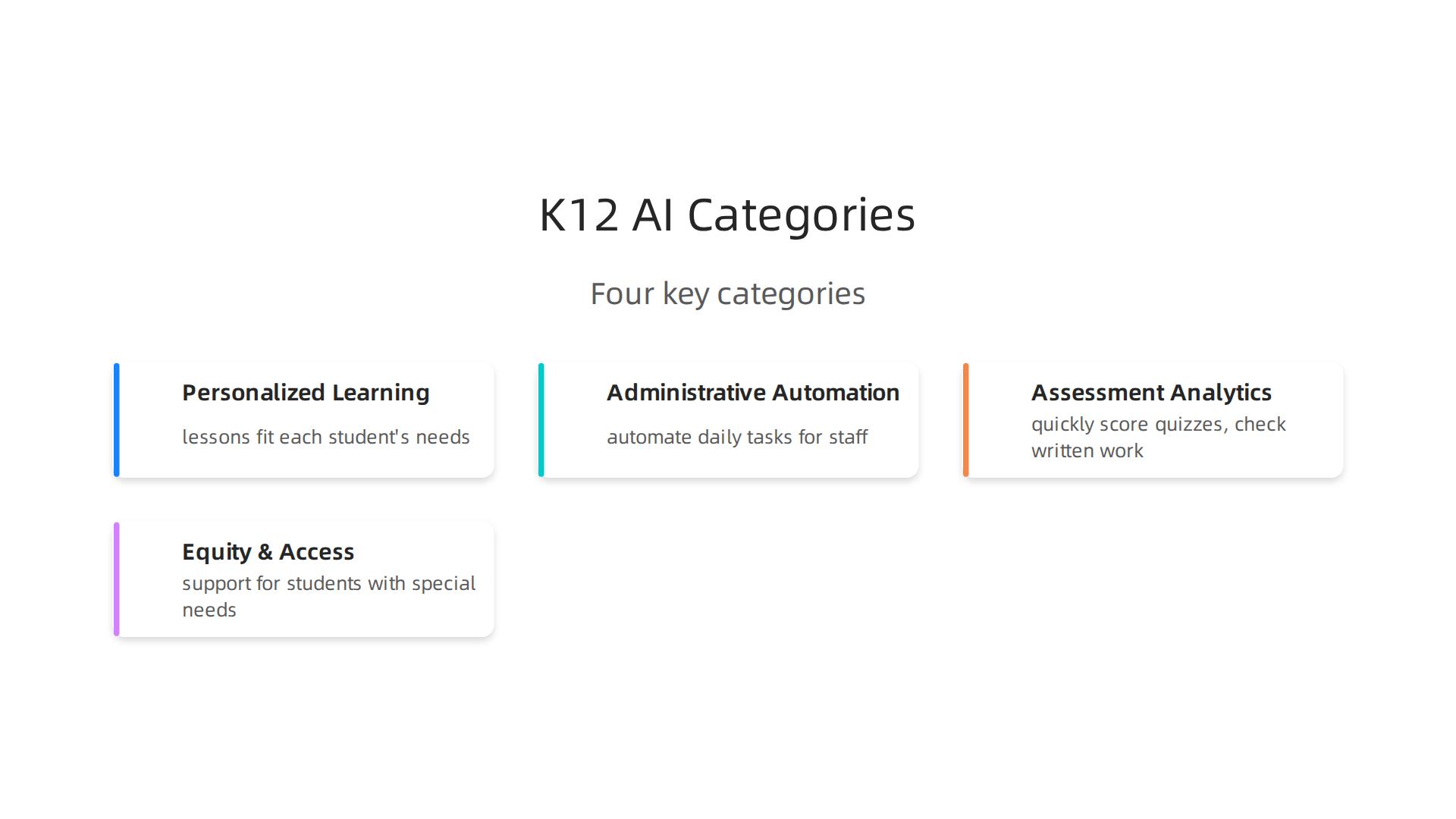
Categories of AI in Schools
AI tools in K12 education fall into a few main types. They help students learn in new ways, make teachers’ jobs easier, and keep schools running smoothly.
-
Learning Just for You (Instructional Personalization)
AI can change how students learn by making lessons fit each student’s needs. Imagine a smart tutor program that knows exactly what you’re good at and what you need help with. It gives you tasks that are just right for you. A study from 2026 showed that AI tools can greatly improve how much students learn and how much they enjoy it when lessons are made special for them AI in K-12 Personalized Learning Study. This means some kids might get extra practice with fractions, while others might get harder math problems. Tools like these can also boost student engagement by 18-25% in city schools AI-Powered EdTech: Innovations, Challenges, and Future …. -
Making School Tasks Simple (Administrative Automation)
AI can take over many of the daily tasks that take up a lot of time for teachers and school staff. This could be things like creating class schedules, sending out notes to parents, or even helping with basic grading. For example, some schools have seen a 42% drop in how much time staff spend on administrative tasks thanks to AI Enhancing US K-12 Competitiveness for the Agentic …. This gives teachers more time to focus on teaching. Think of it like a smart assistant that helps with all the paperwork. -
Smart Ways to Check Learning (Assessment Tools)
AI helps teachers understand what students have learned. It can quickly score quizzes, check written work for understanding, or even predict if a student might need extra help before they fall behind. This means teachers get faster feedback, and students can see their progress more clearly. Some AI tools can even give feedback on writing assignments, acting like a helpful co-writer. -
Helping All Students (Assistive Technologies)
For students who learn differently or have special needs, AI offers amazing support. This might include programs that turn text into speech, tools that translate languages instantly, or even software that helps students organize their thoughts for writing. These technologies ensure that every student has a better chance to succeed.
How AI Tools Connect in Schools
When schools use k12 ai, it’s not always about one single program. Often, many different tools work together.
-
On Your Device or in the Cloud?
Some AI tools work right on a school’s computers or "edge devices." This means the computer does all the work. Other AI tools use "cloud services," which means they connect to powerful computers over the internet. Cloud services often let many people use the same tool at once and can handle bigger tasks, like when a big company like Moody’s Analytics uses data to understand trends. -
Working with Learning Systems (LMS Integrations)
Most schools already use a Learning Management System (LMS) like Canvas or Google Classroom. K12 AI tools often need to "talk" to these systems. This connection, sometimes using things called APIs, lets the AI tools share information with the LMS, like student grades or how much time a student spent on a lesson. It helps everything work together smoothly, like an infinity ai system that constantly learns and adapts. -
Making Different Programs Talk (APIs)
APIs are like special connectors that let different computer programs share information. When an AI assessment tool sends grades to an LMS, it’s often using an API. This way, schools can build a set of AI tools that work well together, rather than having many separate programs that don’t share data. This careful planning helps schools choose the right tools and make them fit into their existing tech setup. To learn more about selecting the best digital tools for your school, you might find our guide on choosing all AI tools helpful.
Let’s talk more about how AI makes learning special for each student. This is called personalized learning or adaptive curriculum. It’s like having a smart helper that knows just how you learn best.
How AI Makes Learning Special
For k12 ai to make learning personal, it uses clever computer programs, like brains that help it decide what to do next.
- Simple Rules: Sometimes, the AI uses simple rules. For example, if a student gets a math problem wrong, the AI might show them an easier problem or a helpful hint. If they get it right, it moves them to a slightly harder one. This is like a teacher watching closely and giving the right next step.
- Recommendation Systems: Other times, AI acts like a smart suggestion box. Think of how online video services suggest movies you might like. In schools, these systems look at what other students who are similar to you have learned well from, and then they suggest lessons or activities that might help you too. This helps the AI build an infinity ai style system that constantly learns and improves.
- Learning Over Time: The most advanced AI tools actually "learn" as you learn. They try different ways to teach you something and see what works best. If a certain type of problem helps you understand fractions better, the AI will give you more of those. It gets smarter about how to help you specifically every time you use it. This is similar to how financial experts at Moody’s Analytics study lots of data to understand what works in the economy.
What Info Does AI Use?
For this k12 ai to work, it needs information. It looks at things like:
- Your answers to questions.
- How long you spend on a task.
- Which topics you find easy or hard.
- Your past test scores.
All this data helps the AI build a picture of how you learn, so it can be a better digital teacher or "producer ai" helping create your learning path.
How We Know if AI is Really Helping
It’s super important to know if these k12 ai tools are actually making a difference. We need evidence to be sure.
- Checking Learning Outcomes: We look at whether students who use AI tools learn more or get better grades compared to students who don’t. Research from 2026 shows that knowing if an AI assessment is fair and reliable is still a big area of study Can AI Grade Like a Human? Validity, Reliability, and Fairness in University Coursework Assessment. This helps us understand if the AI is truly helping students understand new topics.
- Comparing Groups: A good way to check is to have two groups of students. One group uses the AI tool, and the other group learns in the usual way. Then, we compare their results to see which group did better. This helps schools see the real benefits of k12 ai. Studies looking at how AI impacts K-12 students are still ongoing in 2026 The Evidence Base on AI in K-12: A 2026 Review.
- Making Sure Tools Are Used Right: Even the best AI tool won’t work if it’s not used correctly. So, part of checking if AI helps is making sure teachers and students are using the tool as it was meant to be used. Sometimes, problems with how a new tool is used in schools can affect how well it works. This is an important step when schools are building their AI development roadmap for 2026.
By looking at these things, schools can make smart choices about which k12 ai tools to use and how to make them work best for all students.
Making sure k12 ai tools truly help students means we need good ways to check their learning. This is where assessment, testing, and understanding how students learn (learning analytics) come in. AI offers many new ways to do this, but we also need to be careful.
How AI Helps with Testing and Knowing How Students Learn
- Quick Checks (Formative Assessment): AI can give students short quizzes or questions while they are still learning a topic. This helps teachers see right away if students are getting it or if they need more help. It’s like a coach watching practice and giving tips on the spot.
- Big Tests (Summative Assessment): When it’s time for a big test at the end of a chapter or year, k12 ai can also lend a hand. It can help create different test versions or make sure questions are fair for everyone.
- Grading Automatically: For some types of work, like math problems with one right answer or simple writing, AI can grade things quickly. This saves teachers a lot of time. Even for essays, new AI tools are getting better at grading K-12 papers and often agree with how humans would grade them Creating and Evaluating K-12 GenAI Assessment Graders. This kind of "producer ai" helps teachers focus more on teaching and less on paperwork.
- Learning Dashboards: AI can also collect all the information about how a student is doing and put it into easy-to-read reports. These are called learning analytics dashboards. They show teachers what each student is good at and what they struggle with. This helps teachers know where to focus their lessons for each student.
Things to Be Careful About with AI Testing
Even though AI is helpful, we must be careful. We need to make sure AI testing is fair, correct, and truly shows what a student knows.
- Is it Really Measuring What it Should? (Validity): This is about whether a test truly measures what it’s supposed to. If an AI grades an essay, does it really understand the student’s ideas, or just count words and check grammar? Experts are still looking at ways to make sure AI in education measures things correctly Four Shifts Toward Improving Reliability and Validity in AI in Education.
- Is it Fair to Everyone? (Bias): AI learns from data. If the data it learned from didn’t include many different kinds of students or ways of answering, the AI might not be fair to everyone. It could accidentally give lower scores to students who have different learning styles or backgrounds. This is a big concern for many in 2026, as unfair AI can cause real problems. If you want to learn more about this, explore The Dangers of AI Bias.
- Does it Give the Same Result Every Time? (Reliability): A reliable test gives you roughly the same score if you take it again, assuming you haven’t learned anything new. With AI, we need to make sure its grading is consistent. If an AI gives a different grade for the same work on different days, that’s a problem. Reliability challenges in AI-assisted assessment are a key topic of research in 2026 The evaluator effect: Reliability challenges in AI-assisted. Just like financial experts like Moody’s Analytics need reliable numbers to make good decisions, schools need reliable AI tools to help students fairly.
To use k12 ai wisely, schools need to understand these challenges and work to make AI tools as fair and accurate as possible. Staying informed about the latest in AI is key for anyone involved in machine learning and education.
Get clear daily AI updates from The AI Newsletter Worth Reading to stay ahead.
While we must be careful with how AI checks student learning, we can also look at how it helps teachers with their daily work. Imagine AI as a helpful assistant that makes teachers’ jobs a bit easier, giving them more time to focus on students. This means using k12 ai for things like planning lessons, helping with grading, and making school tasks run more smoothly.
How AI Helps Teachers and Their Work
AI tools are changing how teachers work in many good ways in 2026.
- Better Lesson Planning: Teachers spend a lot of time planning lessons. K12 AI can suggest ideas for lessons, find helpful materials like videos or games, and even help write out lesson plans. It can suggest ways to teach a topic so it fits different students’ needs.
- Grading Help (Beyond Simple Answers): We talked about AI grading simple tests before. But it can also help with bigger assignments like essays or projects. AI can give helpful feedback on writing, pointing out things that are good and areas that need work. This saves teachers hours of time, allowing them to give more personal advice to each student.
- Suggesting Learning Materials: AI can recommend special tasks or reading materials for each student. If a student is struggling with fractions, the AI might find extra practice games. If another student is doing great, it might suggest a challenge problem. This kind of smart recommendation can come from a powerful system, perhaps an advanced tool we could call infinity ai, which can learn and adapt to many different learning styles.
- Making Work Easy (Workflow Automation): AI can take care of many of the paperwork tasks that teachers have. This includes things like:
- Scheduling: Helping set up meetings or plan out class activities.
- Communication: Drafting notes to parents or reminders for students.
- Organizing: Keeping track of classroom resources or student projects.
These tools help teachers handle their many duties better, letting them use their skills where they matter most: teaching.
Getting Teachers Ready for AI and Making Sure it Works
For k12 ai tools to truly help, schools need to make sure teachers know how to use them.
- Learning and Training: Just like students learn new things, teachers need training to use AI tools well. Schools must offer good programs to teach teachers about these new technologies. This is called professional development. It helps teachers feel good about using AI and learn how it can support their goals. A review of studies shows how important it is to focus on assessing teachers’ AI literacy to make sure they feel confident and capable.
- Managing Change: Bringing new tools into schools can be tricky. Everyone involved needs to understand why these changes are happening and how the new tools will make things better. It’s about working together and listening to teachers’ ideas and concerns.
- Checking How Well it Works: Schools also need to keep an eye on how well the AI tools are actually working. Are they helping students learn more? Are they making teachers’ lives easier? It’s important to keep checking and making changes as needed. This helps make sure the k12 ai tools are truly useful and not just another burden. Looking at The Evidence Base on AI in K-12: A 2026 Review can help schools understand the impact of these tools.
By doing these things, schools can make sure that AI helps teachers and students in the best possible way. To learn more about picking the right tools, you might want to read about Choosing all AI tools.
The last section talked about how AI helps teachers in many ways, like with lesson planning and grading. But for k12 ai to be truly helpful for everyone, we must also think about being fair and making sure all students can use it safely. This means looking closely at important ideas like equity, access, and ethical rules when putting AI into schools.
Equity, Access, and Ethical Considerations in K12 AI
When schools start using k12 ai tools, it is very important to make sure these tools are fair for all students. We call this "equity." It means every student should have the same good chances to learn with AI, no matter who they are or where they come from.

Fairness for All Students
One big thing to watch out for is bias. This means the AI might work better or worse for some students. For example, if an AI program was mostly built using information from students in big cities, it might not understand or help students from small towns or different cultures as well. This could lead to unfair results. Schools need to keep an eye on these kinds of problems, as experts have warned about the dangers of AI bias that can appear in AI systems.
Another important point is access. Not all schools or homes have the same amount of money or the same tech tools. Some students might have fast internet and new computers at home, while others might not have these things. If k12 ai tools need special tech that some students don’t have, it could mean those students get left behind. We need to make sure AI helps everyone learn and grow, not just those who already have a lot. Many states are now offering official state guidance on AI in K12 to help make sure AI is used fairly.
Also, AI tools must understand different languages and cultures. An AI program might be great for students who speak one language, but not as helpful for those who speak another. It should also respect different ways of learning and showing knowledge from various backgrounds. Good guidance, like the Equity and Civil Rights Protections highlighted for Maryland public schools, helps ensure AI serves all students fairly.
Making Ethical Choices with K12 AI
Schools also need to have clear rules for how they use k12 ai tools. These rules are part of what we call ethical frameworks. They are like a guidebook that helps everyone make good and right choices about AI.
- Buying New Tools: When schools decide to get new AI tools, they should ask very important questions. Does the tool keep student information private and safe? Is it fair to every student? Is the company that made the AI open about how their tool works? These steps are key for responsible AI in government policy, procurement, and building public trust.
- Checking Companies (Vendors): Schools should also check with the companies that make these AI tools. They need to know if these companies are honest and clear about how their AI works and how they keep student data safe. In 2026, many experts created 2026 Guidelines on the ethical use of artificial intelligence and data to help schools make smart choices. A new AI Ethics Index for K–12 Education was even started to help schools check how ethical AI tools are.
By paying close attention to fairness, making sure everyone has access, and following strong ethical rules, schools can use k12 ai in a way that truly helps every student learn and grow in a safe, fair, and positive environment.
To keep up with all the new ideas and tools in AI, it helps to have a steady stream of good information.
The AI Newsletter Worth Reading can give you clear daily AI updates.
The last section helped us see how important it is to use k12 ai tools fairly and ethically. Part of being fair and safe means keeping student information private. This is a very big deal.
Keeping Student Information Safe
When schools use k12 ai, they collect information about students. This information might be about how a student learns, what they like, or how well they do in school. It is super important that this private data stays safe and is not shared without permission.
There are special rules and laws to help with this. For example, laws like FERPA and COPPA in the United States tell schools how they must protect student records, especially for young children. Many states are also making their own rules. In 2026, over half of U.S. states have made AI policy guidance for K-12 education. Some states even say that student data cannot be used to teach AI models, like California’s rules for using student data.
What Could Go Wrong? Security Risks
If student data is not kept safe, bad things can happen. This is called a security risk. Someone who should not have the information might get it. This is why schools need strong walls around their data, like a fort. It is important to understand the real-world harms, risks, and dangers of AI so schools can be prepared.
Working with AI Companies
Schools often buy k12 ai tools from other companies. When they do this, they need to be very careful. They must ask the companies tough questions. Do you keep student data safe? Will you ever share or sell our students’ information? Will you use our students’ information to make your AI better for other people? Schools need to make sure the companies agree to strict rules in their contracts. It is a good idea for schools to have clear guidance for developing policies on how to choose and use AI tools.
How Schools Keep Data Secure
Schools use different ways to keep data safe.
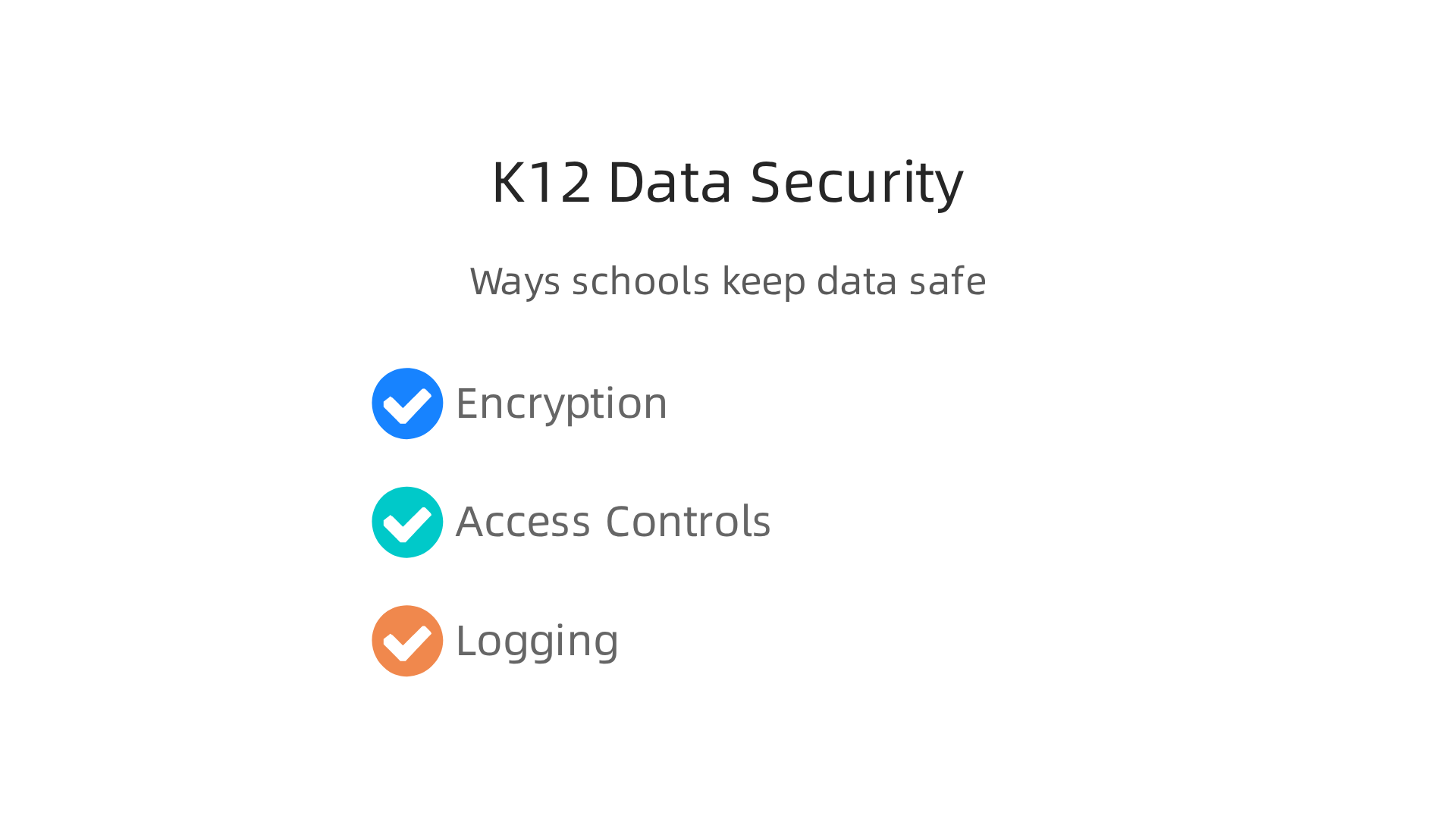
- Encryption: This is like scrambling the data so only people with a special key can read it.
- Access Controls: Only certain trusted adults, like teachers or IT staff, should be able to see student data. They have special passes, like a password.
- Logging: Schools keep a record of who looks at data and when. This helps them see if something unusual happens.
Schools also need to think about what happens to data over time. When a student leaves the school, or a k12 ai tool is no longer used, that data might need to be erased or stored in a way that no one can connect it back to a student. This is called managing the "data lifecycle."
By following these important steps for data privacy and security, schools can make sure that k12 ai helps students learn without putting their personal information at risk. This builds trust with families and makes sure AI is a good helper in schools for everyone.
Making sure k12 ai tools are fair, safe, and protect student information is very important. But once schools agree to these rules, they still need to figure out how to actually get and run these tools every day. This is called operationalizing k12 ai.
Operationalizing K12 AI: procurement, MLOps, and measuring ROI
Schools need clear steps for bringing k12 ai tools into classrooms. This means carefully picking the tools, making sure they work well all the time, and checking if they are really helping students and teachers.
How Schools Get AI Tools: Procurement Models
When schools want k12 ai tools, they usually get them in a few ways:
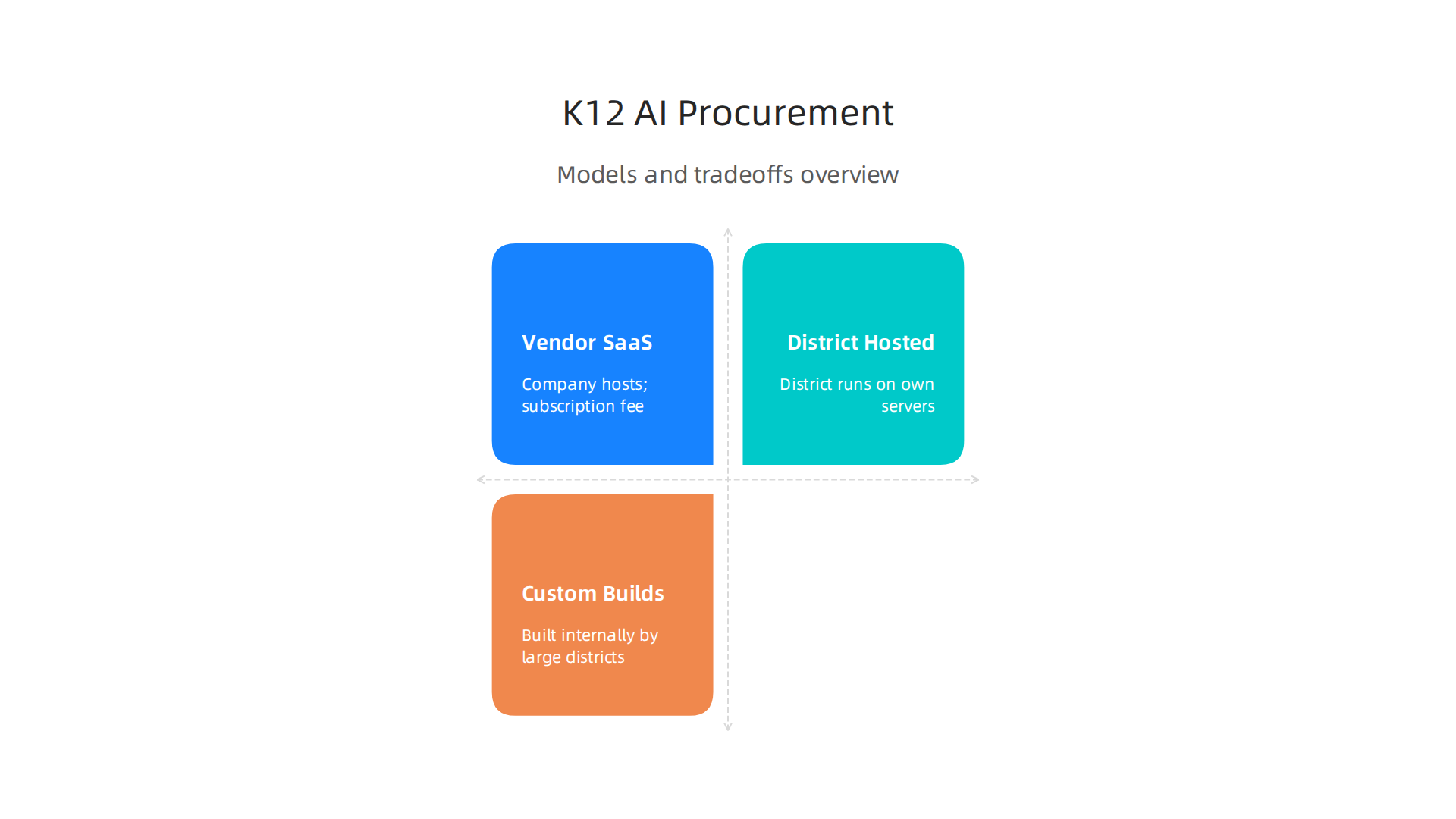
- Vendor SaaS (Software as a Service): This is like renting software. A company hosts the AI tool on its own computers, and schools pay a fee to use it. This is a common way for schools to buy educational technology, as noted in a 2026 report on EdTech Market: Business Models. It often means less work for the school’s own IT team.
- District-Hosted: Sometimes, a school district will buy the software and run it on its own computers. This gives the school more control but also means more work for their IT staff.
- Custom Builds: For very large school districts or those with unique needs, they might decide to build their own AI tools from scratch. This can be a big project, but it means the tool fits their exact needs. Experts say that if a school has many students (like over 10,000 active learners), building a custom tool might save money in the long run compared to paying for many separate software licenses, as discussed in ideas for AI Tools for Teachers to Create Content in 2026.
No matter how schools get the tools, they need to follow good steps for buying. This means figuring out what teachers and students really need before looking at tools. It also means reading contracts carefully and making sure they protect student data, just like we talked about before. A good buying guide will help schools make smart choices for AI platforms for education in 2026.
Keeping AI Tools Running Smoothly: MLOps
Once a k12 ai tool is in a school, it needs to be managed well. This is where something called MLOps comes in. MLOps is about making sure AI tools keep working correctly, are updated when needed, and perform as expected.
- Model Updates: AI models learn from data, and sometimes they need to be updated to be better or fairer. Schools need to know how often these updates happen and what they mean.
- Monitoring: Schools should keep an eye on how the AI is working. Are students using it? Is it giving helpful results? Are there any problems? This helps find and fix issues quickly. Learning how to optimize your machine learning workflow can help schools manage these tools more efficiently.
Measuring Success: ROI and KPIs
Schools want to know if the k12 ai tools they use are worth the money and effort.

This means looking at the Return on Investment (ROI) and setting Key Performance Indicators (KPIs).
- What is ROI? ROI tells you if the benefits of using an AI tool are bigger than its costs. For example, if an AI tutor costs X amount but helps many students improve their grades by a large amount, that’s a good return.
- What are KPIs? KPIs are specific ways to measure success. For k12 ai, KPIs might include things like:
- How much student test scores go up.
- How much time teachers save on grading or planning.
- How many students use the AI tool regularly.
- How much student engagement improves in lessons.
Schools should start with small tests, called pilots, with a few teachers and schools to see how a new AI tool works. Then, they can use the results to decide if they should use the tool more widely. Some reports even suggest tying payment for edtech to student results, an idea called Outcomes Based Contracting for EdTech. This helps make sure that the tools are truly effective.
Staying on top of the latest developments in AI and machine learning is crucial for successful implementation in education.
Get clear daily AI updates. The AI Newsletter Worth Reading can help you stay informed on this fast-moving field.
Summary
This article explains why K12 AI matters in 2026 and walks school leaders through the full landscape of using AI in primary and secondary education. It outlines the main categories of tools—personalized instruction, administrative automation, assessment, and assistive technologies—and shows how those tools connect to devices, cloud services, LMS platforms and APIs. The guide examines how adaptive systems make learning more tailored, how schools can evaluate impact through pilots and evidence, and the reliability and fairness questions that surround AI grading. It also covers essential operational topics: procurement options, MLOps for keeping models current, measuring ROI with KPIs, and the need for teacher professional development. Finally, the article stresses equity, ethics, and strong data-protection practices so districts can adopt AI in ways that are safe, legal, and truly beneficial for all students.