
Data Intelligence Your Guide to AI Powered Business Growth

Why data intelligence matters now: scope, stakes, and the promise
In 2026, companies collect a huge amount of information every day. But having lots of data is not enough. To truly make good choices and build smart systems, you need something called data intelligence. Simply put, data intelligence is about turning all that raw data into smart insights that help people make better decisions and run their businesses more smoothly. It helps you understand your data better and use it in smart ways [https://www.hpe.com/us/en/what-is/data-intelligence.html].
For machine learning (ML) teams and leaders, data intelligence is super important. It means having a clear picture of how your data works, where it comes from, and how trustworthy it is. It’s not just about looking at numbers; it’s about finding the hidden messages within your data. This helps ML teams build stronger models and helps leaders make big choices with more confidence.

Good data management is a key part of this, as it ensures the data is clean and ready to be used.
Data intelligence helps solve three big problems:
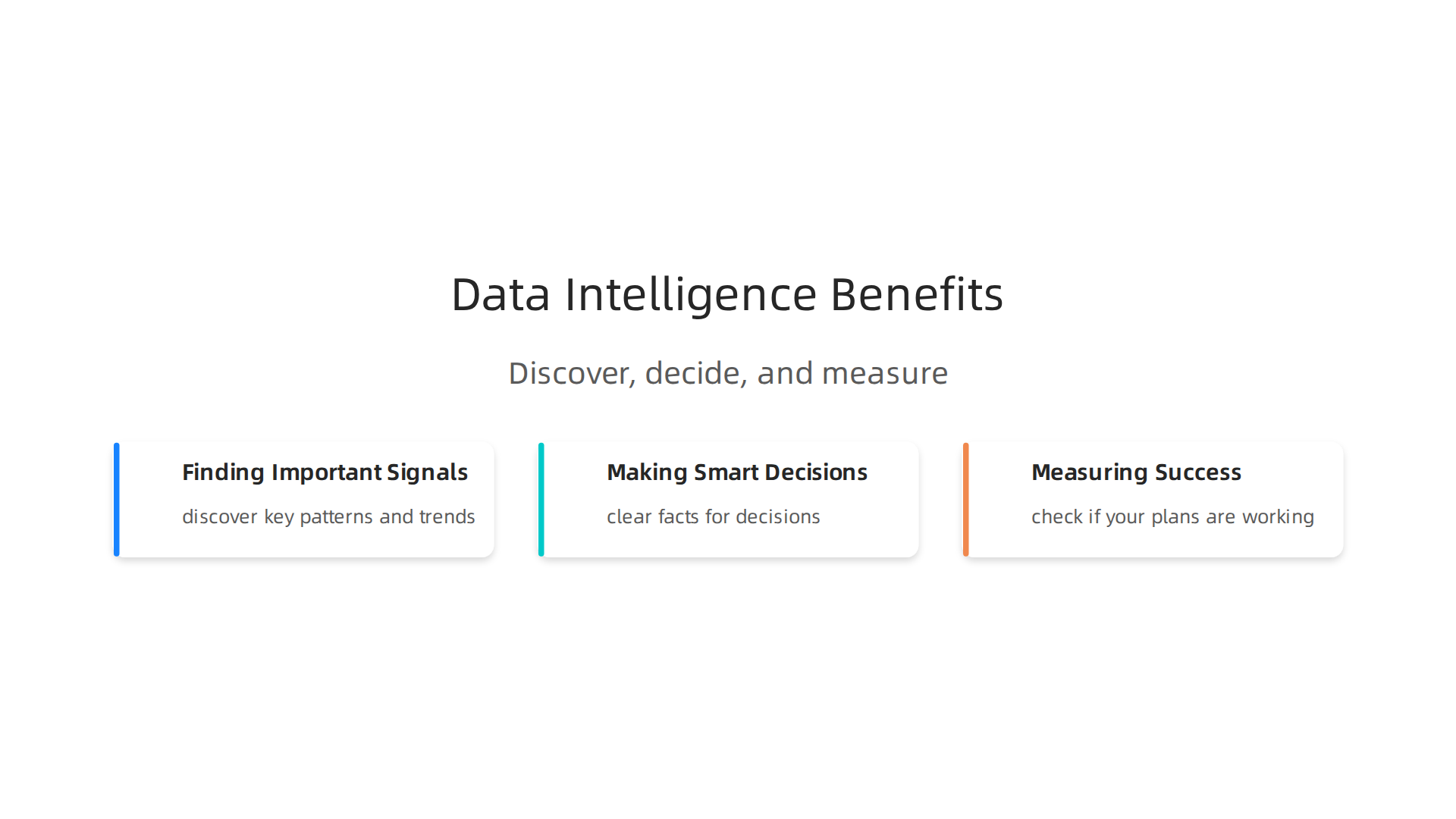
- Finding Important Signals: It helps you discover key patterns and trends in your data that you might miss otherwise. Think of it like finding a treasure map in a pile of old papers.
- Making Smart Decisions: It gives you the clear facts you need to make quick, good decisions. This means less guessing and more certainty when you are planning what to do next.
- Measuring Success: It helps you check if your plans are working. By looking at the right numbers, you can see what is going well and what needs to change. This is crucial for improving any project.
Many businesses today use advanced data analytics platforms to get this kind of intelligence. These tools help them collect, look at, and understand their data. In essence, data intelligence turns information into knowledge and knowledge into value for your business [https://www.riverpublishers.com/journal/journal_articles/RP_Journal_1550-4646_1311.pdf]. It’s how businesses learn and grow smarter over time.
To keep up with the latest in artificial intelligence and machine learning, you need reliable information.
Get clear daily AI updates from The AI Newsletter Worth Reading.
What is Data Intelligence? A Practical Definition
To really understand what data intelligence is, let’s break it down into simple parts. Think of it as a special journey your information takes, going from simple facts to powerful insights. Data intelligence is a complete way of looking at and using all the information a business gathers to make smart choices [https://www.cloudera.com/resources/faqs/data-intelligence.html].
It helps companies understand their data better and turn that understanding into real business value.
Here are the main steps that make up data intelligence:
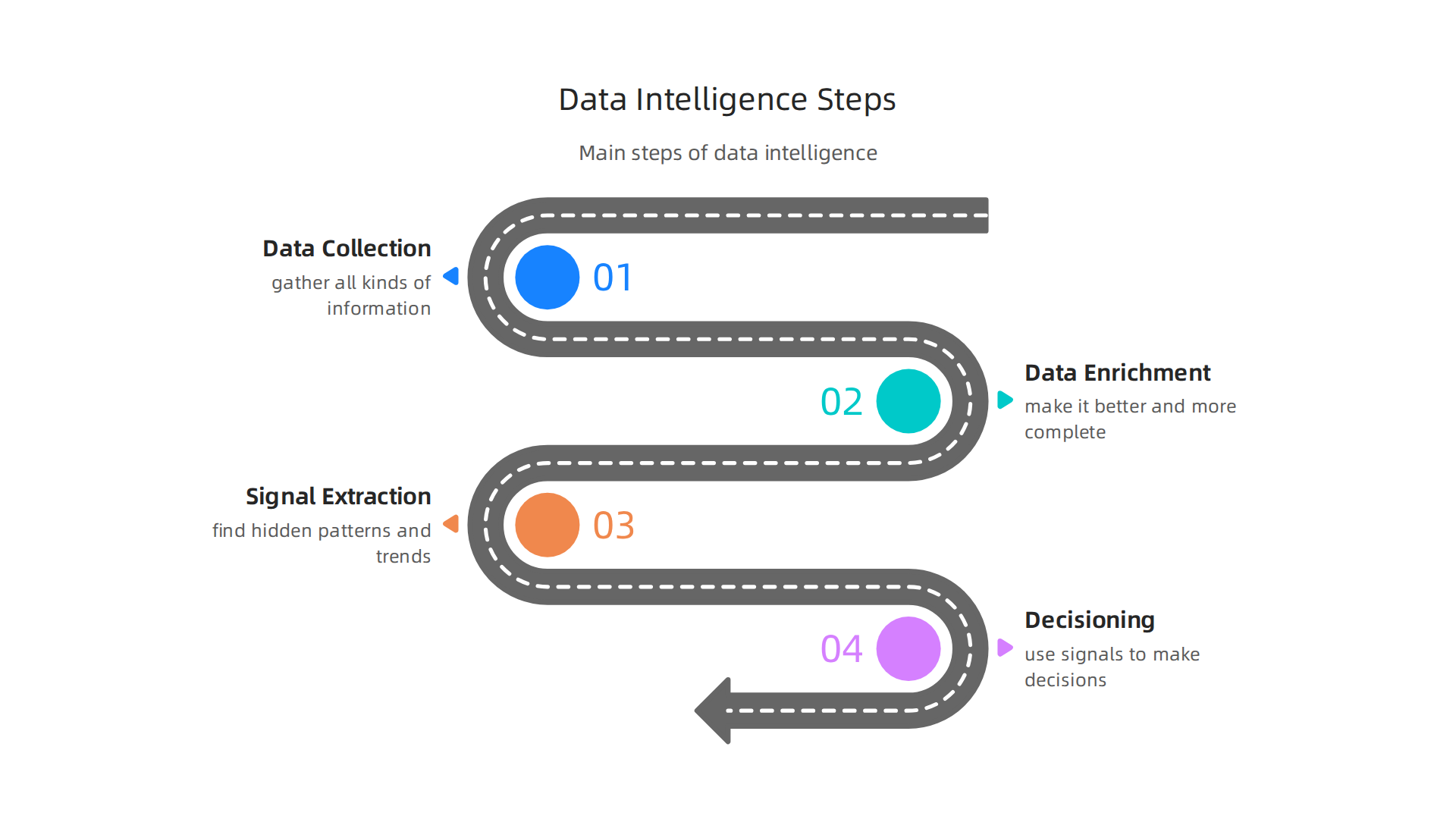
- Data Collection: This is the first step, where you gather all kinds of information. It’s like collecting all the pieces of a puzzle. This could be numbers from sales, notes from customer talks, or information from how machines are running.
- Data Enrichment: Once you have the data, you make it better and more complete. You might add details, clean up mistakes, or combine different pieces of information. This helps ensure your data is ready to be used. Think of it as cleaning and sorting your puzzle pieces. Many companies use strong data management methods to help with this step.
- Signal Extraction: This is where the magic happens. You look closely at the improved data to find hidden patterns, important trends, and things that stand out. These are the "signals" that tell you what’s really going on. It’s like finding the edges and corners of your puzzle to see the bigger picture [https://www.domo.com/glossary/data-intelligence]. Good exploratory data analysis techniques for machine learning are key here.
- Decisioning: Finally, you use these clear signals to make educated decisions. This means knowing what steps to take next, whether it’s launching a new product, improving a service, or changing how something works. This step is about turning insights into action, helping your business grow and succeed.
You might hear about "data analytics" or "business intelligence" too. While they are related, data intelligence goes a step further, especially for machine learning. Data analytics usually looks at past information to see what happened. Business intelligence (BI) helps you understand why things happened, often through reports and dashboards [https://scholarsbank.uoregon.edu/server/api/core/bitstreams/9c1a0783-6f70-4d13-b58f-d90928eadb99/content].
Data intelligence, on the other hand, combines these ideas and adds a focus on how data affects future choices and strategies. It’s about using data to get ahead and make predictions, especially when building smart AI and machine learning systems [https://www.ibm.com/think/topics/data-intelligence]. It gives you a deeper, more active understanding of your data for guiding important business moves.
To stay sharp in the world of AI and machine learning, you need clear, up-to-date information. Get clear daily AI updates from The AI Newsletter Worth Reading.
Data intelligence takes raw information and turns it into powerful knowledge, especially for smart AI and machine learning systems. This process relies on three key parts: the raw data itself, the clever notes we add to it called metadata, and the clear signals we find.
Raw Data: The Building Blocks
Think of raw data as the basic facts you collect. It’s like having a big pile of puzzle pieces. This could be numbers from sales, what customers clicked on your website, or reports from machines. Without good, basic data, you can’t start your journey towards data intelligence. It’s the foundation of everything. For complex AI systems, getting this electronic data gathering and retrieval right is crucial.
Curated Metadata: Data About Data
Now, imagine each puzzle piece had a tiny label telling you its color, shape, and what part of the picture it belongs to. That’s metadata. Metadata is information about your data. It helps you understand:
- Where the data came from: Was it from a survey, a sensor, or a customer record?
- What the data means: Is this number a price, a quantity, or a date?
- How good the data is: Is it fresh and accurate, or old and incomplete?
Using metadata helps organize your raw data and makes it much easier to find and use. Without good metadata, even the best data becomes hard to manage, leading to confusion and slower progress in data science. Some businesses use specific data analytics platforms to keep track of this.
Derived Signals: The Insights
When you combine raw data with useful metadata, you can start to find "signals." These are the important patterns, trends, or insights that are hidden within your information. They are like seeing the completed picture of your puzzle. These signals are what help you make smart decisions. For example, a signal might tell you that customers in a certain area prefer a new product, or that a machine is about to need maintenance. Finding these signals is the goal of data intelligence. It means turning information into knowledge and knowledge into value Data intelligence in the context of big data.
Making Signals Reliable: Lineage, Quality, and Cataloging
For your decisions to be good, the signals you find must be trustworthy. This is where three key ideas come in:
- Data Lineage: This means knowing the full history of your data. Where did it start? How was it changed? Who touched it? Understanding data lineage helps you trust your data. If you know its journey, you can rely on its insights.
- Data Quality: This is about how correct and complete your data is. Bad quality data leads to bad signals, which then lead to bad decisions. Ensuring Data annotation quality is vital for machine learning. Good data quality is like having all the right puzzle pieces, without any missing or broken ones.
- Data Cataloging: This is like having a well-organized library for all your data and metadata. A data catalog helps everyone in a company find the data they need quickly and understand what it’s for. It makes sure that your important data is not lost or forgotten. A strong Data Intelligence Architecture: Components and Best Practices often unifies metadata, governance, lineage, and how data is watched over.
Together, these parts make sure that your data intelligence efforts are solid. They ensure that the insights you get are clear, correct, and truly helpful for driving your business forward in 2026. This complete view of your information helps your team build reliable ML systems.
When your team has reliable ML systems built on trusted information, the next big step is turning those trusted findings into smart business moves. This is where data intelligence really shines. It helps companies use what they learn from their data to make important choices that help them grow and do better.
Think about it like this: your data has told you a clear story about what’s happening. Now, data intelligence helps you decide what to do with that story.

Better Products and Services
One big way data intelligence helps is by making products better. Companies can look at what customers like and don’t like. For example:
- What features do people use most? If many customers love a certain part of an app, the company might decide to make that part even better or add more like it.
- What makes customers stop using a product? If data shows that many people leave after a certain step, the company can fix that step to keep more customers happy.
By using these insights, businesses don’t just guess what to do. They make choices based on real facts. This helps them create products that people truly want and need, making their customers more loyal. For teams needing to identify and deploy valuable solutions, a strategic guide for ML teams can be very helpful.
Smarter Business Growth
Data intelligence also helps businesses grow in smart ways. It’s not just about making things better, but also about knowing where to put your energy. For example:
- Finding new customers: Data can show which new groups of people might be interested in a product, helping companies decide where to advertise.
- Where to expand: If a business sees a certain area has many potential customers, they might decide to open a new store or offer new services there.
This type of smart planning, driven by data intelligence, helps companies spend their money wisely and find real success. In 2026, many companies are looking to artificial intelligence to help with these growth strategies. Actually, 95 percent of organizations have an AI strategy, though only 8 percent have seen clear returns on their investment yet. This shows the big need for data intelligence to make those AI strategies truly work and deliver value, according to a Global AI Pulse Q1 2026 report.
Driving AI Decisions
For smart AI and machine learning systems, data intelligence is key. AI models learn from data. The better the insights from that data, the smarter the AI becomes at making its own suggestions or taking actions. For instance, an AI might learn from data intelligence that a certain type of customer is likely to buy a specific item. Then, the AI can suggest that item to similar customers. This is the data science meaning in action, turning raw information into useful predictions and actions.
In short, data intelligence is about taking all the clean, clear information you have and using it to guide every big decision. It helps businesses see the path forward, make better products, find new growth, and get the most out of their AI tools in 2026.
Staying up to date on how AI is transforming businesses and data intelligence is crucial.
The Deep View Newsletter provides daily insights and analysis into the world of AI and technology. The AI Newsletter Worth Reading delivers clear updates right to your inbox.
Staying up to date on how AI is transforming businesses and data intelligence is crucial. But knowing is only part of the battle. To truly use what you learn, you need the right tools and platforms. Choosing these tools wisely is key to turning smart ideas into real success for your company in 2026.

This process means looking at different kinds of tools that help manage and understand your data.
Tools and Platforms: Choosing the Right Stack
Think of building your data system like building a house. You need different tools for different jobs. For data intelligence, you’ll need a "stack" of tools that work together. In 2026, the market for these tools is quite advanced, with many options available to help businesses handle their data better 2026 Data Analytics Tech Stack: Key Tools & Trends.
Here are the main types of tools and platforms you should know about:
- Data Ingestion: These tools are like the front door for your data. They help bring information from different places into your main system. This could be from your website, sales records, or social media. Good data ingestion makes sure all your information gets to where it needs to go cleanly and quickly.
- Data Catalogs: Imagine a library for all your data. A data catalog helps you organize, find, and understand all the data you have. It tells you what each piece of data means, where it comes from, and who can use it. This is super important for good data management.
- Feature Stores: When you’re building smart AI models, you often use "features," which are special pieces of data that describe something. A feature store helps you keep these important features ready to use for many different AI projects, making your machine learning faster and more consistent. Many enterprises are looking at their full tooling landscape for AI, ML, and data science meaning in 2026 to ensure they have the right components The Enterprise AI / ML / Data Science Tooling Landscape in 2026.
- Data Analytics Platforms: These are the workspaces where you explore and understand your data. They help you create charts, reports, and dashboards to see patterns and get insights. Popular examples include Microsoft Power BI and Tableau, which are some of the top business intelligence tools in 2026 Business Intelligence Tools in 2026: The Art of Analyzing Data. These platforms help you move towards data science by making it easier to analyze information.
- Observability Tools: Once your data systems are up and running, you need to make sure they’re working well. Observability tools act like a watchdog, keeping an eye on your data pipelines and AI models. They alert you to problems, like if data stops flowing correctly or if an AI model starts making strange predictions.
Choosing the Right Tools for Your Business
Picking the best data intelligence software or data analytics platforms depends a lot on what your company needs and how ready it is to use advanced data. Not every business needs every single tool right away. You should think about:
- What problems are you trying to solve? Do you want to understand customer behavior better, or predict sales, or improve your AI systems? Your goals will guide your choices.
- How much data do you have? Small businesses might start with simpler tools, while larger companies with lots of data will need more robust and scalable solutions.
- Your team’s skills: Do you have people who know how to use complex data tools, or do you need platforms that are easier to learn?
- Budget: Some tools are free and open-source, while others can be quite expensive. You need to find a balance.
Many companies are looking for "AI-ready" data platforms in 2026. These platforms offer specific features like managing different types of data for AI models and keeping track of how those models are doing 2026 Data Platform Trends — Gartner Takeaways. This makes it easier to build and deploy AI systems that really work.
Making smart choices about your data tools is a big step. For more guidance on finding the right fit for your team, you can explore articles on data analysis tools 2026 choosing the right platform for ML teams. It’s all about matching the tools to your specific needs so you can get the most value from your data. Building strong why enterprise data systems are the backbone of AI success is critical for any company looking to grow with AI.
Beyond picking the right tools, how your team works together and the rules you follow are just as important for getting the most value from your data. Good organizational practices make sure that your smart ideas, especially in data intelligence, turn into real success. In 2026, many companies are focusing on making sure their people and processes are ready for advanced data use and AI.
Organizational Practices: Teams, Processes, and Governance
Think about it this way: even with the best kitchen tools, you still need skilled chefs, clear recipes, and rules to make a great meal. It’s the same for data intelligence. You need the right team, clear steps, and good rules for managing all your data.
Building Your Data Team
For your company to truly use data intelligence, you need people with different skills.
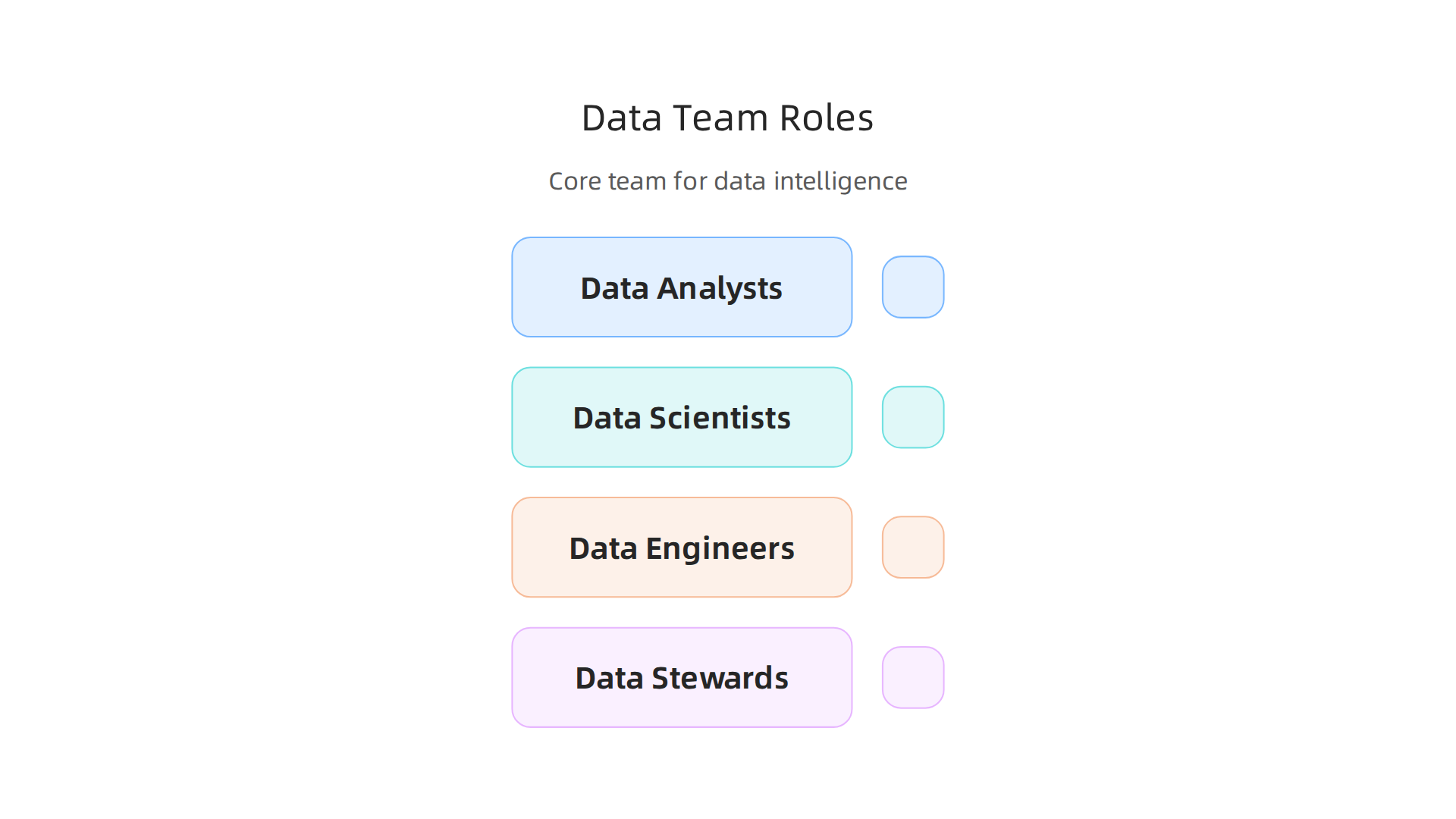
This often means having a mix of:
- Data Analysts: These people look at data to find answers to questions, like "Why did sales drop last month?"
- Data Scientists: They build smart models that can predict things or find deeper patterns, moving your company towards data science in new ways.
- Data Engineers: They build and maintain the pipes and systems that move and store your data, making sure it’s always ready to use.
- Data Stewards: These folks make sure the data is accurate, complete, and used correctly. They’re key for good Data Governance Best Practices for 2026.
It’s helpful to clearly say who is Responsible, Accountable, Consulted, and Informed (RACI) for different data tasks. This way, everyone knows their part.
Working Across Teams
Data is not just for the "data team." It touches almost every part of a business. Sales, marketing, product development, and customer service all need to work with data and the data team. This means:
- Sharing Information: Data teams should share their findings in ways that other teams can easily understand and use.
- Working Together on Projects: When a marketing team wants to launch a new campaign, they might work with data analysts to understand customer habits. This is a "cross-functional workflow."
- Clear Communication: Everyone should understand the data science meaning and what data can and cannot do.
Data Governance, Compliance, and Ethics
This is about setting the rules for your data. Good data management and governance are like the company’s constitution for data. They cover:
- Data Quality: Making sure your data is correct and reliable.
- Data Security: Protecting sensitive information from being lost or stolen.
- Data Privacy: Handling personal information carefully and respecting people’s privacy.
- Data Ownership: Knowing who is in charge of different sets of data.
In 2026, strong data governance is super important, especially with more companies using AI. It’s so vital that it’s becoming a top concern for company leaders Responsible AI and data governance: what you need to know. You also need to make sure your data practices follow laws and rules. This is called compliance. For example, many places have rules about how you can collect and use customer data.
Finally, there’s ethics. Using data ethically means doing what’s right, even if it’s not legally required. This includes making sure AI systems are fair and don’t harm people. Companies are setting up ethics boards and clear policies for how they use AI and data, especially to prevent things like bias Responsible AI 2026: Top Risks & Frameworks Revealed. Understanding the potential real world harms risks and dangers of AI is a key part of this. Good governance and ethical thinking help you build trust with your customers and stakeholders.
After setting up strong teams, clear processes, and good rules for data management and ethics, the next big step is to know if all your hard work is actually paying off. It’s not enough to just use data intelligence tools; you need to see if they are truly helping your business grow or save money. This is where measuring impact comes in.
Measuring Impact: KPIs, ROI, and Dashboards
Think of it like cooking a meal. You have the best chefs and recipes, but did the meal taste good? Was it worth the effort? For data intelligence, you need to measure if your data efforts are making a real difference.
What are Key Performance Indicators (KPIs)?
KPIs, or Key Performance Indicators, are like scorecards for your business. They are specific, measurable goals that show if you’re hitting your targets. When it comes to data intelligence, KPIs help you connect your data projects to actual business results.
For example, if your data team uses smart analysis to help the sales team, your KPIs might include:
- Increased Sales: Did sales go up because of the new data insights?
- Better Customer Happiness: Are customers happier and staying longer?
- Saved Money: Did you find ways to cut costs through data?
- Faster Decisions: Are teams making important choices more quickly thanks to data?
By picking the right KPIs, you can see how data intelligence is directly helping your company’s main goals.
Designing Dashboards for Insights
To easily keep an eye on your KPIs, you’ll want to use dashboards. A dashboard is like a control panel that shows all your important numbers in one easy-to-understand place.

It uses charts, graphs, and simple displays to show how things are going at a glance.
Good dashboards are:
- Clear: Anyone can understand them, not just data experts.
- Simple: They don’t try to show too much information at once.
- Focused: They only show the KPIs that really matter for a specific goal.
Building these dashboards often involves using special choosing industry analytics platforms. These tools help you pull data from many places and show it in a helpful way.
Showing Your Return on Investment (ROI)
ROI, or Return on Investment, is about seeing if the money you put into data intelligence is bringing back more money (or other good things) than you spent. It’s a way to prove the value of your data efforts.
In 2026, many companies are investing a lot in AI and data. But showing a clear ROI can be tricky. Some reports show that even though many companies have an AI plan, only a small number, like 8%, report having a clear return on their investment from AI efforts Global AI Pulse Q1 2026. Another study found that only about 25% of companies get a lot of value from their AI spending Global AI Adoption Statistics 2026.
To measure ROI for your data intelligence projects, you can:
- Start Small: Run pilot projects to test ideas and measure their specific impact.
- Track Everything: Keep careful records of costs (people, tools) and benefits (money saved, new income).
- Compare: Look at what happened before and after using data intelligence to see the changes.
By carefully tracking KPIs and working to show a clear ROI, you can prove the real worth of your data intelligence efforts and make sure they keep getting the support they need.
To keep up with the latest in AI and how it impacts businesses, from strategy to measurement, there’s a valuable resource for you. Get clear daily AI updates from The AI Newsletter Worth Reading.
Now that you know how to measure if your data intelligence efforts are working, the next step is to actually put those good ideas into action. It’s like finding a great new recipe in a cookbook; you need to cook it in your kitchen for others to enjoy. For businesses, this means taking smart discoveries from research or small tests and turning them into real tools that help customers or improve how the company runs every day. This is often called "translating research to production."
What Does it Mean to Go from Research to Production?
Think of it this way: a scientist might discover a new way to understand customer habits using a small set of data. That’s the "research" part. But for this discovery to actually help the business, it needs to be built into a system that works all the time, for all customers, without issues. This process of building and setting up these systems is key for any company using data intelligence.
Many companies in 2026 are using powerful tools for this, like different data analytics platforms and even specific data intelligence software platforms that help them manage their insights.
Common Problems When Moving Ideas to Real Use
It’s not always easy to take a great idea and make it work perfectly in the real world. Here are some common problems:
- Things don’t work the same: A model might work great in a test environment but break when used with real-world data. This can happen because the test setup was different from the live setup.
- Hard to repeat results: If you can’t get the same result every time, it’s hard to trust the system. This is called reproducibility, and it’s super important for any data project. For machine learning, it means making sure your model can be built again and again with the same results Why Reproducibility is Key for MLOps.
- No clear steps: Sometimes, teams don’t have a clear plan for how to move a new data tool from an idea to something that everyone can use.
MLOps: Your Playbook for Success
To solve these problems, many businesses use something called MLOps. MLOps stands for Machine Learning Operations. It’s like a set of rules and tools that help teams build, use, and manage machine learning models reliably. MLOps helps bridge the gap between thinking up smart data ideas and making them work in real life What is MLOps? A Guide to Productizing AI.
Here’s how MLOps helps turn research into useful tools:
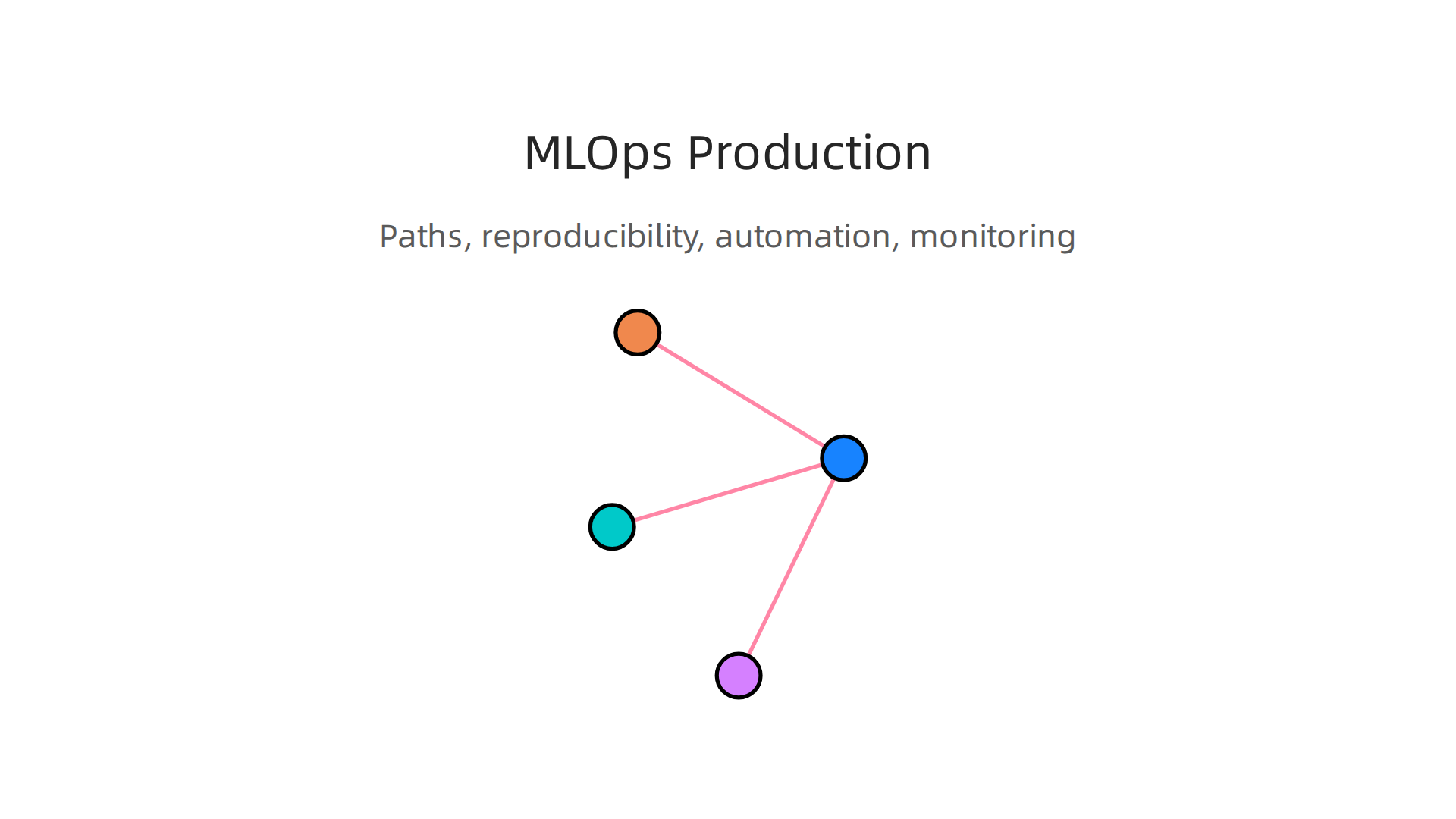
- Clear Paths: MLOps gives you a step-by-step way to move from testing a model to putting it out for everyone to use. This includes making sure your data is ready, your code is clean, and your model is checked for quality. To see how MLOps fits into the bigger picture, you can learn about the AI Development Roadmap for 2026: Research, MLOps, and Governance.
- Reproducibility: MLOps makes sure that if someone runs your data project again, they will get the same results. This often involves tracking every piece of code, data, and even the settings used to train a model. This way, you can always go back and see exactly how a result was achieved, which is key for trust and fixing problems. You can learn more about Reproducibility and Versioning in ML Systems.
- Automation: It helps automate many parts of the process. This means less manual work and fewer mistakes. For example, it can automatically check new data, retrain models when needed, and put new versions of models into use. This also helps to optimize your machine learning workflow to cut bottlenecks and speed up model delivery.
- Monitoring: Once a data tool is in use, MLOps also helps you watch it closely. This ensures it’s still working well and giving accurate results over time. If something goes wrong, you’ll know quickly.
By following MLOps best practices, businesses can make sure their valuable data intelligence discoveries don’t just stay in a lab. Instead, they become powerful tools that help the company grow and serve its customers better every day.
Summary
This article explains why data intelligence is essential for modern businesses and ML teams, showing how raw data becomes actionable insights through collection, enrichment, signal extraction, and decisioning. It defines the core parts of data intelligence—raw data, curated metadata, and derived signals—and explains why lineage, quality, and cataloging make signals trustworthy. You’ll learn how data intelligence drives better products, smarter growth, and more effective AI by linking insights to decisions. The guide covers the tooling landscape—data ingestion, catalogs, feature stores, analytics platforms, and observability—and how to choose the right stack for your needs. It also outlines organizational practices (team roles, cross-functional workflows, governance and ethics) and practical ways to measure impact with KPIs, dashboards, and ROI. Finally, it describes how MLOps and reproducibility help move research into production so data intelligence delivers real business value.