
AI in Government Policy Procurement and Building Public Trust

Why AI in Government Matters Today
In 2026, you might be hearing a lot about artificial intelligence (AI) and how it’s changing our world. One big area where AI is making a huge splash is in government. When we talk about AI government, we mean how governments everywhere are using smart computer programs to do their jobs better, faster, and sometimes even more fairly.
You might wonder, "will AI take over the world?" The truth is, AI is a tool, and governments are learning how to use it safely and well. From making public services run smoother to setting new rules and even planning for the future of a country, AI is a key part of how governments operate today.

For instance, the White House released a National Policy Framework for Artificial Intelligence in early 2026 to help guide how AI is used and regulated across the country. This shows just how important the topic is.
For people who work with machine learning (ML) every day, like those in a team ai department, understanding AI in government is super important. It affects everything from what kinds of AI tools they can buy (procurement) to making sure their AI systems follow all the rules (compliance). They also need to think about how to fix problems before they happen (risk mitigation) and how their work helps everyone in the public.
Governments use AI in many ways.
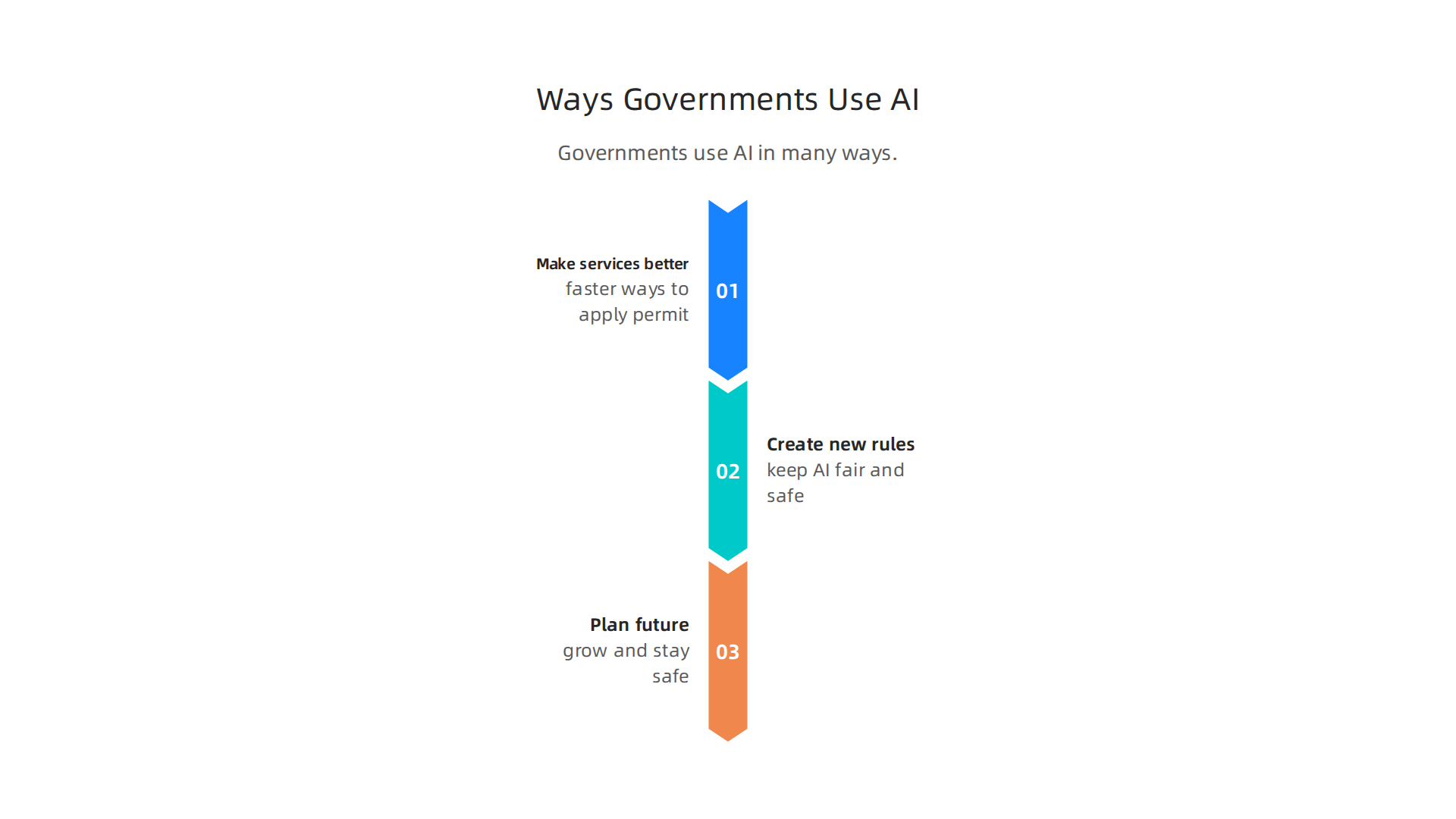
They might use it to:
- Make services better: Think about faster ways to apply for a permit or get help from a government office.
- Create new rules: Governments are making rules to keep AI fair and safe for everyone. This includes thinking about things like the dangers of AI bias.
- Plan for the future: A national AI strategy helps a country use AI to grow and stay safe. As one guide notes, part of a strong Government AI Transformation: The 2026 Playbook includes setting up national AI strategies with clear goals.
So, the impact of AI in government is huge. It shapes how laws are made, how services are given, and even how countries interact on the world stage. Because of this, staying up to date on government AI decisions is more important than ever for anyone involved in machine learning.
To keep learning about the fast-moving world of AI and its impact, consider signing up for insights delivered right to your inbox. You can get daily updates and clear explanations with The AI Newsletter Worth Reading.
When we look deeper into how governments are handling AI, we see that many countries are creating their own plans, often called national AI strategies. These plans help guide how a country will use and manage artificial intelligence. In 2026, a few big ideas show up again and again in these strategies.
Common themes you’ll find include:
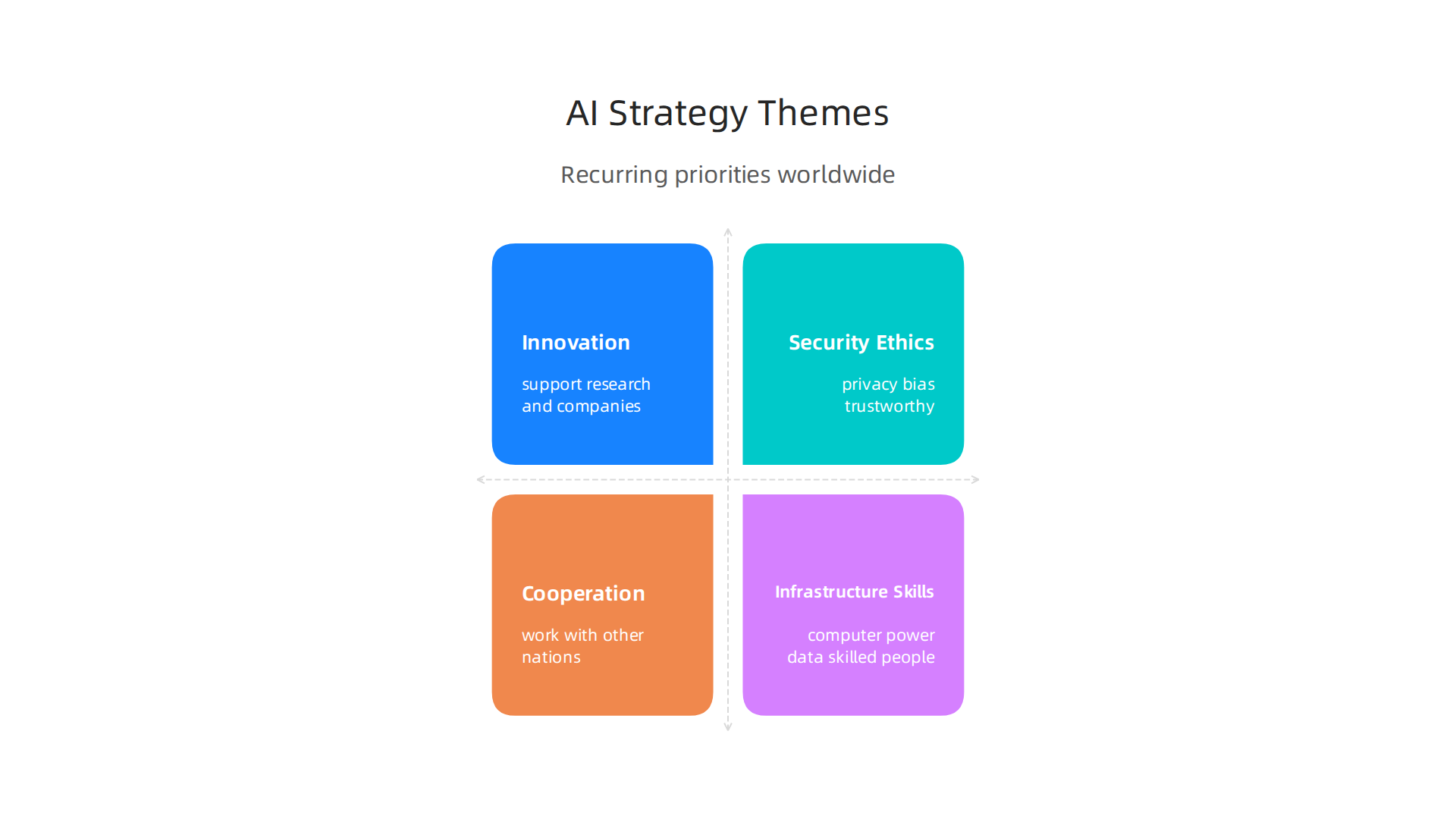
- Encouraging new ideas (innovation): Governments want to help create new AI tools and make sure their country is a leader in AI technology. This means supporting research and giving companies the chance to build new things.
- Keeping things safe and fair (security and ethics): Governments are very focused on making sure AI is used in ways that are safe for everyone. This includes thinking about privacy, stopping AI from being unfair (called bias), and making sure AI systems can be trusted. For example, some strategies focus on making sure AI systems are unbiased before they are even used by government agencies ACQUISITION LETTER.
- Working together (cooperation): Many countries realize that AI is a global thing, so they are looking for ways to work with other nations on AI rules and development.
- Building the right stuff (infrastructure and skills): This means having the computer power, data, and skilled people needed to create and use AI well. The US Federal AI Strategy 2026: From Executive Orders to Congress outlines some of these key pillars.
What This Means for Your Team
For groups like a team ai that build or work with machine learning, these national strategies have big impacts. It affects how you buy AI tools and how you make sure your work follows the rules.
- Procurement (buying AI): Governments have special rules for buying things, and AI is no different. They want to make sure the AI tools they buy are safe, effective, and fair. This means
team aidepartments need to understand new guidelines for what kind of data is used, how models are tested, and how secure they are. For example, the General Services Administration (GSA) has set out new draft rules for buying AI systems that include showing how you’ll use them and what rights the government has over them GSA AI Procurement Rules Would Introduce New. - Compliance (following rules): When you use AI in government, you must follow all the rules and laws that are made to protect people. This means thinking about how your AI response affects different groups of people, ensuring privacy, and having ways to fix problems if they happen. Knowing these rules helps prevent big issues down the road. Federal agencies have a process that includes aligning with agency AI strategy and documenting the system, as detailed in Government AI 2026: Procurement, Compliance, and Deployment.
Understanding these government AI policies is super important for anyone in the field. It helps teams choose the right tools, build strong systems, and make sure their work helps everyone in a safe and fair way.

To learn more about how AI works in general, check out an AI overview 2026.
Regulatory Frameworks: What Rules ML Teams Must Track
Understanding government AI policies is very important for anyone working with AI. It helps teams choose the right tools and build strong systems. Beyond just general strategies, the actual rules for AI come in different forms. For any team ai working on models that might touch public services or handle sensitive data, knowing these types of rules is key.
Here are the main kinds of rules you’ll find for ai government:
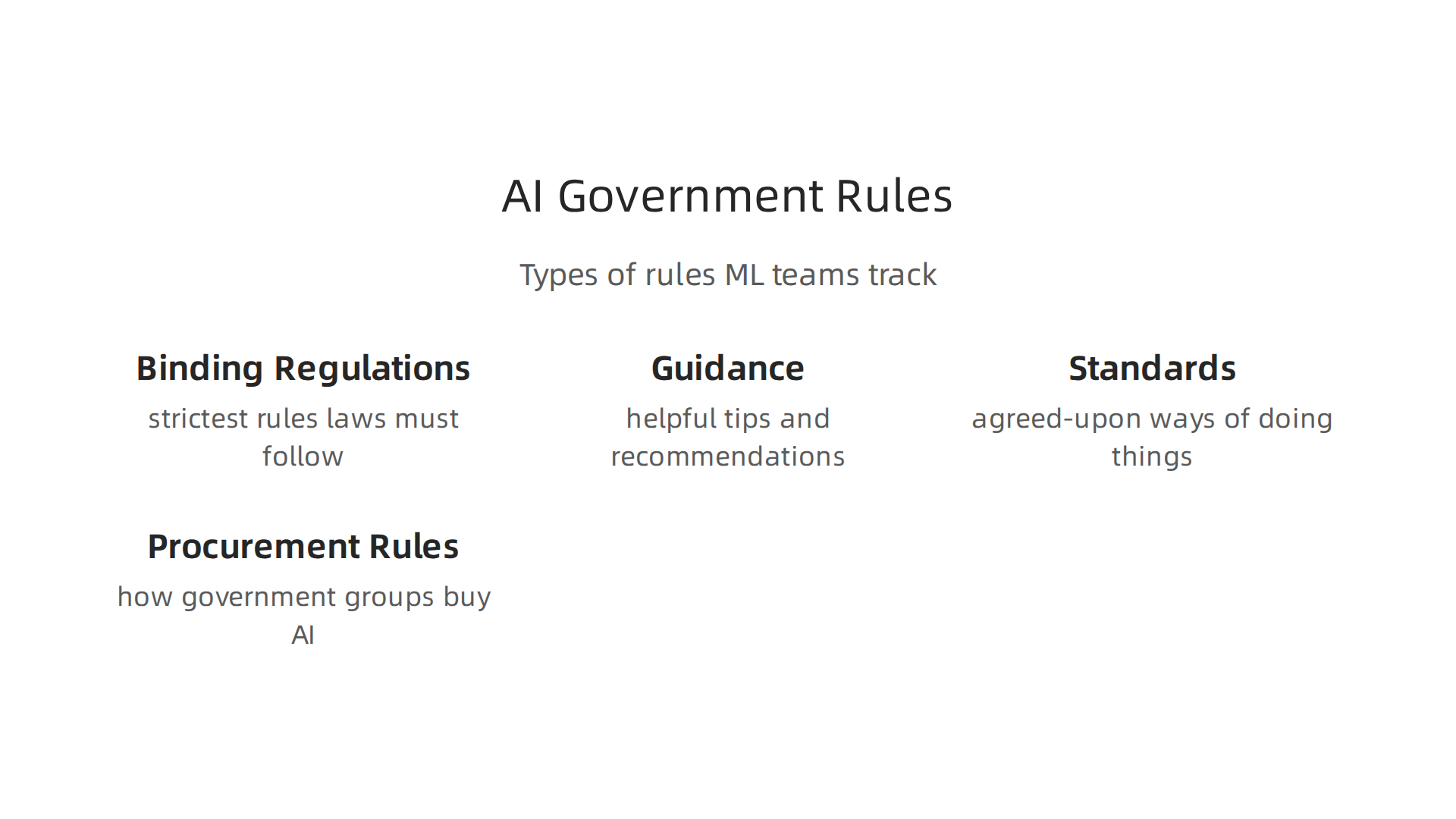
- Binding Regulations and Laws: These are the strictest rules. They are like actual laws that you must follow. If you do not follow them, there can be penalties. For example, laws about how to protect people’s private data often apply to AI systems. In 2026, many countries are working on new laws specifically for AI. The White House, for instance, has released its National Policy Framework for Artificial Intelligence, suggesting legislative steps to guide AI use White House Releases National AI Policy Framework.
- Guidance: These are helpful tips and recommendations from the government. They tell you how to do things the right way, even if they aren’t strict laws. They help teams understand how to use AI safely and fairly.
- Standards: These are agreed-upon ways of doing things that help make sure AI systems work well and are trustworthy. Think of them like best practices that many people agree on. Following these standards helps your
team aibuild better, more reliable AI. - Procurement Rules: These are special rules for how government groups buy AI tools and services. They make sure that the AI products bought meet certain safety and ethical standards. This means vendors need to be very clear about how their AI works.
For teams building AI models, especially those for public services, keeping up with these rules is a must. Here are some practical steps your team ai should take:
- Keep an Inventory of AI Systems: Know what AI tools you are using, where they came from, and what they do. This includes tools made by your team and ones you buy from others.
- Classify Risks: Figure out how much risk each AI system has. Systems that make important decisions about people, like in healthcare or law, will have higher risks and need more careful checks. You need to assign accountability for AI to specific roles, as outlined in guides for AI governance framework.
- Ensure Accountability: Make sure there are clear ways to oversee AI systems. This means having human experts review AI decisions, keeping detailed records of how AI systems work (audit logs), and checking often for any unfairness or bias in the
ai response. - Document Everything: Write down how your AI models are built, the data they use, and how you test them. This helps everyone understand how the AI works and shows you are following the rules.
Understanding these different regulatory parts helps ensure that AI is developed and used responsibly. If you’re looking to dive deeper into how to build and scale your machine learning systems, you’ll find helpful resources on how to use AI in 2026.
Stay informed about the fast-changing world of AI and its rules.
The AI Newsletter Worth Reading
When government groups decide to buy new AI tools, they follow special steps. This is called procurement. For any team ai that wants to work with the government, understanding these steps is super important. It is not just about having a great AI tool. It is also about showing that your tool is safe, fair, and trustworthy.
Here is how ai government agencies typically get new AI systems and what teams should be ready for:
Typical Pathways for Government AI
Government agencies often look for AI solutions in a few ways:
- Identifying a Need: First, they figure out what problem AI can help solve. They also make sure the AI project fits with their overall AI strategy and rules, as laid out by bodies like the Office of Management and Budget (OMB) in the US Government AI 2026: Procurement, Compliance, and Deployment.
- Looking for Vendors: They then seek companies or groups that can provide the right AI solution. This often involves putting out a request for proposals (RFP), where vendors explain how their AI can meet the government’s needs.
- Reviewing Proposals: Government evaluators carefully look at each proposal. They have specific things they check for. For example, the General Services Administration (GSA) in 2026 has new draft rules that ask for clear details on how AI systems are built and used by federal contractors GSA AI Procurement Rules Would Introduce New Disclosure and Use Rights Requirements.
What ML Vendors Need to Prepare
If your team ai wants to sell AI to the government, you need to be very clear and detailed. Here are some key things to prepare:
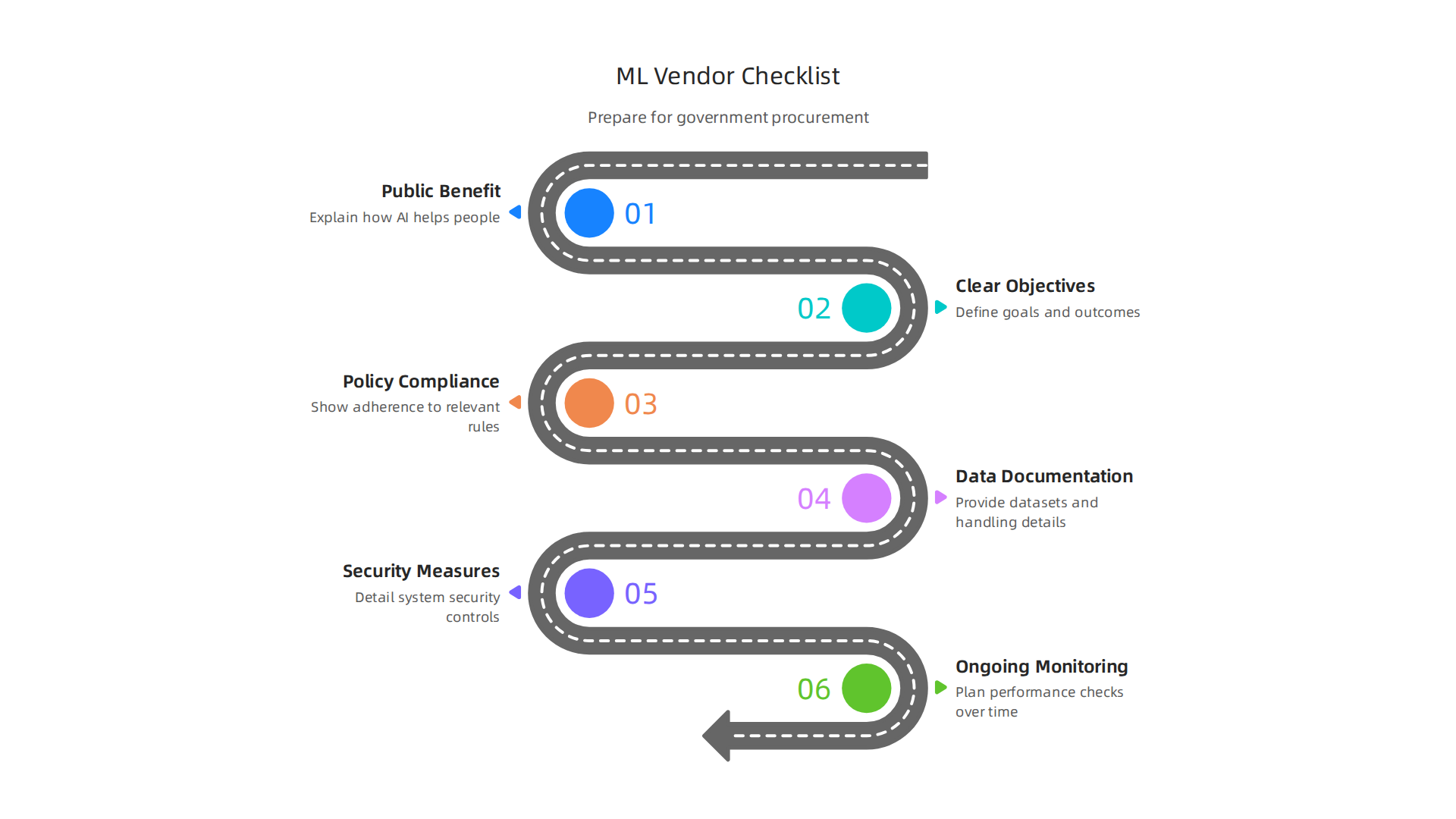
- Show Public Benefit: Governments want AI that helps people. You should explain how your AI system will make things better for the public, not just how cool the technology is
Guidelines for AI procurement – GOV.UK.
- Clear Objectives: Define exactly what your AI aims to do. Focus on the results it will achieve.
- Proof of Policy Compliance: You must show that your AI follows all the relevant privacy, security, and ethical rules. This means explaining how you handle data and how your AI makes decisions fairly AI Policy overhauled with new Impact assessment tool and Procurement Guidance.
- Documentation on Data and Models: Governments want to know everything about your AI. This includes the data you used to train it, how your models work, and what steps you took to check for and fix any unfairness or bias. They even look at how your
ai responseis created and if it is unbiased ACQUISITION LETTER. - Security Measures: You need to show strong security for your AI systems to protect sensitive government information.
- Ongoing Monitoring: Governments expect AI systems to be monitored even after they are put to use. This means having plans for checking performance, detecting model drift, and fixing problems over time.
Common Evaluation Criteria and Contract Items
When government buyers look at AI proposals, they often check for these points:
- Impact and Risk Category: They categorize AI systems by how much impact they have. Systems with high impact on people’s lives will need much more checking.
- Civil Rights and Privacy: Agencies will check if your AI respects people’s rights and keeps their private information safe.
- Bias Assessment and Mitigation: It is crucial to show that you have looked for bias in your AI and have ways to reduce it. This includes reviewing data, models, and how the AI makes decisions. You need to ensure fair results.
- Transparency and Explainability: Can you explain how your AI reached a decision? Governments often prefer AI systems that are not a "black box" but can be understood by humans.
- Human Oversight: Even with AI, human review is still very important. Government guidelines often ask for human experts to check AI-generated findings before they become final decisions AI in Government Source Selection: Accelerating.
- Testing and Validation: You need to show that your AI has been thoroughly tested and that it works as it should. This means checking its performance and accuracy often.
- Contract Terms: Be ready for specific contract rules that cover things like data ownership, how the AI can be used, and what happens if something goes wrong.
Working with ai government means being prepared and very open about your AI. It is about building trust and showing that your AI is a responsible and helpful tool for public service. Getting your proposals right is key to success, as explored in articles like AI Evaluator Readiness: How to Write Proposals That Win.
For any team ai working with the ai government, it is vital to make sure their AI systems are safe and keep information private.

This is not just a nice-to-have, it is a must. Governments deal with a lot of important and private data about people. So, how your AI handles this data is super important.
Privacy First: Building AI with Care
When we talk about privacy, it means thinking about it from the very start, not just adding it on later. This is called "privacy-by-design." It means that when your team ai is planning and building an AI system, you should always be asking: How can we protect people’s private information here?
One big part of this is called "data minimization." This simply means only collecting the data you truly need for your AI to work. If you do not need someone’s home address to help them find a government service, then do not collect it. Less data means less risk.
Many government bodies require special checks called privacy impact assessments (PIAs) for AI systems that use personal information. These checks help find out what data the system uses and if it has a good reason to use it Privacy as the Foundation of Responsible AI Governance. For example, the Ontario government in 2026 expects AI systems to be privacy-protective and follow human rights rules Ontario AI Governance Principles: Public Sector.
Keeping Government AI Secure
Security is another huge piece of the puzzle. Public sector AI tools face risks, especially when they handle sensitive or private data. So, strong security is not just for computers in general, but for AI systems themselves Q. Public Sector: Artificial Intelligence.
Your team ai needs to plan for possible dangers. This is called "threat modeling." It means looking for weak spots in your AI system that someone might try to attack. After your AI is working, you need to keep watching it all the time. This is "continuous monitoring" and it helps catch new threats or problems quickly AI Security And Governance Guide 2026.
Smart Ways to Manage Data for AI
For ai government projects, good data management, or "data governance," is key. This involves several steps for your team ai:
- Risk Checks: You should check for risks at every step of your AI project. This means from when you first think of the idea, to when you collect data, build the AI model, test it, and even after it is running AI Safety Report 2026: Public Sector Governance and Cybersecurity.
- Preparing Data: The government also gives tips on how to get their datasets ready for AI. This helps make sure the data is good enough for training AI systems Guidelines and best practices for making government datasets ready for AI.
- Continuous Learning: You need to have plans for watching your AI over time and making changes as needed. This helps your AI stay good at its job and adapt to new situations NIH Collaborative AI Assurance Research Laboratory.
Making sure your AI systems are private and secure builds trust with the public and the government. It shows that your team ai is responsible and cares about using AI for good. To dive deeper into how to handle data effectively for machine learning, explore ways to optimize your machine learning workflow to cut bottlenecks and speed up model delivery.
To stay on top of the latest advancements and best practices in AI, consider subscribing to The AI Newsletter Worth Reading.
Ethics, Accountability, and Public Trust: Designing for Oversight
When an ai government uses AI systems, people need to trust them. This trust comes from knowing that the AI is used fairly, that humans are still in charge, and that someone will take responsibility if things go wrong. This is about ethics, making sure the AI acts in a good way, and accountability, which means being responsible for what happens.
Being Open: Transparency
Transparency means being open about how AI works. It is like showing your work in school. For ai government systems, this means letting people understand how decisions are made. A team ai should keep a record of all AI systems being used, what they are for, where their data comes from, and who they affect Responsible AI governance in 2026: Frameworks and failures.
Good documentation is a big part of this. It includes writing down how the AI model was built, where its training data came from, and what it is supposed to do. This helps everyone, even outside experts, see if the AI is fair and working right [The Ultimate AI Compliance Checklist for 2026]. When we are open about AI, it helps stop worries like "will ai take over the world" because people can see it is being managed.
Humans Still in Charge: Oversight
Even with smart AI, humans must stay in control. This is called human oversight. It means having clear rules for when a person should step in and check the AI’s work or even stop it. For example, if an AI system helps decide who gets a certain public service, a human should always review the final decision. This helps make sure the AI does not make unfair choices or mistakes. You need to have clear ways for people to watch the AI and step in if needed [AI Agent Governance and Compliance in 2026]. This helps make sure the ai response is always helpful and fair to people.
Taking Responsibility: Accountability
Accountability means someone is responsible for the AI’s actions. If an AI system makes a mistake, who is to blame? Is it the team ai that built it, the government department that uses it, or the leader who approved it? It is important for government bodies to clearly state who owns the risks and who is responsible for fixing problems. The UK government, for example, talks about having clear ownership of risks and responsibility for following rules [Artificial Intelligence Playbook for the UK Government].
To make sure this happens, teams should keep good records of what the AI does, like a diary. These records should be hard to change and show what happened, including any problems [Does Artificial Intelligence Escape Accountability?]. This way, if there is ever a question, you can look back and understand why the AI did what it did. This builds trust because people know that ai government is not just letting machines run wild. For more on the downsides, learn about the dangers of AI bias, deepfakes, job loss, and other critical risks in 2026.
Building Trust
By being transparent, keeping humans in charge, and having clear accountability, ai government can build public trust. These steps show that the government is serious about using AI in a way that helps everyone and respects people’s rights. It’s about designing AI systems that are both smart and good. You can also explore practical steps for your team ai by learning how to use AI in 2026: A Guide for Building and Scaling Machine Learning Systems.
After setting up rules for fairness and responsibility, an ai government needs to put these rules into daily practice. This means having clear steps for how AI systems are built, checked, and managed to make sure they are safe and follow all rules. It’s about making sure that the promise of good AI becomes real for everyone.
Safe Deployment and Risk Mitigation: Operationalizing Compliance
Making Rules Work: Engineering Workflows
For ai government to truly use AI well, policies need to become practical tasks for every team ai. This involves several key steps throughout an AI system’s life:
- Testing AI Systems: Before any AI tool is used widely, it must be tested very carefully. Think of it like a new car needing crash tests before it can be sold. AI systems need tests to make sure they work as expected and do not have hidden problems. This testing should cover all stages of the AI’s life, from planning to deployment AI Safety Report 2026: Public Sector Governance and Cybersecurity.
- Watching AI Closely: Monitoring: Once an AI system is working, it needs constant watching. This is called continuous monitoring. It’s like having a lookout always checking for trouble. This helps spot if the AI starts acting strangely, making wrong decisions, or if its performance changes over time AI Security And Governance Guide 2026: Protect Models, …. Regular checks ensure the
ai responseremains fair and helpful. - What to Do When Things Go Wrong: Incident Response: Even with careful planning, mistakes can happen. An
ai governmentneeds a clear plan for what to do if an AI system causes a problem. This plan is called incident response. It tells everyone what steps to take to fix the issue quickly and learn from it so it does not happen again. This includes collecting user feedback during the initial rollout and addressing issues before full deployment Third-Party AI Risk and Supply Chain Transparency Guide.
Fixing Common AI Problems: Risk Mitigation
AI systems can have specific problems that need fixing. Here are some common risks for ai government and how to deal with them:
- Bias: This happens when an AI system makes unfair choices because of biased data it learned from. For example, if an AI is trained mostly on data from one group of people, it might not work well or be fair to other groups. To fix this,
team aimembers should look for bias early on, collect diverse data, and use methods to correct biased outcomes FUTURE-AI: international consensus guideline for trustworthy and …. They can also test models with different groups to ensure fairness AI bias in law enforcement – A practical guide – Europol. Learning about data annotation quality the cornerstone of AI success and a legitimate tech career can also help prevent bias from the start. - Robustness: This is about how well an AI system handles new, unexpected information or small changes without breaking down or making big errors. A robust AI keeps working correctly even when things are not exactly as it expects. This is important because in the real world, data can be messy and unpredictable.
- Data Drift: Over time, the world changes, and so does the data an AI system sees. This change is called data drift. For example, if an AI helps predict traffic, and suddenly many people start working from home, its old predictions might become wrong.
AI governmentsystems need to be able to detect this drift and be updated often so they remain accurate and helpful.
By carefully planning for these steps and problems, ai government can deploy AI systems safely and wisely. This helps ensure that AI is a tool for good and addresses worries like "will ai take over the world" by showing clear human control and careful management.
Want to stay informed on the latest AI advancements and how they impact public sector deployment? Get clear daily AI updates from The Deep View Newsletter.
After making sure AI systems work well and are safe inside one country, the bigger picture involves working with other countries. Artificial intelligence doesn’t stop at borders. For ai government to truly guide AI for everyone’s good, nations must work together.

International Collaboration, Standards, and Next Steps for Teams
Just like managing AI within a country, managing it globally needs clear rules and working together. Many countries are setting up their own plans for AI. For instance, in March 2026, the White House shared its National AI Policy Framework. This plan looks at how the U.S. federal government will handle AI, focusing on protecting children and communities, and giving guidance for new laws White House Releases a National Policy Framework for Artificial. Other countries, like Japan and the UK, also have their own guidelines for how their governments should buy and use AI systems.
Why Harmonized Standards Matter
When each country has different rules, it can make things complicated. Imagine a team ai that works on an AI system meant to help people in many different parts of the world. If every country has completely different rules for how that AI must work, it’s very hard for the team to make one system that fits all.
This is why working towards "harmonized" or similar standards across countries is so important. It helps everyone understand what is expected for AI safety and fairness. Having shared rules helps make sure that the ai response is trustworthy, no matter where it is used. This kind of global teamwork is a strong way to address worries like "will ai take over the world" by showing that humans are actively working together to guide AI’s future.
Opportunities for ML Teams to Engage
Team AI professionals have a big role to play in this global effort. You don’t have to wait for governments to tell you what to do. Here are ways you can help:
- Influence Standards: Many government groups and international bodies ask for input from experts when they are creating new AI rules. Your team’s practical experience can help shape these standards to be more realistic and effective.
- Public-Sector Pilots: Governments often run small tests or "pilot programs" for new AI ideas. These are chances for
team aito show how AI can solve real problems safely and fairly, while also giving feedback on what works and what doesn’t. You can learn more about how to use AI in 2026 for building and scaling machine learning systems in these scenarios. - Stay Informed: Keep an eye on new AI policies and frameworks from different countries. Understanding these can help your team build AI solutions that are ready for the global stage. For example, keeping up with procurement guidelines can be very helpful for teams looking to work with governments Government AI 2026: Procurement, Compliance, and Deployment.
By getting involved in these ways, team ai can help ensure that as AI grows, it does so in a way that benefits everyone, everywhere. This builds trust and confidence in the future of ai government and its ability to manage these powerful tools.
Summary
This article explains why AI is becoming central to modern government work and what that means for machine learning teams. It covers how national AI strategies set priorities—innovation, safety, cooperation, and skills—and how those strategies affect procurement, compliance, and day-to-day operations. Readers learn the different kinds of rules (laws, guidance, standards, procurement), practical steps for vendor readiness, and how to design systems with privacy, security, and human oversight in mind. The piece also explains operational requirements like inventorying AI systems, risk classification, testing, continuous monitoring, and incident response, plus how to address bias, robustness, and data drift. Finally, it highlights the need for international harmonization and ways ML teams can influence policy, win government work, and deploy AI responsibly.