
Lightchain AI Decoding Decentralized Machine Learning for Professionals

Why Lightchain AI matters now — a concise primer for ML professionals
The world of artificial intelligence (AI) is always changing very fast. Every day brings new breakthroughs, like a big openai announcement today. In 2026, many new AI ideas and tools are popping up, from wave ai to spark ai. Among these exciting new projects, Lightchain AI is getting a lot of attention.
Lightchain AI is a special kind of blockchain. Think of it as a new internet where AI tasks can run directly on the network. It is known as a Layer-1 blockchain that is made especially for AI work. This means it can handle things like training AI models and making smart predictions in a new, shared way. It uses a special method called "Proof-of-Intelligence" (PoI) to make sure everything works correctly and rewards people for doing useful AI computations. It also has something called an Artificial Intelligence Virtual Machine (AIVM) which helps run these AI jobs right on the blockchain Lightchain AI Price Prediction: Can LCAI Break Out as AI.
This article is a deep dive into Lightchain AI. We will explore why it is so important for many people working in tech today. If you are an ML engineer, you will want to understand how this new technology might change the way you build and use AI models.

If you lead product teams, you will see how Lightchain AI could help create new kinds of services and tools. And if you invest in new technology, you will want to know about its potential for the future.
We will look at some big questions about Lightchain AI:
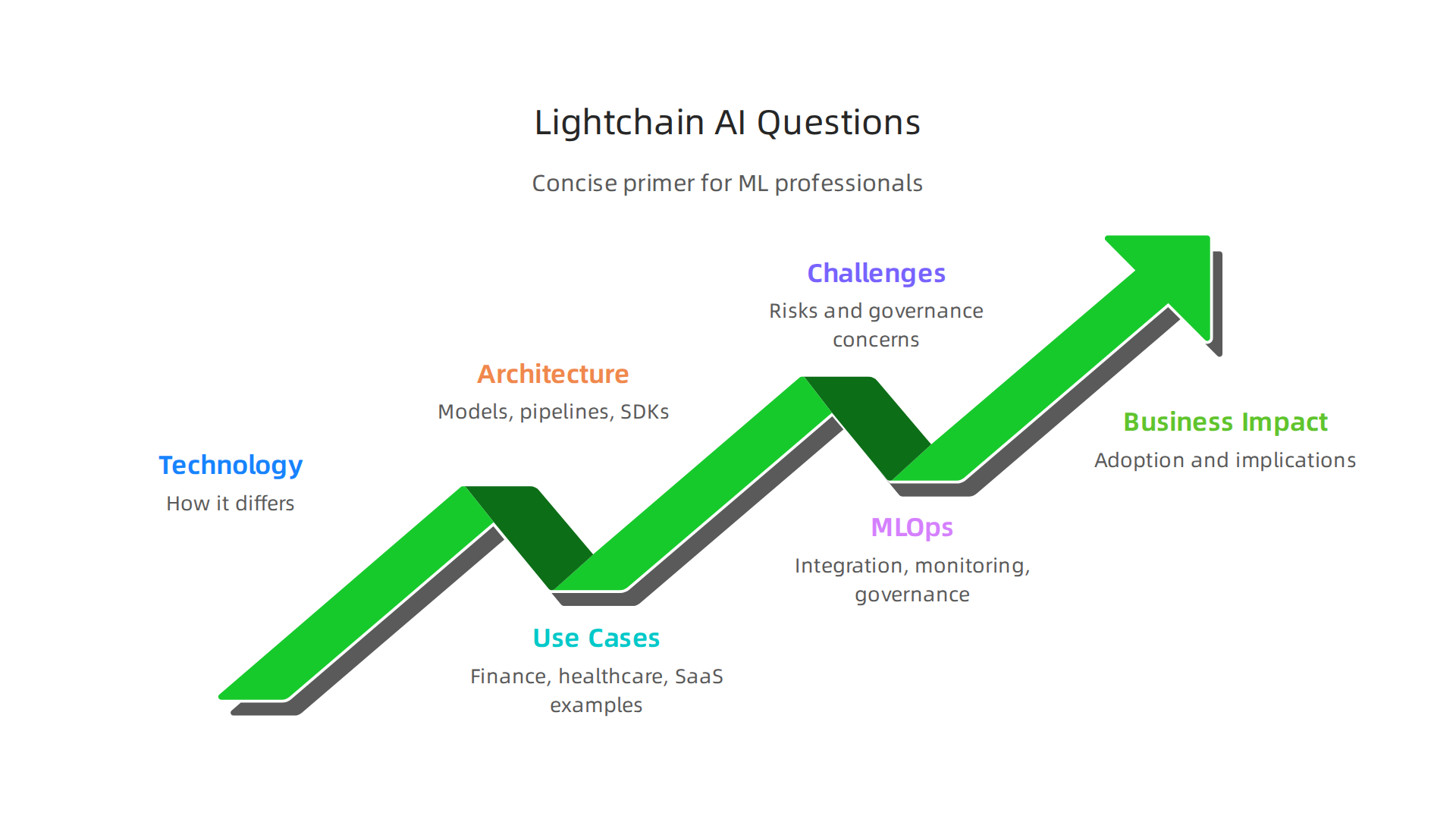
- What makes its technology special? We will explore how Lightchain AI is different from other AI or blockchain projects you might know.
- How can it be used in the real world? We will check out actual examples of how Lightchain AI can solve important problems.
- What are the challenges or risks? Like any new technology, there are things to think about when using Lightchain AI or putting it into practice.
- How might it change businesses? We will talk about what this new way of doing AI could mean for companies and the wider market.
This guide will help you understand this important new player in the AI world. To stay on top of all the fast-moving changes in AI, make sure you do not miss any important updates. The AI Newsletter Worth Reading.

We will explore how Lightchain AI fits into the bigger picture of a complete how to use AI in 2026.
Lightchain AI did not just appear overnight. Its journey started with a big idea: to fix some of the problems found in today’s world of artificial intelligence. You see, as AI grew bigger and became more complex, people noticed some issues. These included worries about how secure AI systems were, how clear or "transparent" their actions were, and how private our data stayed when used by AI.
1) Company overview: history, funding, and strategic focus
The people behind Lightchain AI wanted to create a new way for AI to work. They aimed to build a system where AI tasks could run in a more open, fair, and secure way.

This is called a decentralized approach, where no single company or group has all the power. They wanted to make sure AI calculations were trustworthy and that people who helped run these calculations were rewarded fairly. This core idea is what led to the creation of Lightchain AI as a Layer-1 blockchain, made especially for AI, by connecting blockchain’s strengths with AI’s potential lightchain-whitepaper.pdf.
At the heart of Lightchain AI’s plan is its special technology. We already talked about the "Proof-of-Intelligence" (PoI) and the "Artificial Intelligence Virtual Machine" (AIVM) in the last section. These parts work together to let AI models train and make predictions right on the blockchain. This helps make AI more honest and secure. They also want to bring new ideas to life, like decentralized apps that use AI without needing a central boss. This kind of thinking helps Lightchain AI stand out among other projects, including even big ones that come from an openai announcement today.
When it comes to how Lightchain AI is supported, it has received money from investors. For example, in 2025, the project successfully raised over $21 million to help fund its next steps and development plans With Over $21M Raised, Next Phase of Lightchain AI Project Underway. This money is very important for building out the technology and getting more people to use it. The funding shows that investors believe in Lightchain AI’s vision and its goal to change how AI works on a global scale.
Lightchain AI’s main focus is to be a leading player in the world of decentralized AI. In 2026, many companies are trying to find their place in the fast-moving AI market, from projects like wave ai to spark ai. Lightchain AI wants to offer a solid platform for anyone building AI tools, ensuring their creations are secure and efficient. This focus on building a strong base for AI makes it an interesting project in the current market, joining the ranks of The Open Future AI Companies Leading The Industry In 2026. They believe that by decentralizing AI, they can unlock new ways for technology to help us all.
Lightchain AI wants to be a big part of how AI works in the future. To do this, it has special tools and a clever way of building things. In the last section, we talked about its core ideas like Proof-of-Intelligence (PoI) and the Artificial Intelligence Virtual Machine (AIVM). Now, let’s look closer at how Lightchain AI actually puts these ideas into practice with its products and how it’s all put together.
2) Product & architecture deep dive: models, pipelines, and SDKs
Lightchain AI isn’t just a big idea; it’s a platform built with real parts that make AI work in a new way. Think of these as the engine and controls for a special kind of AI car.
Core Product Parts: How Lightchain AI Works

- AI Models: Lightchain AI is made to handle different types of AI models. These are like the "brains" of AI programs that learn and make decisions. With Lightchain AI, you can train and run these AI models right on its special blockchain Lightchain AI in 2026 : LCAI Token, AIVM und Roadmap. This means the models work in a very open and secure way, rather than being hidden inside one company’s servers.
- Training Pipelines: Training an AI model means teaching it using lots of data. Lightchain AI helps build training pipelines, which are like assembly lines for teaching AI. These pipelines are decentralized. This means many computers work together, and those helping are rewarded through the PoI system we mentioned before. This helps make sure the training is fair and reliable.
- Inference Stack: "Inference" is when an AI model takes what it learned and uses it to make predictions or decisions. Lightchain AI’s "inference stack" is how it does this. It lets AI models make predictions in a distributed way. This means the work is spread out, making it fast and secure. It’s a different way of doing things compared to how
openai announcement todaymight do it with their big central systems. - Developer Tools (APIs/SDKs): To make it easy for people to build on Lightchain AI, they offer special tools. These include APIs (Application Programming Interfaces) and SDKs (Software Development Kits). These tools are like instruction manuals and ready-made parts that developers can use to connect their AI projects to the Lightchain AI blockchain. You can find these tools and more help on their Roadmap for Lightchain Protocol AI portal.

Using these tools helps you understand how to use AI in 2026 in a decentralized way.
How Lightchain AI is Built: Choices and Strengths
When building any big computer system, there are always choices to make. Lightchain AI has made specific choices to stand out.
- On-Prem vs. Cloud: Many companies run AI either on their own computers (on-prem) or using big online services (cloud). Lightchain AI is different because it uses a decentralized network. This means it doesn’t rely on just one place or one big cloud company. This helps keep things fair and spread out, unlike more centralized options such as
wave aiorspark ai. - Speed and Growth (Latency/Scalability): Lightchain AI is designed to be quick and handle a lot of tasks at once. This is called low latency and high scalability. Because it uses a network of many computers, it can process many AI jobs efficiently. This setup is key to helping you optimize your machine learning workflow and get results faster.
- Data Rules and Security (Data Governance and Security Posture): One of the biggest worries with AI is how data is handled and kept safe. Lightchain AI uses blockchain technology to make data very secure and keep it private. Its decentralized approach means that information is less likely to be controlled or misused by a single party. This kind of setup ensures that all AI tasks are transparent and safe, giving users peace of mind Is this the AI Crypto that will reshape the future forever ? Full Breakdown 2026 Lightchain (LCAI). It’s all about making sure AI is trustworthy.
Want to stay on top of all the exciting changes in AI? Get clear daily AI updates from The AI Newsletter Worth Reading.
After understanding the building blocks of Lightchain AI, it’s time to see how this new technology helps in the real world. Lightchain AI is not just for tech experts; it’s made to solve actual problems for different businesses and groups. It aims to change how AI is used in many important areas, making it more fair and safe.
Where Lightchain AI Makes a Difference
Lightchain AI is built to help a few main types of businesses and solve common problems they face.

Its special decentralized way of working, as described in the lightchain-whitepaper.pdf, is very useful in places where trust and clear rules are key.
- Money Matters (Finance): In banking and finance, Lightchain AI can help spot fraud more quickly and safely. Imagine AI looking at money movements to find strange patterns. Because Lightchain AI uses blockchain, every decision and action by the AI can be seen and checked. This helps everyone trust the system more.
- Helping People Stay Healthy (Healthcare): Healthcare deals with a lot of private information. Lightchain AI can help here by keeping patient data very secure while still letting AI models learn from it to improve care.

For example, AI could help doctors find patterns in many patient records to suggest better treatments, all while keeping personal details private. You can learn more about why big data systems are so important for AI success in complex fields like this by reading about why enterprise data systems are the backbone of AI success.
- Online Tools and Services (SaaS): Companies that offer software as a service (SaaS) can use Lightchain AI to make their AI features more powerful and trustworthy. This could mean better personalized services for users or more secure ways to manage user data, especially when dealing with advanced AI models like Large Language Models (LLMs). The goal is to build a fair and open AI system, as discussed in The Next Generation LLMs and Blockchain. If you’re keen to keep up, here’s an internal resource on LLM AI 2026 technologies and research you need to track.
What Kind of Work Lightchain AI Does Best
Lightchain AI is great for certain kinds of AI tasks because of how it’s designed. It works especially well for:
- Big Training Jobs (Batch Training): This is when AI models learn from huge amounts of data all at once. Lightchain AI can spread this heavy work across many computers, making it faster and more cost-effective.
- Quick Decisions (Real-Time Inference): When an AI needs to make a decision or prediction right away, that’s real-time inference. Think of an AI suggesting the next best action in a video game or quickly checking a credit card transaction. Lightchain AI’s setup helps these quick tasks happen smoothly across its network.
- AI on Small Devices (Edge Deployments): "Edge" refers to small devices like smart cameras or sensors that need AI to work directly on them, instead of sending all data to a big cloud server. This is super important for privacy and speed. Lightchain AI is built to handle lightweight, optimized AI models that work well on these smaller devices and for real-time uses, as noted in the LightChain AI official site. This means AI can be smarter right where it’s needed, even without a constant internet connection to a central hub.
After exploring the kinds of tasks Lightchain AI handles best, especially on small devices, it’s important to understand how this smart system fits into larger business operations. Putting any new AI, including Lightchain AI, into a company’s daily work isn’t always simple. This is where MLOps comes in.
Integration, MLOps, and Deployment Considerations
MLOps is like a set of best practices and tools that help manage the entire life of an AI model. Think of it as a factory line for AI. It makes sure that AI models are built, tested, put into action, and watched over correctly. For Lightchain AI, which uses a special decentralized way of working, MLOps is even more important to make sure everything runs smoothly and safely. A practical guide describes how MLOps helps deploy machine learning systems at scale, which is exactly what Lightchain AI aims to do for businesses in 2026.
Here’s how Lightchain AI fits into different parts of MLOps:
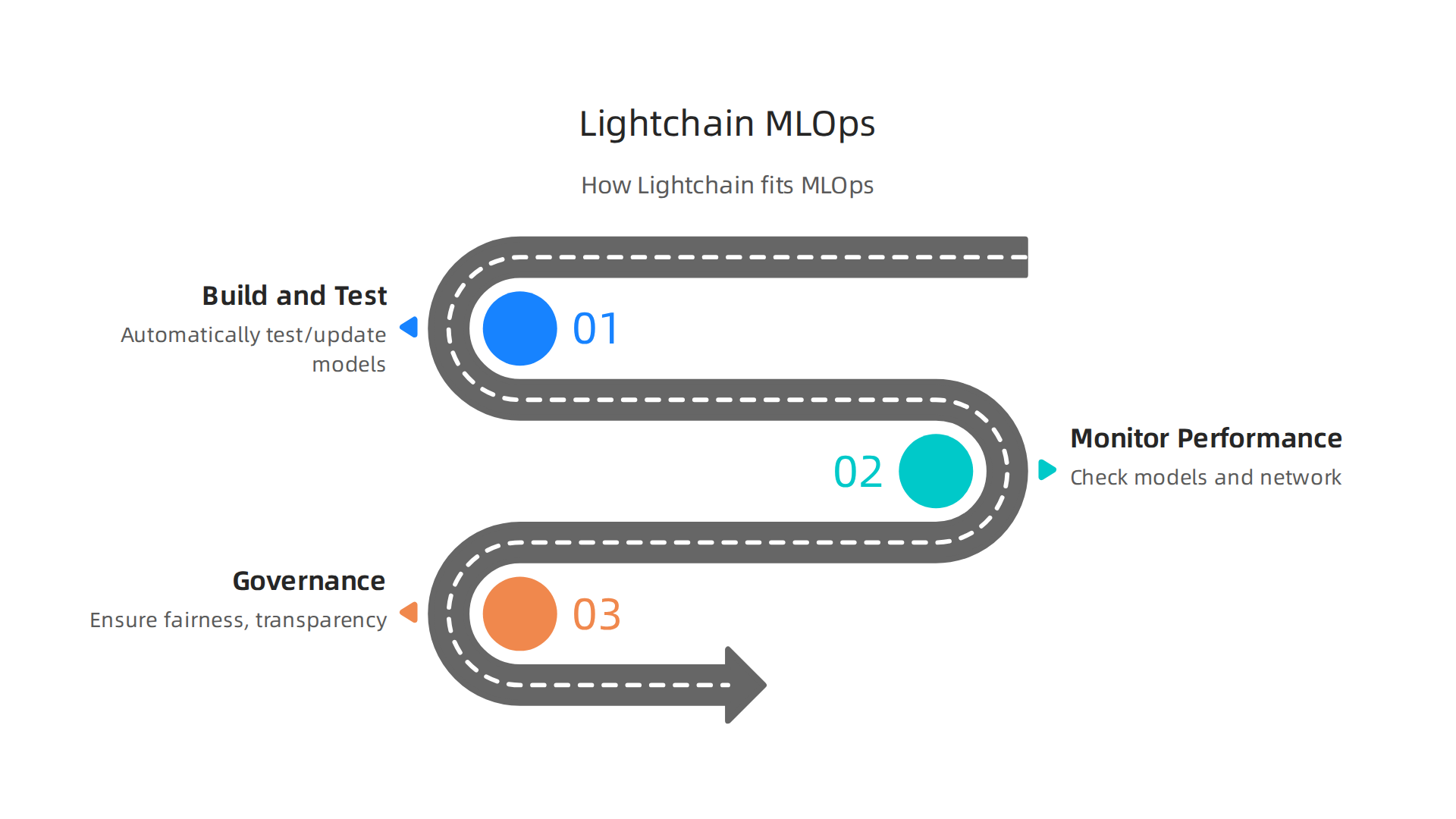
- Building and Testing AI (CI/CD Pipelines): CI/CD stands for Continuous Integration and Continuous Deployment. It’s about automatically testing and updating AI models. For Lightchain AI, this means making sure new AI models or updates are tested thoroughly across its decentralized network before they go live. This helps avoid problems and keeps the system working well.
- Watching AI Performance (Monitoring): Once Lightchain AI models are working, we need to watch them closely. This means checking if they are making good decisions and if their performance stays strong over time. For Lightchain AI, monitoring also means keeping an eye on how different parts of the network are doing, making sure data is secure, and that the AI isn’t doing anything unexpected. Monitoring helps catch issues like "model drift" where an AI starts to perform worse over time because the world around it changes.
- Following the Rules (Model Governance): This is about making sure AI models are fair, transparent, and follow all necessary laws and company rules. With Lightchain AI’s decentralized nature, good governance helps trace every decision and action, building trust. It ensures that the AI models are not biased and that people can understand why decisions are made.
Dealing with Challenges and Finding Solutions
Bringing Lightchain AI into a big company can have its challenges, mainly because it’s new and works differently from traditional AI.
- Making it Fit: Companies already have their own systems. Integrating Lightchain AI means connecting it to these existing tools. This can involve making sure data flows correctly between systems and that Lightchain AI’s decentralized parts can talk to centralized company software. Expert AI integration services can help assess what a company needs and design custom ways to connect Lightchain AI smoothly.
- Keeping it Secure: While Lightchain AI is built for security, connecting it to a company’s network needs careful planning. This means setting up strong digital walls and access rules to protect sensitive data.
- Scaling Up: As a company grows, Lightchain AI needs to grow with it. MLOps helps here by making sure the AI system can handle more data and more users without slowing down. It’s important to design the integration in a way that allows for easy expansion. To learn more about how to set up and scale such systems, you might find our guide on how to use AI in 2026 helpful.
By following good MLOps practices, businesses can make sure their Lightchain AI tools are not only powerful but also reliable, secure, and fair. This approach helps companies get the most out of their AI investments and keeps their AI systems working effectively for years to come. To keep your machine learning operations running smoothly and efficiently, you should also look into ways to optimize your machine learning workflow.
Want to stay informed about the latest developments in AI and machine learning?
Get clear daily AI updates from The AI Newsletter Worth Reading.
Market positioning, Competitors, and Regulatory/Ethical Risks
Moving from how Lightchain AI works inside a company, let’s look at where it stands in the bigger picture of AI technologies today.

Lightchain AI is a special kind of platform. It’s a Layer-1 blockchain built just for decentralized artificial intelligence. This means it tries to offer an open, fair, and private way for developers and others to use AI. Its main goal is to create a decentralized AI ecosystem, helping to run, train, and deploy AI models without relying too much on big, central cloud providers like Google or Microsoft, as highlighted in its Lightchain AI whitepaper.
What makes Lightchain AI stand out for technical buyers is its focus on privacy and transparency. It uses advanced methods like zero-knowledge proofs and federated learning to keep sensitive data safe while still letting AI do its work. This is a big deal for industries like finance or healthcare, where keeping data private and being able to show how AI makes decisions is very important. This unique approach means Lightchain AI is solving real-world problems with a mix of blockchain and AI, offering tangible uses and solutions. It even aims to allow for audit trails of AI actions to ensure transparency, which is key for trust.
Who Lightchain AI Competes With
Lightchain AI isn’t just up against other blockchain AI projects. It also faces competition from traditional, centralized AI services. For instance, while some platforms like LangChain offer tools for building AI applications, Lightchain AI’s decentralized nature sets it apart. While companies like OpenAI are constantly making news with new openai announcement today and big advancements, Lightchain AI offers an alternative for those who want more control over their data and more transparency in how AI works. Projects often described as wave ai or spark ai might also have different focuses, but Lightchain AI’s core strength is its combination of blockchain and AI for privacy and secure computation.
Many companies are still in a "wait-and-see" phase with new technologies, which is also true for Lightchain AI as of 2026. However, its roadmap shows a plan for working with big companies in areas like finance and healthcare to find new AI uses.
Rules and Risks for Lightchain AI
With any new technology, especially one that mixes AI and blockchain, there are important rules and ethical questions to consider. For Lightchain AI, making sure it follows all laws and keeps data safe is very important. Its design helps with data privacy and transparency, but companies still need to be careful about how they use it.
One big risk for any AI is bias, where the AI might make unfair decisions. Lightchain AI tries to handle this by being transparent, meaning decisions can be checked. Also, because it’s a newer kind of system, companies looking into Lightchain AI should be aware of potential concerns. For example, some early public reviews have mentioned Customer Service Reviews of lightchain.ai raising red flags for certain aspects of the project. This means it’s crucial for teams to do their homework.
On the other hand, Lightchain AI has worked to build trust. It has undergone public security checks from companies like Cyberscope, CertiK, and SolidProof. This helps show that the system is designed to be safe. Businesses also need to think about broader issues like the dangers of AI bias and how these decentralized systems fit into the overall regulatory landscape. As the AI world continues to grow, understanding both the advantages and the potential pitfalls will be key for companies evaluating tools like Lightchain AI.
Commercials: Pricing, Licensing, and Support Model
Now that we know about the challenges and risks of new AI tools, let’s look at how platforms like Lightchain AI make money. For businesses looking to use Lightchain AI, it’s important to understand how they will pay for it and what kind of help they can expect.
Lightchain AI, like many new tech companies in 2026, likely uses a few ways to charge for its services:
- Subscription Plans: This is like paying a set fee every month or year to use the platform. It might have different levels, like a basic plan for small teams and a bigger plan for large companies. These plans often come with a certain amount of features or usage limits.
- Usage-Based Pricing: This means you pay for what you use. For example, you might pay per AI model run, or for how much computing power your AI models need. This can be good for companies that don’t use the service all the time, or for those whose needs change a lot.
- Enterprise Licenses: Bigger companies might get special deals. This could be a custom plan that includes more services, dedicated support, and special features tailored to their specific needs. It might involve a large, one-time payment or a long-term contract.
It’s important for businesses to think about the different parts of using AI, like setting it up and keeping it running smoothly. This is often called MLOps, which involves managing the whole life of machine learning models from start to finish. You can learn more about how to get AI ready for real-world use in a practical guide to deploying ML systems at scale.
How AI Models and Data Are Licensed
When you use Lightchain AI, you also need to think about who owns the AI models you build and the data you use. Since Lightchain AI focuses on decentralization and privacy, it aims to give users more control over their own data and models.
- Model Licensing: Developers using Lightchain AI might choose to keep their AI models private or share them with others. Lightchain AI helps ensure that when you share, the rules are clear. For example, some models might be open for anyone to use, while others might require a license fee.
- Data Licensing: Because Lightchain AI is built on blockchain, it helps protect data privacy. This means companies can use their own data to train AI models without sending it all to a central company. They can set rules for how their data is used and who can access it.
Support and Keeping Things Running
For any company using a new AI platform, good support is key. When you bring in a tool like Lightchain AI, you want to know that help is there if you need it.
- Support Levels: Lightchain AI likely offers different levels of support, from basic online help to premium support with fast response times for critical issues. For big companies, having a dedicated support team is often part of an enterprise agreement.
- Service Level Agreements (SLAs): These are promises about how well the service will perform, like how much uptime it will have or how quickly problems will be fixed. Businesses will want clear SLAs to make sure Lightchain AI meets their needs.
- Avoiding Vendor Lock-in: One big worry for businesses is getting "stuck" with one vendor. Lightchain AI’s decentralized design is meant to help with this. By offering an open platform, it aims to give businesses more freedom. However, companies still need to plan how they would switch to another platform if needed, or if a new
openai announcement todayshifts the market greatly.
Staying up-to-date with all the new tools and changes in AI can be tough. That’s why many professionals find it helpful to get regular updates.
The AI Newsletter Worth Reading
Get clear daily AI updates from The Deep View Newsletter.
Summary
This article is a concise primer on Lightchain AI, a Layer‑1 blockchain purpose-built to run AI workloads using innovations like Proof‑of‑Intelligence (PoI) and an Artificial Intelligence Virtual Machine (AIVM). It explains the project’s origin, funding, and strategic focus, then drills into product architecture — models, training pipelines, inference stacks, and developer SDKs — and shows where Lightchain delivers value across finance, healthcare, SaaS and edge deployments. The guide covers practical MLOps considerations for CI/CD, monitoring, and governance when integrating a decentralized AI platform into enterprise workflows, and it flags operational, ethical, and regulatory risks such as bias, integration complexity, and vendor maturity. You’ll also get a view on market positioning versus centralized AI providers, typical commercial models (subscription, usage, enterprise licensing), and what teams should evaluate in pilots and security audits. After reading, ML engineers, product leads, and technical buyers will understand when Lightchain makes sense, how to plan adoption, and which technical and organizational steps reduce risk during deployment.