
Data Analyst Entry Level Jobs 2026 Land Your First Role

If you are looking for your first job in the world of data, or if you dream of building smart AI tools, this guide is for you.

In 2026, finding data analyst entry level jobs is a great way to start a career that can lead to many exciting paths. The job market for data analysts is growing fast, making it one of the quickest growing areas in technology and business. Experts say the demand for these jobs could grow by 20 to 30% each year compared to 2024-2025 data Data Analytics Job Market in 2026.
A data analyst role is not just about crunching numbers. It’s often the first step toward bigger and more advanced roles, like becoming an ai agent engineer or learning how to become a data scientist. The skills you pick up as a data analyst, such as understanding data and finding patterns, are the very building blocks for working with artificial intelligence.
However, starting out can have its challenges. Many new data analysts worry about not having all the right skills. It is also common to wonder what kind of projects you need for your job application portfolio. For example, common skills employers look for include SQL, Python, and Excel Data Analyst Job Outlook 2026: Job Market Research. Making sure your past work shows you can handle real data and prepare it for machine learning tasks is very important. This guide will help you understand these challenges and show you how to turn your work as an analyst into experience that’s ready for AI.
For those eager to stay ahead in the fast-changing world of AI, there’s a valuable resource.
Get clear daily AI updates from The AI Newsletter Worth Reading.
Understanding the Entry-Level Landscape for Data Analysts
It is good to know what to expect when you start looking for data analyst entry level jobs. Knowing the types of jobs, the companies that hire, and where these jobs are most common can make your search much easier in 2026.
Common Data Analyst Job Titles
When you first start out, you might not always see a job called "Data Analyst." Sometimes, companies use different names for similar entry-level roles. Some common titles include:
- Reporting Analyst
- Data Coordinator
- Operations Analyst
These jobs are often stepping stones to becoming a full data analyst or even learning exploratory data analysis techniques for machine learning in 2026. They help you learn how to query data, organize it, and present simple reports. For example, a Reporting Analyst might focus on creating daily or weekly reports using spreadsheets and basic database tools. A Data Coordinator usually helps keep data clean and tidy.
Where Data Analysts Work
Many types of companies need data analysts. You will find data analyst entry level jobs in many different places. A lot of the demand comes from technology companies, also known as "Tech/SaaS" businesses, which stands for Software as a Service. These companies often deal with large amounts of customer data or product usage data. You can also find opportunities in IT services and consulting firms Data Job Market Insights 2026. These companies might hire analysts to help their clients understand data.
Even with the rise of AI, experts confirm that the need for people who can analyze data is still very high. This shows that data analysis is a solid career choice, not one that will disappear because of new technology Data Analyst Job Market in 2026: Demands and Prospects.
Hot Spots for Data Analyst Jobs
The location of data analyst jobs can change, but some places consistently have more opportunities. In 2026, New York has become a top spot for data analyst positions, even more than California The Data Analyst Job Market Just Produced Numbers Nobody. About 26% of all data analyst job postings are in New York. New Jersey also has a good number of openings, with about 11% of job postings found there Data Analyst Job Outlook 2026: Trends, Salaries, and Skills. So, if you are looking for data analyst jobs near me, checking these areas might be a good idea if you are in the US.
Knowing these details about the job market helps you focus your search. It also helps you see how important your skills in areas like data analysis and machine learning are, no matter where you live. For those keen to develop their technical skills, mastering Replit Python for Data Manipulation and Machine Learning in 2026 can be a great way to prepare.
To get one of the many data analyst entry level jobs available in 2026, you need to show you have the right mix of technical and people skills. Employers are looking for candidates who can not only work with data but also explain what the data means to others.
Essential Technical Skills for Data Analysts
When it comes to tools and languages, certain skills are a must-have for entry-level data analyst roles.
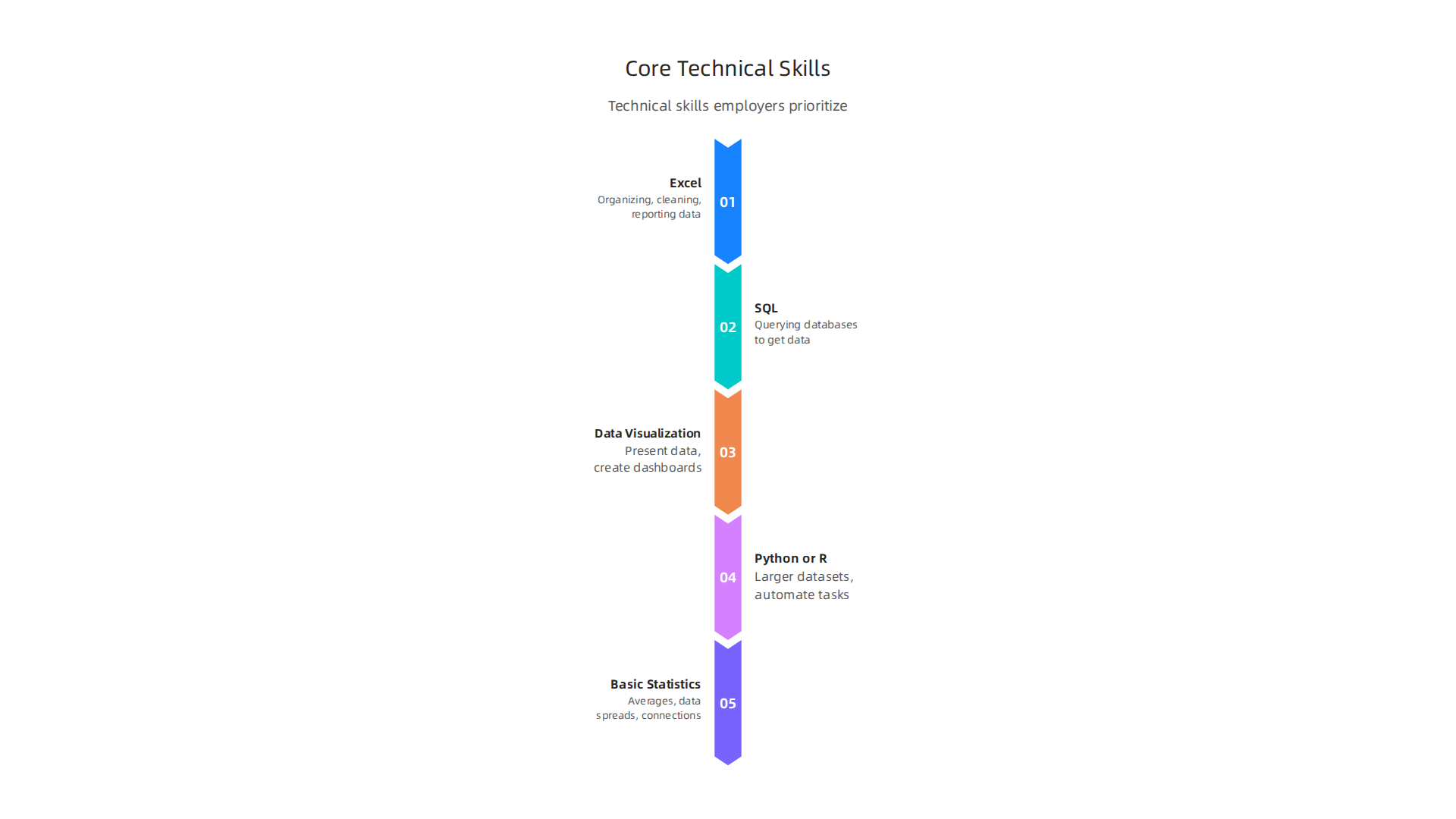
- Excel/Spreadsheets: This is a fundamental skill. Almost every company uses spreadsheets for organizing, cleaning, and reporting data. You should know how to use advanced Excel functions, pivot tables, and create charts to show data clearly How to prepare for a Data Analyst Entry Level Job – 2026 Roadmap. Many roles expect you to be really good at Excel, as it’s often 75% or more of what an entry-level analyst does Data Analyst Skills & Tools You Need in 2026 (Ranked by ….
- SQL (Structured Query Language): This is super important for talking to databases. You’ll use SQL to get data, clean it, and join different pieces of data together. About 80% of job postings for data analysts ask for SQL skills Data Analyst Career Path 2026: Skills, Roadmap, Projects, …. You should be comfortable with basic commands like SELECT, JOINs, and GROUP BY.
- Data Visualization Tools: After you analyze data, you need to present it in a way people can understand. Tools like Tableau or Power BI help you create dashboards and charts that tell a story with data. These tools are mentioned in about 60% of job postings The ONLY 8 Data Analyst Skills That Matter in 2026.
- Python (or R): While Excel and SQL are key, programming languages like Python are becoming more important. Python can help you handle larger datasets, automate tasks, and do more advanced analysis. It shows up in about 74% of data analytics job listings and that number is growing Data Analytics Skills That Every Fresher Must Have in 2026 – GROWAI. Learning to master Python data analysis tools for machine learning in 2026 can really set you apart.
- Basic Statistics: You don’t need to be a math genius, but understanding basic statistics helps. Things like averages, how data spreads out, and finding connections between different data points are very useful.
These skills are essential for many data analyst entry level jobs. To stand out, learn about the specific data analyst skills employers demand in 2026 and how to master them.
Important Soft Skills and Domain Knowledge
Technical skills alone are not enough. Employers also look for certain personal qualities and knowledge about the business.
- Communication Skills: You need to be able to explain complex data findings in simple words to people who might not understand data very well. This includes clear writing and good speaking skills Entry-Level Data Analyst: What They Do + How to Get Started.
- Data Storytelling: This means turning your data analysis into a clear and compelling story. You need to show why the data matters and what actions should be taken based on it.
- Critical Thinking and Problem-Solving: Data analysts need to be good at asking the right questions, spotting problems in data, and finding ways to fix them.
- Teamwork: You’ll often work with different teams, so being a good team player is important.

- Domain Knowledge: This means understanding the business you’re working for. If you know how the business works, you can better understand what the data is telling you and make more helpful suggestions.
Combining strong technical skills with these soft skills will make you a very attractive candidate for data analyst entry level jobs. Building a strong portfolio showing off these skills is also a smart move. Learn how to build a data analysis portfolio that gets you hired in 2026 to demonstrate your abilities to potential employers.
Staying informed about new tools and methods is also key. For daily updates on AI and machine learning, which are often connected to data analysis, consider checking out The AI Newsletter Worth Reading.
You’ve learned about the important technical and soft skills that employers are looking for in 2026. Now, the big question is, how do you get those skills? There are a few main paths people take to land data analyst entry level jobs.
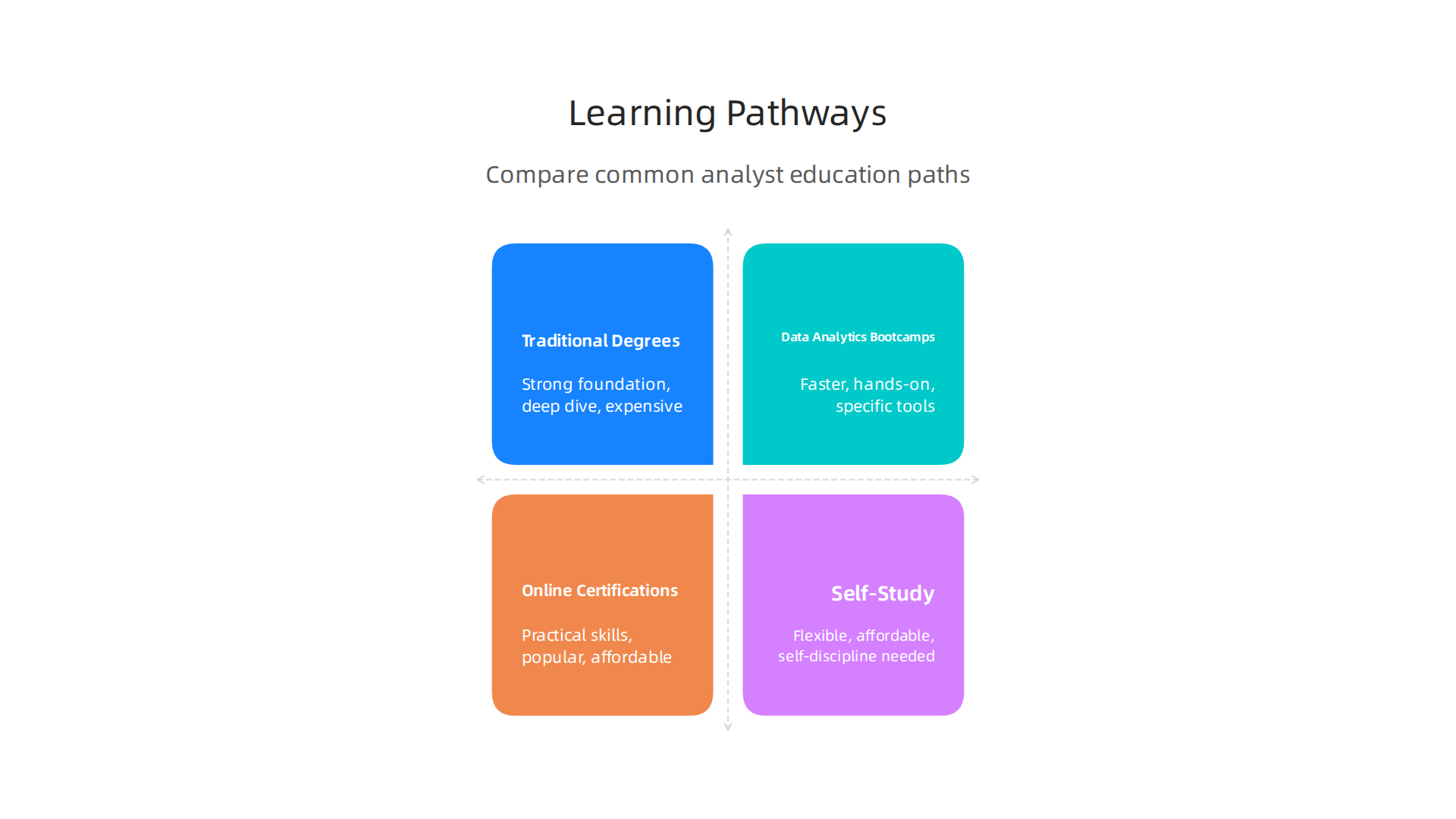
Each path has its own good points and things to think about, like how much it costs and how long it takes.
Traditional Degrees: College and University Programs
Many people think a college degree, like a Bachelor’s or Master’s, is the only way to get a good job. For data analysis, a degree in fields like data science, statistics, computer science, or even business can give you a very strong foundation. These programs usually take several years and offer a deep dive into theories and different subjects.
A Master’s degree, especially, can lead to higher starting salaries, often for more specialized jobs, with many graduates finding work quickly Online Master’s Data Science vs Bootcamp: ROI Comparison …. However, degrees are often the most expensive and time-consuming option. They might not always focus on the newest tools and skills that businesses are using right now.
Data Analytics Bootcamps
Bootcamps are a much faster way to learn the skills for data analyst entry level jobs. These are intensive, short programs, usually lasting three to six months, that focus on hands-on, practical training Data Analyst Bootcamp: 2026 Options Compared. They teach you the specific tools and methods you’ll use every day in a data analyst role.
Many bootcamps talk about high job placement rates. For example, some top programs report around 79% of grads getting jobs within six months, with starting salaries often between $65,000 and $78,000 The 5 Best Data Analytics Bootcamps in 2026 – Newsdata.io. While bootcamps can be a great way to quickly change careers, it’s wise to look for programs that have clear, audited reports on how many of their students actually find jobs in the field Best Data Analyst Bootcamps in 2026: Honest Reviews & …. They are generally less expensive and quicker than a full degree. Comparing a Bootcamp vs. Degrees [2026] can help you decide.
Online Certifications and Self-Study
You don’t always need a formal degree or a bootcamp to prove you have the skills. Online courses and certifications, like those offered by big tech companies, are becoming very popular. Companies often care more about your practical skills and projects than just a piece of paper. For instance, Google values practical projects and certifications, especially from programs like Google Career Certificates Which Course is Best for Landing a Google Job? The Ultimate ….
Self-study is another path. With so many free and low-cost resources online, you can learn a lot on your own. The key here is to actively work on projects and build a strong portfolio to show what you can do. This path takes a lot of self-discipline but can be the most flexible and affordable. To improve your analysis skills, you might want to explore exploratory data analysis techniques for machine learning in 2026.
What Do Employers Prefer?
In 2026, many employers looking to fill data analyst entry level jobs care most about whether you can do the job. This means showing clear proof of your skills. Whether you get those skills from a degree, a bootcamp, or self-study, having a strong portfolio with real-world projects is super important. It shows you can turn data into useful insights. For those interested in advanced data careers, understanding how to use AI in 2026 a guide for building and scaling machine learning systems can also be a valuable addition to your skillset.
When deciding which path is right for you, think about:
- Cost: How much can you afford to spend on your education?
- Time: How quickly do you need to start working?
- Your Learning Style: Do you learn best in a classroom, an intense program, or on your own?
- Employer Preference: While a degree can open doors to certain roles or larger companies, practical experience from bootcamps and strong portfolios from self-learners are highly valued for many data analyst jobs near me and across the world.
Now that you know how to learn the skills, it’s time to show them off. For data analyst entry level jobs, employers want to see proof that you can actually do the work. This means building a strong portfolio and getting ready for different kinds of interviews.
Building a Portfolio, Projects, and Interview Prep
A portfolio is like your personal showcase. It’s where you put projects that highlight your data analysis skills. Think of it as a collection of stories where data helps solve problems. A strong portfolio shows your practical experience and how you think.
What Makes a Good Project?
When you choose projects, aim for ones that show how you can take messy data and turn it into clear, helpful information. Here’s what great projects usually include:
- A Clear Problem: Start with a question you want to answer.
- Data Cleaning: Show how you handle data that isn’t perfect. This is a very real part of any data job.
- Analysis: Explain the steps you took to look at the data. Use tools like Excel, SQL, or Python.
- Visualizations: Create charts and graphs that make your findings easy to understand.
- Insights and Recommendations: What did you learn from the data? What actions could someone take based on your work?
Many experts say you don’t need dozens of projects. Instead, focus on 3 to 4 complete, strong projects that show different skills. For instance, an exploratory data analysis project, a data cleaning project, and a SQL-based project are great starts. One common project type is creating a sales dashboard to track business performance Top 7 Data Analytics Projects to Build a Winning Portfolio in 2026.
To build these, you can find free data online from places like Kaggle or Google Dataset Search. You could even offer to do a project for a local charity or small business to get real-world data and experience. When you share your projects, make sure your steps are clear and easy to follow. A good portfolio often has a story for each project: what problem you faced, how you solved it using data, and what you found Data Analyst Portfolio Projects That Actually Get You Hired.
If you are looking to deepen your understanding of these techniques, explore more about exploratory data analysis techniques for machine learning in 2026. And for those wanting to showcase their work, knowing how to build a data analysis portfolio that gets you hired in 2026 is key.
Getting Ready for Interviews
Once your portfolio is ready, you’ll start applying for data analyst entry level jobs.

Interviews for these roles can come in a few forms:
- Case Studies: You’ll be given a business problem and a dataset. You then have to analyze the data and present your findings and suggestions. This tests your problem-solving and communication skills.
- Take-Home Projects: Similar to case studies, but you complete the analysis on your own time, usually over a few days. This shows your practical skills without the pressure of an in-person test.
- Technical Screens: These interviews focus on your technical skills. Expect questions about SQL queries, Excel functions, or Python coding. You might even have to write code on the spot or explain how certain data tools work. For entry-level roles, strong Excel skills are prerequisites for many companies.
No matter the format, always be ready to talk about your projects in detail. Explain the challenges you faced and how you overcame them. Employers want to see that you can not only work with data but also explain your findings clearly. They want someone who can turn numbers into a story that helps the business.
As you prepare for data analyst jobs near me or anywhere else, remember that staying updated on the latest tech trends, including AI, can also give you an edge, especially if you aim to grow into roles like an ai agent engineer. Staying informed on the broader tech landscape is a smart move for any data professional.
Get clear daily AI updates from The Deep View Newsletter. The AI Newsletter Worth Reading
Data analysts already have a great start for becoming an AI engineer. Your skills in understanding data, cleaning it, and finding patterns are super important. Think of it like this: a data analyst finds the treasure, and an AI engineer builds the map and tools for others to find even more treasure automatically. This move means learning some new, deeper technical skills and getting more hands-on with building intelligent systems.
Key Skills to Learn
To make the jump, you’ll want to add these important skills:
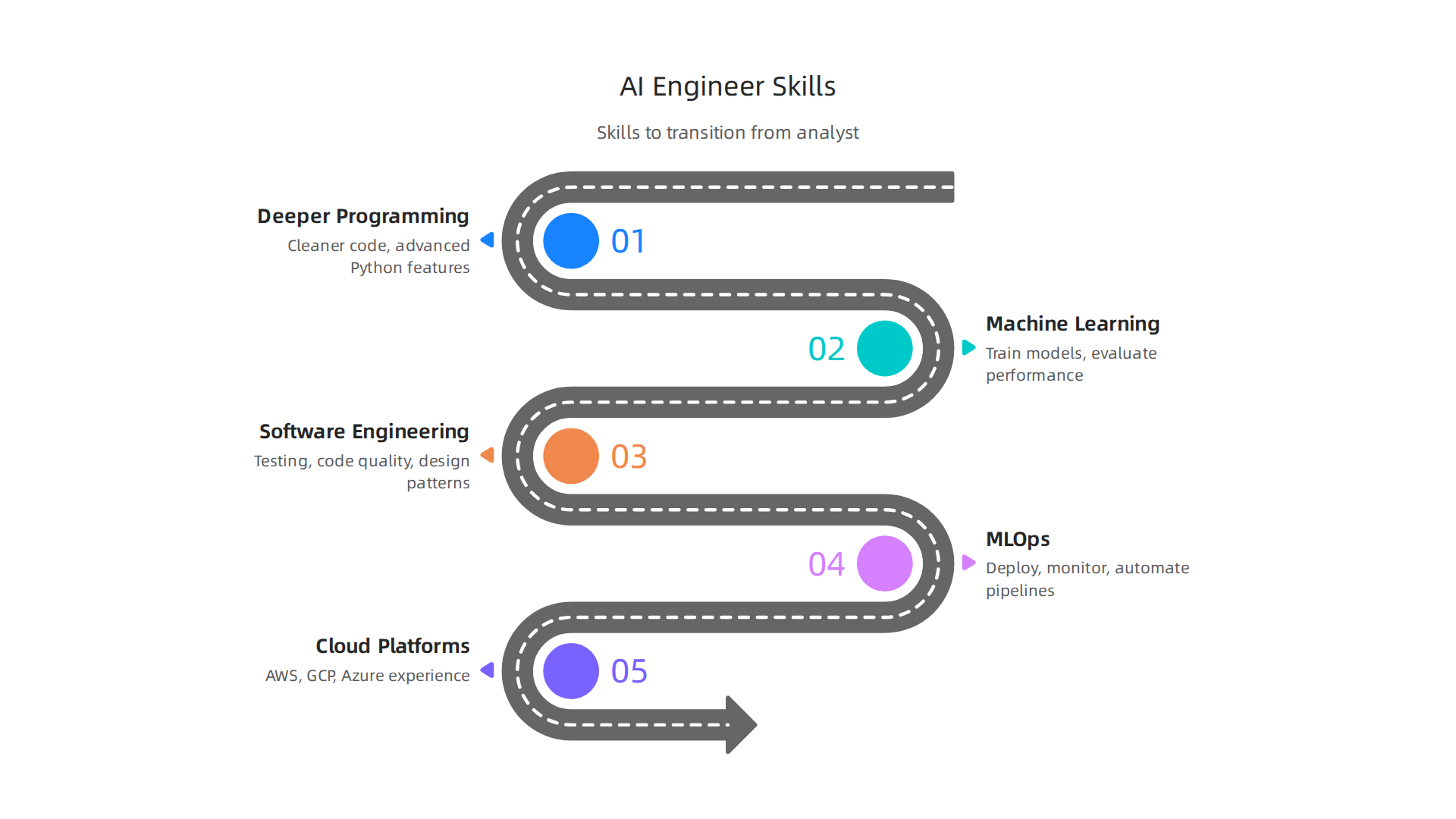
- Deeper Programming: You already know Python for analysis. Now, you need to use it like a software builder. This means writing cleaner code, understanding how to make programs work well, and knowing advanced Python features. Getting comfortable with key libraries like NumPy and Pandas, and especially machine learning libraries such as Scikit-Learn, TensorFlow, and PyTorch, is a must-have for an AI professional in 2026.
- Machine Learning Basics: Go beyond just running models. Learn how these models actually learn, how to train them, and how to check if they are working right. You will need to understand different machine learning algorithms and their math foundations Bridging the Gap: Transitioning from Data Analytics to AI Engineering.
- Software Engineering: This is about making sure your code is strong and can be used by others. It includes things like testing your code, making sure it’s easy to read, and using tools that help teams work together on code.
- MLOps (Machine Learning Operations): This fancy word just means knowing how to get AI models to work in the real world. It’s about putting your models into action, watching them to make sure they keep working well, and fixing them if they don’t. Experience with data pipelines and big data tools like Hadoop or Spark is very useful here How Do You Go from Data Engineering to AI Roles in 2025.
- Cloud Platforms: Many AI systems live in the cloud. Learning how to use services from Amazon Web Services (AWS), Google Cloud Platform (GCP), or Microsoft Azure for building and running AI is very valuable.
Projects and Experience That Help
Hands-on projects are even more important when moving to AI engineering. You want to show you can build things from start to finish.
- End-to-End AI Projects: Instead of just analyzing data, build a full AI project. This means getting data, building a model, and then making it available for people to use, maybe as a simple app or a tool. For example, you could build an NLP interface for a dataset you’ve worked with before Data Analyst to AI Engineer in 6 Months? Here’s the Exact Roadmap.
- Working with AI Tools and APIs: Play around with ready-made AI tools. This could mean using services from OpenAI or other companies to see how AI models work in practice. Building simple things with these APIs shows you understand how to use AI in real applications.
- Focus on Fundamentals: Before diving into complex AI, make sure your basics are very strong. This includes databases, programming, and data structures. Then, add AI knowledge on top From Data & Analytics to Senior AI Engineer.
Becoming an AI engineer or an ai agent engineer is a challenging but rewarding path. It builds on your strong data analyst foundation and pushes you into the exciting world of creating intelligent systems. Remember, it’s about continuous learning and getting hands-on experience.
Staying on top of the fast-changing world of AI is super important for this transition. For clear daily AI updates and more insights into the latest tech trends, consider subscribing to The AI Newsletter Worth Reading.
Moving from a data analyst role to an AI engineer means thinking big about your career. It’s not just about learning new skills, but also about how you use them to grow inside your company or find new opportunities.
Career Growth Strategies: Mentorship, Internal Mobility, and Specialization
Getting ahead in the AI world means being smart about your path. You’ll want to look at how you can move up within your current company, find people who can guide you, and pick a special area in AI to become really good at.
Moving Up Inside Your Company
Your current workplace might have chances for you to become an AI engineer or similar. This is called "internal mobility." Here’s how to look for it:
- Talk to Your Boss: Let them know you want to learn more about AI. Ask if there are small projects or tasks you can help with that involve AI.
- Find AI Teams: See if your company has teams already working with AI. Reach out to them to learn what they do. They might need someone with your data analysis skills.
- Show What You Can Do: Start small AI projects on your own. If you can show a working model or a smart new way to use data, your company might see your potential for a new role. Learning how to build a data analysis portfolio is key to showing off your skills.
Finding People to Guide You
Mentors are like experienced guides. They can help you learn faster and avoid common mistakes.

- Look for AI Engineers: Find people who are already doing the job you want. They might be in your company or in your network. Ask if they’d be willing to share advice or meet for coffee. Many people are happy to help someone who is eager to learn.
- Join Online Groups: There are many online groups for AI and data professionals. These can be great places to ask questions and find mentors. You can also learn a lot from seeing how others solve problems.
- Learn from Others’ Journeys: Watching videos or reading stories about people who made the jump from data analysis to AI can give you good ideas. For instance, some people share their full transition journeys, explaining how they built strong fundamentals in databases, programming, and data structures before diving into AI concepts, as shown in the experience shared by an 18-year IT career professional moving from data and analytics to senior AI engineering From Data & Analytics to Senior AI Engineer.
Picking Your AI Niche
AI is a big field, so it helps to pick a special area. This means you become an expert in one part of AI, which makes you more valuable.
- Machine Learning Infrastructure (ML Infra): This is about building the systems that help AI models run smoothly. It’s like building the roads and bridges for AI. If you like thinking about how data flows and how to make things work fast, this could be for you.
- AI Research: If you love solving tough puzzles and figuring out new ways for AI to learn, research might be a good fit. This often means working with very new ideas and trying things that haven’t been done before.
- Product-Focused Machine Learning: This path is about using AI to make products better for people. For example, helping a shopping website suggest things you might like, or making an app easier to use. If you enjoy seeing how AI directly helps users, this is a great choice.
- AI Agent Engineer: This is a newer area that focuses on building smart AI programs that can act on their own, like a helpful digital assistant.
Making a Long-Term Plan
To make your career move happen, you need a clear plan.
- Build a Learning Map: Write down what you need to learn. Break it into small steps. For example, first, master advanced Python, then learn one machine learning algorithm, then build a small project. Many resources suggest starting with practical tutorials and hands-on projects before diving into the theory From Data Analyst to AI Engineer (in 2024).
- Set Clear Goals: Decide what you want to achieve and by when. For example, "By the end of 2026, I will finish an end-to-end AI project."
- Measure Your Progress: Check in with yourself often. Are you on track? Do you need to change your plan? Celebrating small wins keeps you going.
Remember, moving from a data analyst to an AI engineer is a journey. It takes time, effort, and continuous learning. But with a good plan and the right support, you can make it happen. If you’re looking for data analyst entry level jobs now, thinking about these growth strategies early can help you aim for bigger roles in the future.
Summary
This guide explains how to land entry-level data analyst roles in 2026 and use them as a launchpad into AI careers. It reviews the job market, common entry-level titles, and geographic hot spots, then details the technical skills employers expect—Excel, SQL, Python, and visualization tools—alongside essential soft skills like communication and data storytelling. The article compares learning paths (degrees, bootcamps, self-study), shows what makes a strong portfolio project, and outlines common interview formats such as case studies and take-home tasks. It also maps a practical route from data analyst work to AI engineering, including the additional programming, machine learning, MLOps, and cloud skills you’ll need. Finally, it offers career-growth tactics—internal mobility, mentorship, and specialization—so you can plan a step-by-step transition into higher-level AI roles.