How to Land Entry Level Data Science Jobs in 2026

Introduction
Data science is one of the fastest growing career paths in 2026, and for good reason. Companies across every industry need people who can turn raw numbers into real answers. According to the most recent Bureau of Labor Statistics data, employment for data scientists is projected to grow 34 percent from 2024 to 2034, with about 23,400 new openings each year.
But here’s the catch. Getting your foot in the door is tougher than ever.
The demand is real, but so is the competition. Entry level data science jobs now expect more from candidates than they did just a few years ago. Basic coding skills that used to get you an interview are now considered table stakes. Employers want people who can frame business problems, work with AI tools, and connect their work to real business impact.
That might sound intimidating. It doesn’t have to be.
This guide is your roadmap for landing your first data science role in 2026. We walk through everything you need: the skills that actually matter, how to build a project portfolio that stands out, smart networking strategies, a data scientist resume that passes automated screens, and interview prep that helps you feel ready.
If you are just starting out or making a career switch, this is the place to begin. We also recommend how to build a data analysis portfolio that gets you hired, because your projects often speak louder than your degree.
To stay ahead of fast moving trends in this field, getting reliable daily updates makes a real difference. That is why we suggest The AI Newsletter Worth Reading, which delivers clear, practical AI and data science news straight to your inbox.
Whether you are hunting for remote data analyst jobs or preparing to take on your first data wrangling task, the path forward starts right here. Let’s dig into what it really takes to break into data science in 2026.
Understanding the Data Science Job Market in 2026

The numbers tell a promising story. Job growth for data scientists is still booming. According to the Data Science Career Guide 2026 from DASCA, data science jobs are expected to grow by 34 percent from 2024 to 2034, with more than 82,500 new positions opening up this decade. That kind of growth means opportunity is real.
But here is what has changed. Landing one of these roles now looks different than it did a few years ago. You don’t need a master’s degree to get started. In fact, most employers care more about what you can do than what your diploma says. A recent analysis of the data job market shows that entry-level roles are not disappearing. They are just getting more competitive. Skills that used to open doors, like knowing SQL and Python, are now considered basic expectations. Employers want candidates who can frame business problems, work with AI tools, and connect their work to real business impact.
Practical experience is your biggest advantage. Projects, internships, and even side work count more than a second degree. Many professionals start in roles like data analyst or business analyst and later move into data science. If you are hunting for entry level data science jobs, consider those stepping stones. They give you real data wrangling practice and a story to tell in your interviews.
The good news? Remote work has opened up the map. You are no longer limited to tech hubs like San Francisco or New York. Remote data analyst jobs and data science roles are available across the country and even globally. According to the 2026 data science salary guide from JobCannon, entry-level remote data scientists can earn between $70,000 and $100,000, depending on location and company. This means you can apply to positions in cities where you would never have considered moving.
To stand out, focus on building a strong data scientist resume that highlights projects over pedigree. And if you need direction on where to start, check out this guide on data analyst jobs 2026 to see what skills and roles are opening up right now. The market is growing, but only for those who adapt to what employers actually want.
Essential Skills for Entry Level Data Science Roles
So what do you actually need to know to land one of those entry level data science jobs?
The answer might be simpler than you think. While the field keeps evolving, the core skills that hiring managers look for have stayed surprisingly steady.

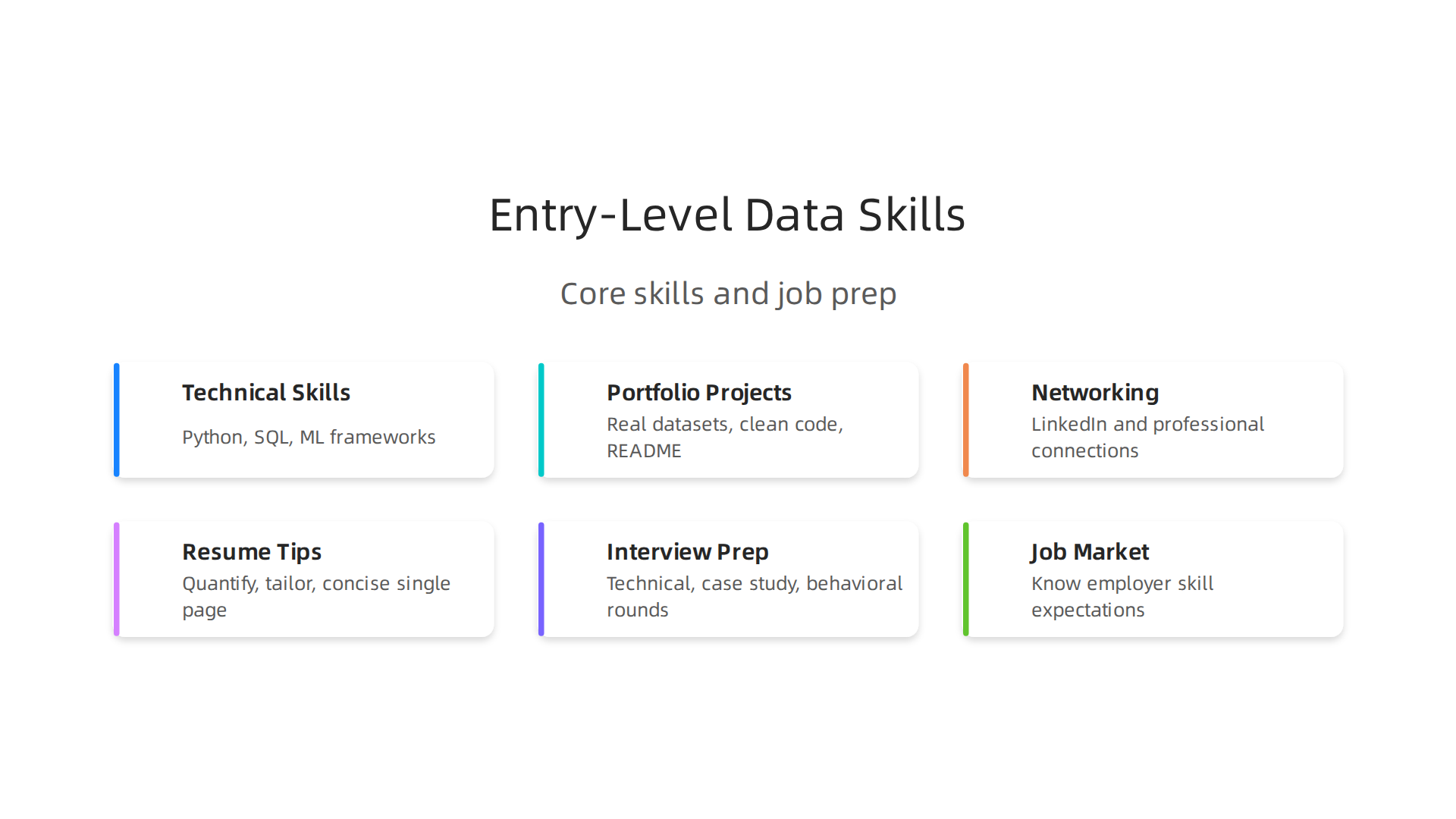
First, you need Python and SQL. These two are non-negotiable. Almost every job posting lists them as minimum qualifications. For example, many of the entry-level data science job postings on Indeed ask for basic proficiency in a programming language like Python or R and foundational SQL skills for working with databases. If you don’t have these yet, start there. They are the building blocks for everything else you will do.
Second, employers want you to understand machine learning frameworks. Tools like scikit-learn and TensorFlow come up again and again in job descriptions. You don’t need to be an expert right away, but you should know how to build and evaluate a basic model. The Coursera overview of data science career paths highlights machine learning engineers as one of the fastest growing roles. Getting comfortable with these frameworks now will help you stand out.
Third, never overlook soft skills. Companies want data scientists who can talk to people, not just machines. Communication and problem-solving ability often separate a good candidate from a great one. Being able to explain your findings to a non-technical manager is just as important as knowing how to run a regression. The same Indeed job postings I mentioned earlier list strong written and verbal communication as a preferred qualification. Do not skip practicing this skill.
If you are deciding between Python and R, you might find this evidence-based comparison of R vs Python for data science helpful. It breaks down which language fits different career paths.
To keep growing after you build these skills, you need to stay current. The field changes fast. The AI Newsletter Worth Reading delivers clear daily updates on AI and machine learning trends right to your inbox. It is a simple way to keep learning without the noise.
Building a Portfolio That Gets You Noticed
Skills are just the start. To land one of those entry level data science jobs, you also need to show what you can do. That is where your portfolio comes in.
Think of your portfolio as your proof. It tells hiring managers you can actually apply Python, SQL, and machine learning to real problems. A study from Dataquest explains that a strong portfolio usually has 3 to 5 projects that highlight skills relevant to your target job. That is a good rule to follow.
So what goes into a project that stands out?
First, every project needs a clear business question. Why does this data matter? What problem are you solving? Second, use a real, messy dataset. Avoid overused ones like Titanic or Iris. Hiring managers are tired of those. Use data from sources like government open data portals or less common Kaggle datasets.
Third, show your data wrangling work. Data cleaning takes up 60 to 80 percent of a data scientist’s time. If you can document your process of handling missing values, fixing formats, and combining tables, that proves you understand the hardest part of the job. Employers love that.
Your code should be clean and well commented. Use a Jupyter notebook with markdown cells that explain each step. Or use regular Python scripts with good inline comments. Store everything in a GitHub repository. Each project needs a proper README file that a hiring manager can scan in 30 seconds.
The README should include the business question, what data you used, the methods, key findings, and any recommendations.
By the way, you do not need a fancy website. A well-organized GitHub profile with clear project repositories is enough. If you want to go further, publish an interactive dashboard on Tableau Public. That is a nice bonus.
If you need some inspiration, check out this detailed guide on how to build a data analysis portfolio that gets you hired in 2026. It walks through project ideas and presentation tips step by step.
Also consider contributing to open source projects or joining Kaggle competitions. Those experiences add real credibility to your resume. They show you can work with others and solve problems beyond tutorial datasets.
Your portfolio is not just a collection of files. It is your ticket to getting an interview. Take the time to polish it. Make each project tell a story. And keep adding new work as you learn more. The line on your data scientist resume that says "GitHub portfolio" will carry a lot of weight when recruiters look at your application.
Networking and Gaining Practical Experience
Your portfolio proves your skills. But to actually land one of those entry level data science jobs, you also need to connect with people and get real-world experience. Networking and practical work go hand in hand. They open doors that applications alone cannot.

LinkedIn is your best friend here. It is the primary platform for connecting with data science professionals.
Start by optimizing your profile. Use a professional photo, write a clear headline that includes your target role, and fill out your summary with your goals. Then start connecting. Follow companies you admire. Join LinkedIn groups focused on data science. Engage with posts by commenting with real questions or insights. Do not just send generic connection requests. Personalize each one. Tell the person you admire their work on a specific project. That is how you start real conversations.
Internships and freelance projects are just as valuable as full-time experience. Many hiring managers look for practical work over perfect credentials. If you cannot find a paid internship, consider freelancing on platforms like Upwork or Freelancer. Even small projects count. They show you can deliver results on a timeline and communicate with clients. Some companies also offer apprenticeship programs that combine training with real projects. These give you a foot in the door.
Attending industry meetups and online webinars helps you learn and network at the same time. Look for local data science meetups on Meetup.com. Many are free. Online webinars hosted by companies or communities are also great. You can ask questions in the chat and follow up with speakers on LinkedIn. Joining a data science community like Data Science Stack Exchange or Kaggle Discussions also lets you ask questions and share your work. The Brolly Academy guide on data science career paths highlights that engaging with these communities expands your opportunities and gives you valuable insights from experienced professionals.
If you are looking for more specific job strategies, check out this guide on data analyst jobs in 2026 that covers how hiring works and what employers want.
One more thing. Staying current with industry trends helps you sound informed in conversations. A great way to do that is to subscribe to The AI Newsletter Worth Reading. It delivers clear daily updates so you never miss important developments in machine learning and AI.
Networking is not about collecting contacts. It is about building relationships that lead to mentorship, referrals, and job offers. Start small. Send one thoughtful message today. Attend one meetup this month. Over time, those connections will carry you into the roles you want.
Crafting a Standout Resume and Cover Letter
Your networking and project experience are solid. But to get a hiring manager to actually call you, you need a resume and cover letter that cut through the noise. Recruiters spend only seconds scanning a resume, so every word must count.
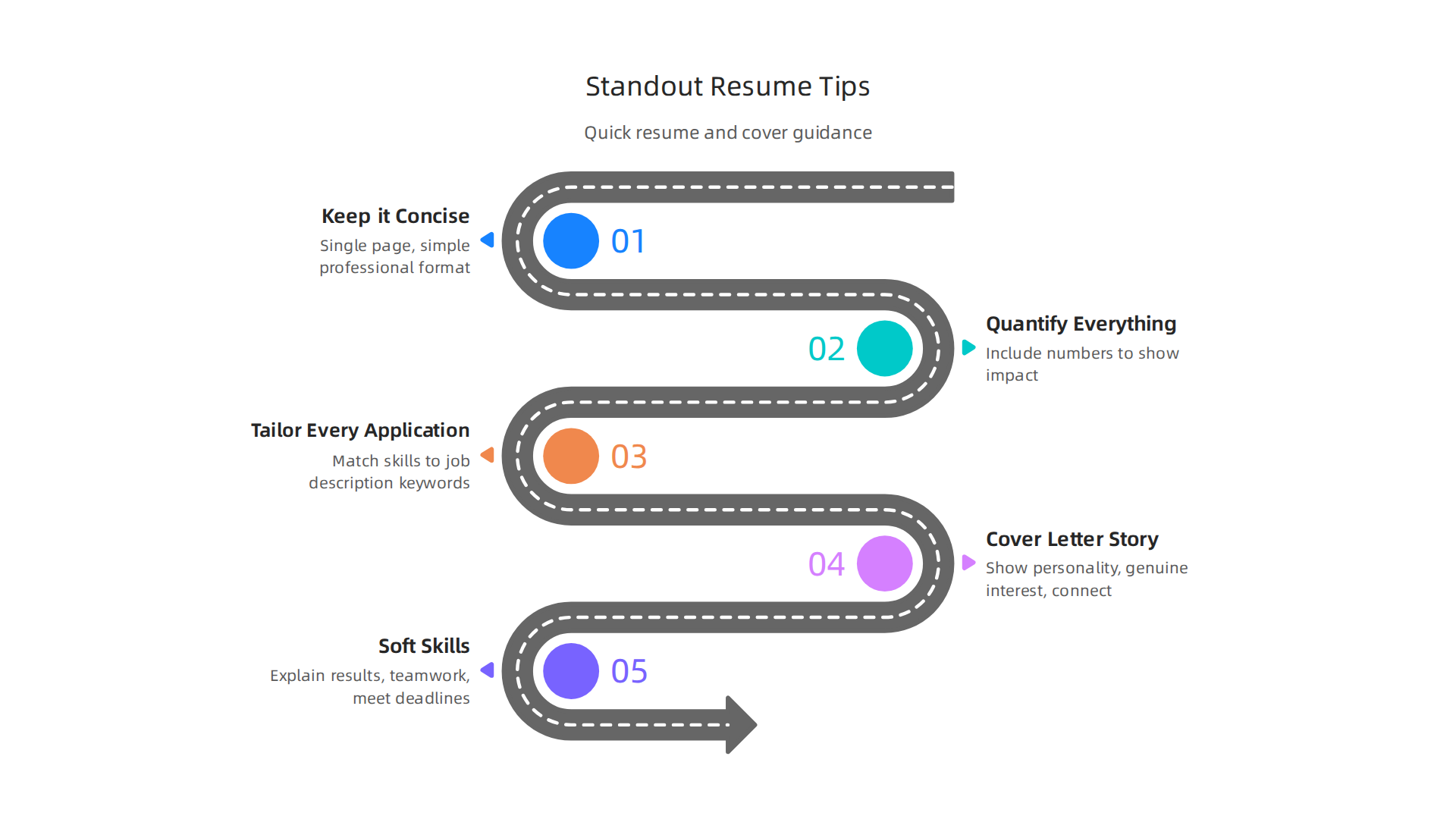
Keep it concise and clean. For entry-level candidates, stick to a single page. Use a simple, professional format with consistent fonts and no graphics. Bullet points help readability. According to the BeamJobs guide on entry-level data scientist resume examples for 2026, you should include sections for contact info, a short summary, projects, skills, and education. Start each bullet with a strong action verb and, whenever possible, include a number to show the impact of your work.
Quantify everything. Instead of saying “cleaned data,” say “Cleaned and prepped a dataset of 50,000 customer records using Python and Pandas, cutting processing time by 30%.” Numbers make your work real. Even if a project was from a class or a personal challenge, describe the problem, the tools you used, and the measurable result.
Tailor every application. Never send the same resume to different jobs. Read the job description carefully and match your skills to the keywords they use. If the job asks for “random forest models,” use that exact phrase instead of “ensemble methods.” This helps your resume get through the automated screening systems many companies rely on. The Career Village advice on getting a data science resume shortlisted emphasizes customizing your objective and highlighting the skills the employer specifically wants.
Your cover letter should tell a short story. This is your chance to show personality and genuine interest. Pick one project or experience that sparked your passion for data science. For example, maybe you built a model to predict customer churn and it improved retention by 15%. Connect that story to the company’s mission. Show that you understand their challenges and you are excited to help solve them.
Don’t forget soft skills. Data science is not just about code. Employers want someone who can explain results to non-technical teams, work well with others, and meet deadlines. Sprinkle in examples of teamwork or communication from internships, group projects, or even volunteer roles.
For more detailed steps on building the projects that will fill your resume, check out this guide on how to build a data analysis portfolio that gets you hired in 2026.
A well-tailored resume and cover letter do not guarantee an interview by themselves. But they dramatically improve your chances when combined with the network and experience you have already started building.
Acing the Data Science Interview

Your resume and portfolio got you in the door. Now you have to walk through it and prove yourself. Interviews for entry level data science jobs can feel intimidating, but they follow a pretty predictable pattern. Know what to expect and practice ahead of time. That is the best way to calm your nerves and show what you can do.
Most interviews have three main parts: a technical assessment, a case study, and a behavioral round.
Let us break down each one.
Technical Assessments
You will likely face a coding challenge in Python, SQL, or both. Some companies also ask statistics or machine learning theory questions over a phone screen or live coding session. The key is to think out loud as you code. Explain your logic step by step. If you get stuck, talk through possible solutions. Interviewers want to see how you problem solve, not just if you get the right answer.
For coding, practice platforms like LeetCode or HackerRank are your friends. Focus on data manipulation, loops, and basic algorithms. For statistics, review concepts like p values, distributions, and regression. Know how to implement a simple model from scratch, like linear regression or K means clustering. Being able to explain the math behind the model in plain English is a big plus.
Case Study Rounds
In a case study, the interviewer gives you a business problem. For example, "Our ecommerce site wants to reduce customer churn. How would you approach this?" Your job is to walk through the entire data science process.
Start by asking clarifying questions. What data is available? What does "churn" mean exactly? Then outline your plan: data collection, cleaning, feature engineering, model selection, evaluation, and how you would deploy the results. You do not need to write code. What matters is your structured thinking and business sense. Practicing these frameworks will make you more confident. According to advice from the Breaking Into Data Science in 2026 guide, applying your skills to real business problems is exactly what hiring managers are looking for.
Behavioral Questions
Behavioral rounds check if you will fit the team. Expect questions like "Tell me about a time you worked on a difficult project" or "Describe a conflict you resolved with a teammate."
Use the STAR method: Situation, Task, Action, Result. Pick a story from a project, internship, or even a class. Keep it short and focus on what you did and what came out of it. Soft skills like communication and teamwork matter a lot. Show that you can explain complex results to people who are not technical.
Practice Makes Perfect
Do not walk into that interview cold. Run through mock interviews with a friend, a mentor, or even by recording yourself. There are online communities that pair you with peers for practice. The more you simulate the real thing, the more natural it will feel.
One common mistake is not researching the company. Before any interview, spend time on their website and recent news. Understand their products, their industry, and their challenges. Then prepare two or three smart questions to ask at the end. This shows genuine interest and sets you apart.
For the technical parts, keep brushing up on the tools you will actually use. If you want a refresher on Python for data analysis, check out this guide on mastering Python data analysis tools for machine learning in 2026. It covers the exact skills that come up in interviews.
Finally, stay current with what is happening in the field. Knowing the latest trends can give you great talking points. For daily updates that are easy to digest, you can subscribe to The AI Newsletter Worth Reading. It delivers clear insights straight to your inbox so you never feel behind.
Acing the interview is about preparation and confidence. Keep practicing, keep learning, and remember that every interview makes you better.
Summary
This guide explains how to break into data science in 2026 by focusing on the skills and evidence employers actually want. It covers the current job market, which now values practical experience and business impact over degrees, and outlines the non-negotiable technical skills (Python, SQL, basic machine learning) plus the soft skills that set candidates apart. You’ll learn how to build a concise portfolio of 3–5 real projects, present your work on GitHub or dashboards, and gain practical experience through internships, freelancing, or community contributions. The guide also shows how to craft an ATS-friendly one-page resume and a short, story-driven cover letter, then prepares you for the typical interview structure—technical assessments, case studies, and behavioral rounds. Throughout, it gives concrete steps for networking on LinkedIn, practicing coding and statistics, and tailoring applications so you get interviews and perform confidently when hired.