
Harvey AI The Legal AI Platform Powering Top Law Firms

Introduction: The Rise of Harvey AI in Legal Practice
Imagine being a lawyer drowning in thousands of contracts, each one needing careful review before a big deal closes. Now imagine an AI tool that can read all of them in minutes and flag the important stuff. That is exactly what Harvey AI does.
Harvey has become one of the most talked-about generative AI platforms built specifically for legal professionals. It uses advanced language models to handle legal research, document review, and contract analysis much faster than traditional methods. For lawyers, this means less time staring at screens and more time doing the strategic work that actually matters.

The company was founded in 2022 by Winston Weinberg, a former securities litigator, and Gabriel Pereyra, a research scientist who worked at both Google DeepMind and Meta.

That combination of real legal experience and deep AI expertise is rare. It is also why Harvey works so well for actual law firms, not just tech demos.
As of early 2026, Harvey has raised over a billion dollars in funding and serves more than 1,500 customers across 60 countries. The platform is used by major law firms and Fortune 500 companies to speed up due diligence, compliance checks, and litigation work. According to a breakdown of Harvey’s history and funding, the company recently hit an $11 billion valuation.
If you work in machine learning or invest in legal tech, understanding Harvey AI is important in 2026. This tool shows how specialized AI can transform a traditional industry. It also raises big questions about how ML models need to be trained, evaluated, and deployed for high-stakes legal work.
Want to stay ahead of the biggest developments in AI like Harvey? The AI Newsletter Worth Reading delivers clear daily updates straight to your inbox.
Harvey AI: Founding Story and Company Milestones
Every great company starts with a simple idea. For Harvey AI, that idea came from a cramped apartment shared by two roommates with very different backgrounds.
Winston Weinberg had just finished his first year as a securities and antitrust litigator at O’Melveny & Myers. He knew firsthand how much time lawyers waste on repetitive document work. Gabriel Pereyra was an AI research scientist who had worked at Google DeepMind and Meta. He understood what large language models could do.
Together, they wondered: could GPT-3 actually do real legal work?
So they ran a test. They took 100 real legal questions, ran them through GPT-3, and asked experienced lawyers if they would send those answers out with zero edits. The result surprised everyone. On 86 out of 100 questions, all three attorneys said yes. According to an interview with Weinberg featured on Inside Harvey: How a first-year legal associate built one of Silicon Valley’s hottest startups, that simple experiment convinced them to cold-email Sam Altman and OpenAI’s general counsel on July 4, 2022. They pitched their vision and walked away with funding from the OpenAI Startup Fund.
From Five Million to Eleven Billion
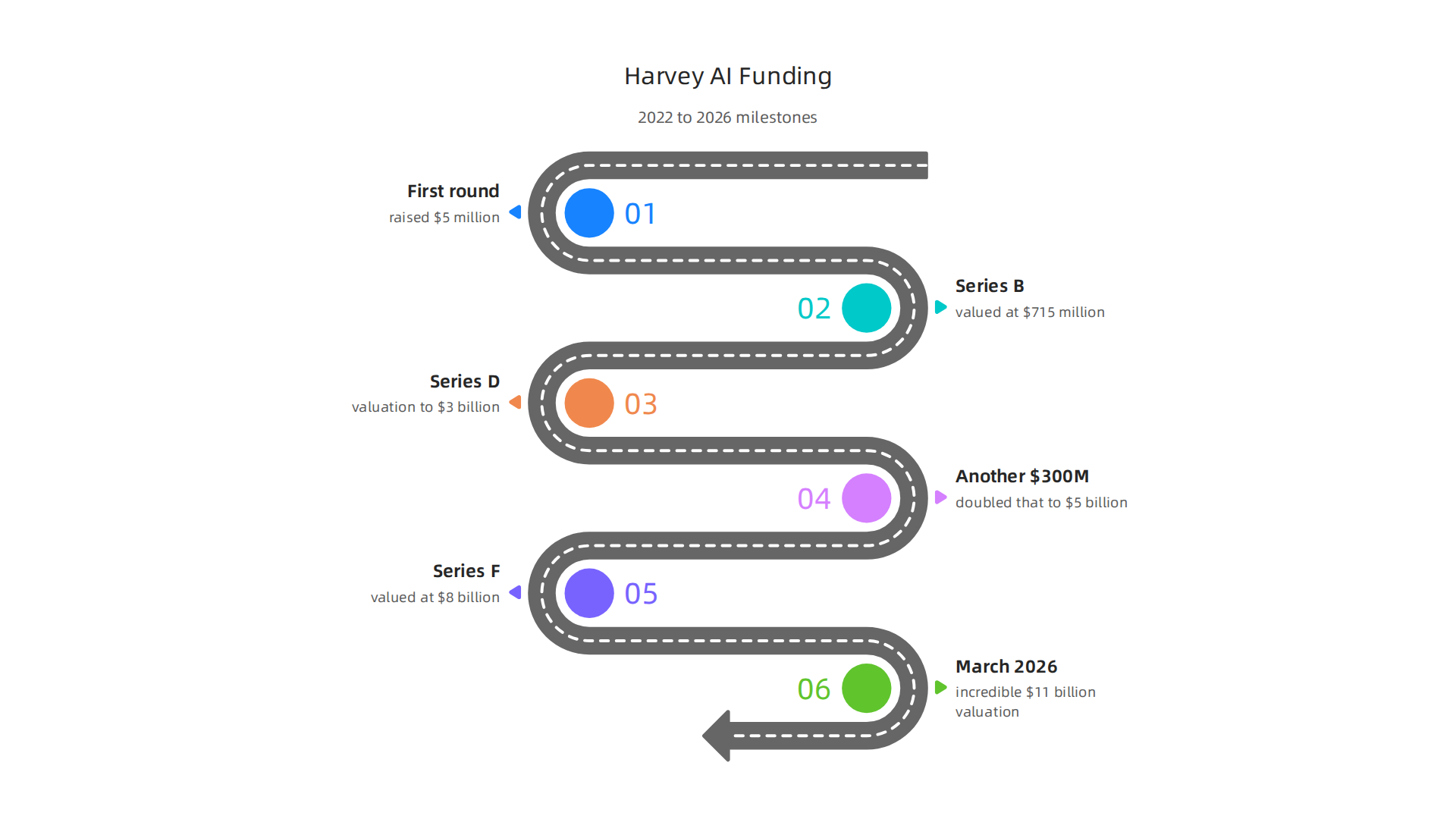
That first round raised $5 million in November 2022. Investors included Jeff Dean from Google AI, Elad Gil, and Sarah Guo.
It was a strong start, but the real growth was just beginning.
By December 2023, Harvey closed an $80 million Series B that valued the company at $715 million. In February 2025, a $300 million Series D pushed the valuation to $3 billion. Just four months later, another $300 million round doubled that to around $5 billion. The pace was staggering.
December 2025 brought a $160 million Series F led by Andreessen Horowitz, valuing Harvey at roughly $8 billion. Then in March 2026, the company raised $200 million at an incredible $11 billion valuation. As detailed in the Harvey AI Harvard Case Study, the company had already surpassed $50 million in annual recurring revenue by early 2025 and expanded to 235 enterprise customers.
Major Milestones Along the Way
Harvey did not just raise money. It built real products and landed real clients. By late 2025, the startup claimed 700 customers across 63 countries, including a majority of the top 10 U.S. law firms. It also crossed $100 million in annual recurring revenue in August 2025.
The platform expanded into international markets and added new product capabilities for contract analysis, due diligence, compliance, and litigation support. In February 2026, Harvey even partnered with actor Gabriel Macht, who played Harvey Specter on the TV show Suits, to launch the company’s Instagram page.
These milestones show a company that is moving fast and thinking big. Harvey AI has become the go-to example of how specialized AI can transform a traditional industry. And for anyone tracking the open source AI 2026 trends shaping the future of machine learning, Harvey’s closed, domain-specific approach offers a fascinating contrast worth understanding.
Under the Hood: The AI Technology Powering Harvey
All that fundraising and growth is impressive. But none of it works without the technology underneath. So how does Harvey actually deliver its magic? Let’s look under the hood.
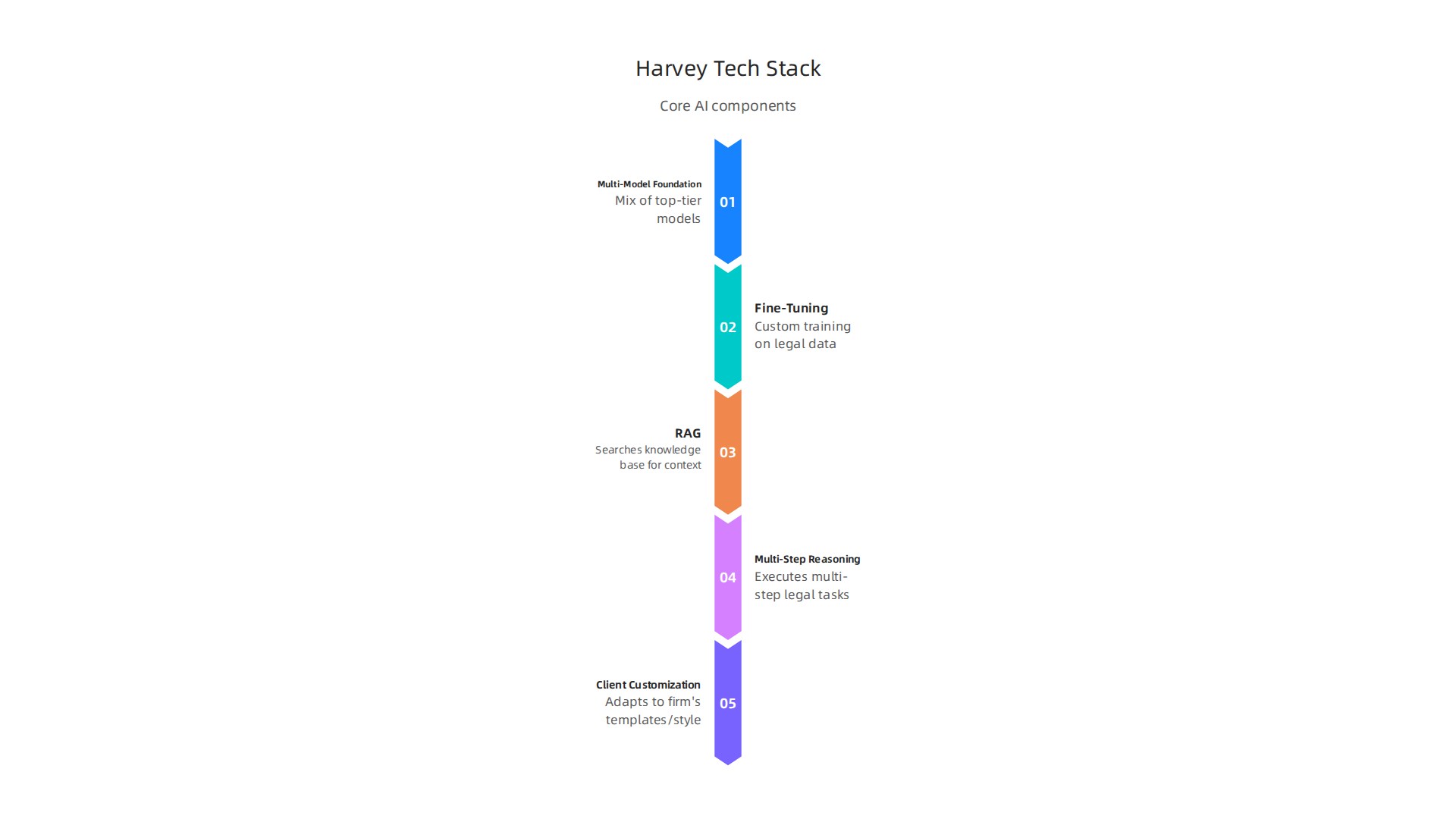
The short answer is that Harvey does not rely on just one AI model. It uses a carefully built stack of models, custom training, and smart retrieval systems.
A Multi-Model Foundation
Harvey started with OpenAI’s GPT models, but it has expanded far beyond that. Today, the platform uses a mix of top-tier models from multiple companies. According to Harvey’s own documentation on what AI models Harvey uses, the current lineup includes Anthropic’s Sonnet and Opus 4 suite, OpenAI’s GPT-5 suite and o3 suite, and Google’s Gemini 2.5 Pro. No single model is best for every legal task, so Harvey routes each request to the model best suited for that specific job.
This approach is called a cascading architecture. Instead of one model doing everything, smaller models handle quick tasks and bigger models step in for complex reasoning. The system also uses reasoning agents that can check their own work and correct errors before showing results to the user.
Fine-Tuning on Legal Data
A general chatbot trained on internet text is not useful for contract review or case law research. That is why Harvey invested heavily in fine-tuning. Working with OpenAI, Harvey built a custom case law model by training on 10 billion tokens of legal data. As detailed in the case study on Harvey’s legal fine-tuning, that training included the complete U.S. case law corpus, starting with Delaware and expanding nationwide.
The fine-tuning teaches the model legal vocabulary, reasoning patterns, and how to write answers the way lawyers expect. In blind tests across 10 major law firms, lawyers preferred Harvey’s answers over standard GPT-4 output 97% of the time.
Retrieval-Augmented Generation (RAG)
Fine-tuning alone is not enough. Legal work requires exact citations, and models can hallucinate. That is where retrieval-augmented generation (RAG) comes in.
With RAG, Harvey does not rely only on what the model remembers. When a lawyer asks a question, the system first searches a knowledge base of legal documents for relevant passages. It then feeds those passages to the model as context before generating an answer. This gives the model real sources to cite and dramatically reduces made-up facts. According to the case study, Harvey’s hallucination rate dropped to just 0.2%.
The retrieval system itself is custom-built. Harvey trained its own embeddings with Voyage AI on over 20 billion tokens of case law. This custom system finds up to 30% more relevant content than standard embedding methods from OpenAI or Cohere, according to Harvey’s own benchmarks in the BigLaw Bench Retrieval deep dive.
Multi-Step Reasoning and Client Customization
Harvey does not just answer questions. It executes legal tasks that require multiple steps. The platform uses agentic workflows: the model can plan a series of actions, check each one, and adjust if something goes wrong. This is how Harvey can do things like compare dozens of contracts at once or analyze a complex due diligence request.
On top of all that, each client law firm gets a custom layer. Harvey adapts its outputs to match the firm’s own templates, style guides, and preferred precedents. The system learns from each firm’s data and improves over time.
For anyone building or evaluating AI systems, understanding how Harvey combines fine-tuning, RAG, and multi-model orchestration offers a real-world blueprint. If you want to stay current on how these technologies keep evolving, subscribe to the AI newsletter worth reading for daily updates on AI breakthroughs and practical deployments.
Real-World Applications: How Law Firms Use Harvey AI
Now that you understand the technology behind Harvey, let’s look at how law firms actually put it to work. The platform is not just a toy for tech enthusiasts. It handles real legal tasks every day at some of the biggest firms and corporate legal teams in the world.
Harvey is used across four main areas: transactional work, litigation, in-house legal, and industry-specific workflows.
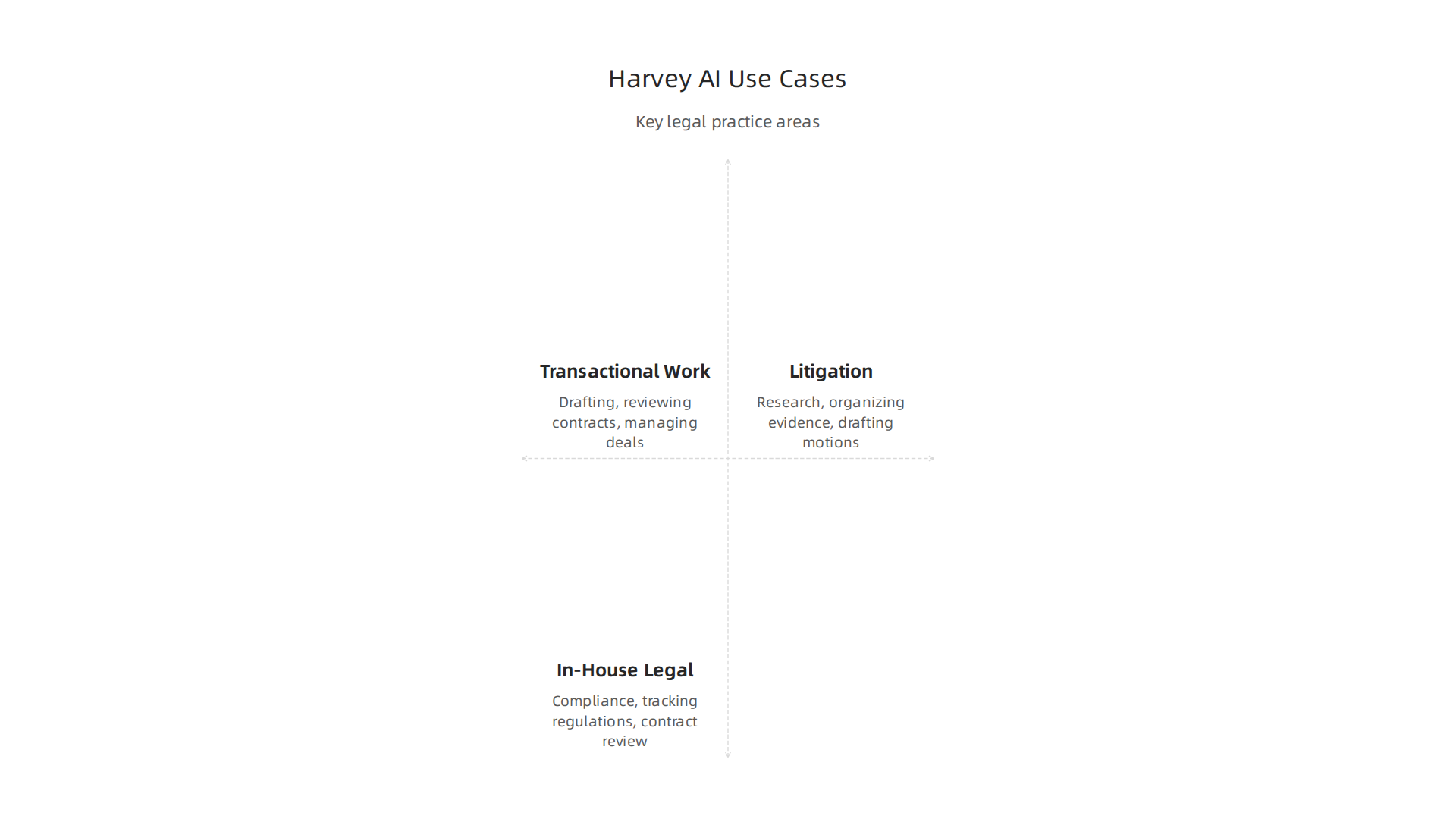
The most common tasks include drafting documents, reviewing contracts, legal research, due diligence, and regulatory compliance. A full list of these applications is available in the Top Harvey AI Use Cases for Law Firms guide.
Let’s walk through each area with real examples.
Transactional Work: Drafting and Due Diligence
Transactional lawyers spend hours writing clauses, reviewing agreements, and managing deals. Harvey speeds up all of that. A lawyer can upload a set of contracts and ask Harvey to compare terms, flag risks, or suggest language based on the firm’s own templates.
Allen & Overy was the first BigLaw firm to deploy Harvey firmwide in 2023. After merging to become A&O Shearman in 2024, the firm rolled it out to more than 7,000 employees. Their teams use Harvey for contract analysis, multilingual drafting, and scanning regulations across different countries.
Paul Weiss went a step further. They worked with Harvey to build custom workflows using Harvey’s workflow builder. The firm achieved an internal adoption rate of over 80% for Harvey, according to the case study from Spellbook’s overview of law firms using AI.
Litigation: Research and Trial Prep
Litigators rely on case law, discovery documents, and trial preparation. Harvey helps them find relevant cases faster, organize evidence, and draft motions.
One Reddit user from r/biglaw shared how they use Harvey for theory testing before a hearing. They upload both sides’ briefs and ask the AI to highlight strong arguments, identify weak points, and draft questions for the court. Another lawyer uses Harvey to compile timelines from pleadings and to draft discovery requests.
For in-house litigation support, companies like Deutsche Telekom use Harvey across their legal, compliance, and data protection departments. They estimate the tool saves each user about five hours per week. Their use cases include litigation support, public tenders, and regulatory compliance.
In-House Legal Teams: Compliance and Contract Review
Corporate legal departments have different needs. They manage supplier agreements, track regulations, and review contracts at scale. Harvey is a natural fit here.
The Adecco Group’s lawyers report saving up to eight hours per week on routine work. In one example, they modeled litigation strategies by comparing their case with historical rulings, which improved their accuracy and preparation.
Repsol, a major energy company, has a 200-person legal team using Harvey. Their adoption rate is 96%. They save four to six hours per lawyer per week. Early in the pilot, they saved about three hours, so the savings grew as the team learned to use the tool more effectively.
Syngenta, a global agriculture company, saw measurable returns. With only 40 seats, they saved $320,000 in just six months, as detailed in the How Harvey’s Legal Team Uses Harvey to Work Smarter blog post.
What the Numbers Tell Us
Across all these examples, the pattern is clear. Lawyers who use Harvey save significant time. The average user saves more than 25 hours per month. Harvey’s own benchmark results show that lawyers working with Harvey outperform by 5% on contract review tasks compared to working alone or relying on AI entirely.
If you want to stay ahead of how AI is reshaping professional work, check out our AI predictions for business leaders in 2026. That guide covers how tools like Harvey fit into the bigger picture of AI adoption across industries.
Impact on the Legal Profession: Efficiency, Pricing, and Access
The time savings we just looked at are impressive. But the real story goes deeper than extra hours in a day. Harvey AI is starting to change how law firms think about their business models, how they set prices, and who gets access to high-quality legal help. Let’s break down each part.
The End of the Billable Hour?
For decades, law firms billed by the hour. The more hours a lawyer logged, the more money the firm made. AI tools like Harvey turn that model upside down. A contract review that used to take a junior associate three hours might now take thirty minutes. That is great for the client who pays less, but it creates a real problem for firms that built their entire business around hourly billing.
Some firms are already moving toward value-based pricing. Instead of charging for time, they charge a flat fee for a specific result. A firm might offer a fixed price to review a merger contract or to draft a set of legal filings. This shift changes everything. It rewards speed and accuracy instead of slowness. A Harvey AI business model case study from Harvard Business School explores how firms are adapting their strategies to survive and thrive in this new landscape.
Opening the Door for Smaller Teams
Here is the part that matters to a lot of lawyers and business owners. Smaller law firms and in-house legal teams now have access to tools that were once only for BigLaw. In the past, only the largest firms had the budget to do deep due diligence or complex regulatory research. Now, a solo practitioner or a three-person legal department can use Harvey to handle work that used to require a whole support team.
This levels the playing field. Boutique firms can compete with AmLaw 100 shops on certain types of work. In-house teams can keep more work inside instead of shipping it to outside counsel.

The OpenAI case study on custom legal AI models shows that lawyers preferred Harvey’s answers over standard GPT-4 97% of the time. That kind of quality means smaller teams can deliver results that match the biggest names in the industry.
Real Concerns About Jobs and Skills
But let’s be honest about the downsides. If AI can handle document review and legal research in minutes, what happens to the junior associates who used to do that work? Many large law firms hire dozens of first-year associates each year specifically to grind through these tasks. Some of those roles will shrink or disappear. That is uncomfortable, but it is also a real possibility.
The solution is not to block the technology. It is to change how we train lawyers. Law schools and firms need to focus on higher-level skills like strategy, negotiation, client relationships, and ethical judgment. Lawyers must also learn to work alongside AI, to check its outputs, and to know when the tool is wrong. The Maryland State Bar overview of Harvey AI features highlights that the profession needs to embrace these new skills rather than fear them.
For a broader look at how AI is reshaping the workforce across industries, check out our guide on critical AI risks including job displacement.
The legal profession is changing fast. To stay ahead of these trends and understand what they mean for your career, get clear daily AI updates from The AI Newsletter Worth Reading.
Competitive Landscape: Harvey AI vs. Other Legal AI Tools
Harvey AI may be the most talked-about legal tool in 2026, but it is far from the only one. Several strong competitors are fighting for space inside law firms and legal departments. Knowing how Harvey stacks up against the rest helps you decide which tool fits your team’s actual needs.
The Major Players
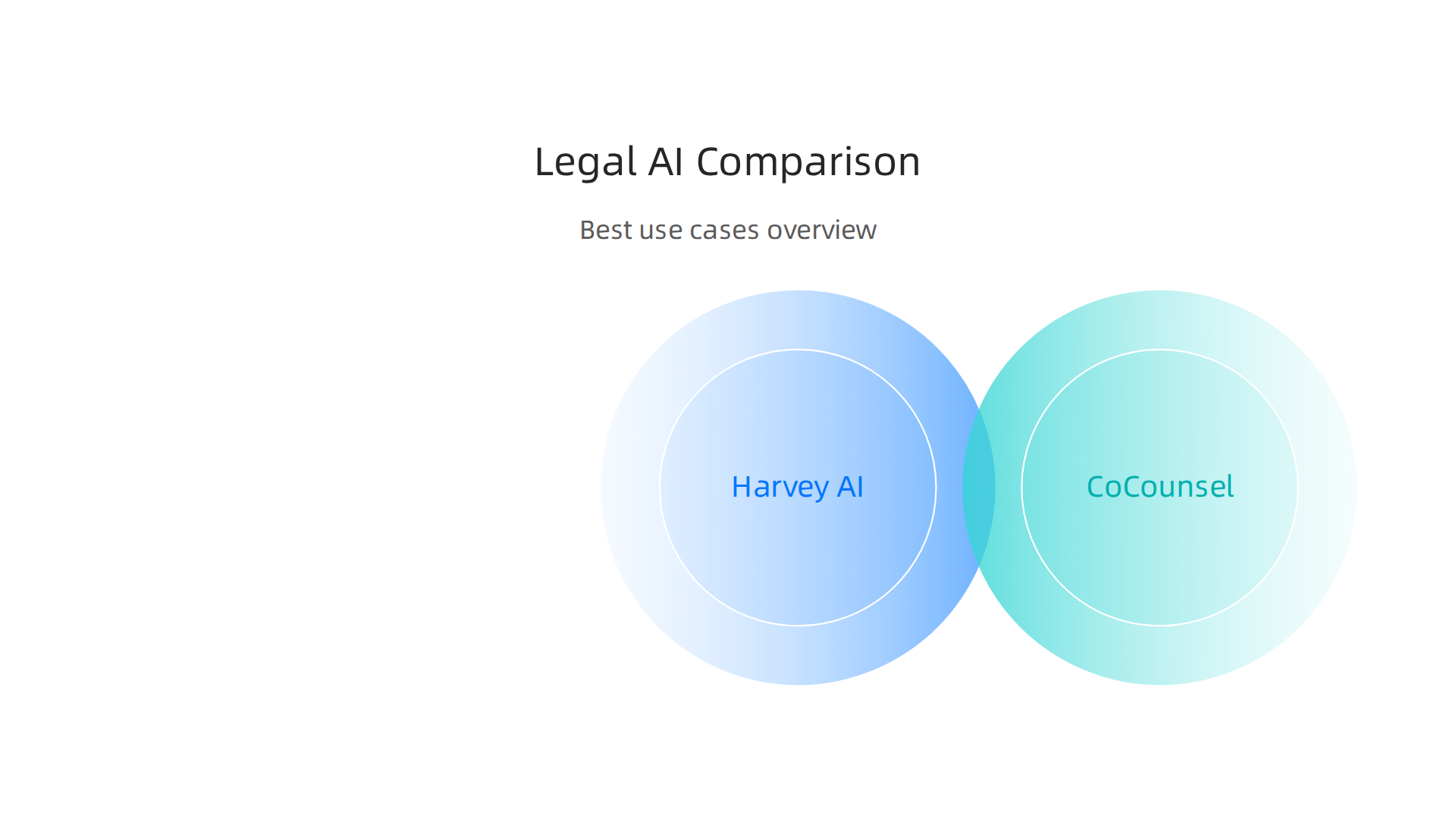
The biggest name right now is CoCounsel, built by Thomson Reuters on the foundation of Casetext. CoCounsel plugs directly into Westlaw, which gives it an edge in legal research. A lawyer can ask a question and get answers with real case citations pulled from the Westlaw database. If your firm already pays for Westlaw, CoCounsel adds AI features for roughly $150 to $400 per month per user according to a detailed comparison of Harvey AI and CoCounsel. That is much less than Harvey’s starting price.
LawGeex focuses on contract review. It checks documents against your own legal policies and flags risky clauses. It does not try to do everything. Instead, it sticks to one job and does it well.
Latch and NexLaw also compete in different corners. Latch is built for contract management and due diligence. NexLaw targets litigation workflows and trial prep. Each one serves a specific type of legal work rather than trying to be a full-suite assistant.
How Harvey AI Stands Out
Harvey positions itself as the premium option for the biggest law firms. Its starting price of around $1,200 per month per seat puts it out of reach for most solo practitioners and small firms. But that price comes with some serious advantages.
Harvey has a tight partnership with OpenAI. It uses custom fine-tuned models trained on legal data, not just a standard GPT-4 wrapper. It also has a full integration with LexisNexis for grounded legal research. The platform includes multiple tools: an assistant for drafting and research, Vault for secure document analysis, Knowledge for in-depth legal research, and Workflows for automating repetitive tasks.
A Casetext and Harvey AI feature comparison shows that Harvey is best for enterprise firms that need broad automation across contracts, due diligence, drafting, and research. CoCounsel is stronger for pure legal research. Harvey does all of that and more, but you pay for the scope.
Market Differences That Matter
| Factor | Harvey AI | CoCounsel (Thomson Reuters) | LawGeex |
|---|---|---|---|
| Best for | BigLaw, enterprise legal teams | Research-heavy mid-to-large firms | Contract review specialists |
| Core strength | Broad automation across many tasks | Deep legal research with Westlaw | Comparing contracts to your policies |
| Pricing | $1,200+/month per seat | $150-$400/month per user (with Westlaw) | Not publicly disclosed |
| Custom training | Yes, on your firm’s data | No | No |
Harvey’s main differentiator is its ability to handle diverse tasks inside one platform. A lawyer can research case law, draft a memo, review a contract, and run due diligence without switching tools. That saves time, but it also locks the firm into one ecosystem.
For firms that mainly need strong research, CoCounsel may be a smarter buy. For teams that handle massive contract volumes, a focused tool like LawGeex might do the job for less money.
To learn more about how to pick the right AI for your workflow, check out this guide to choosing AI tools for 2026.
The Bottom Line
No single legal AI tool wins for every firm. Harvey leads in scope and enterprise customization. CoCounsel leads in research accuracy and affordability. Niche tools like LawGeex and Latch win by doing one thing exceptionally well. The smart move is to match the tool to your team’s real workload, not to buy the flashiest name.
Challenges and Ethical Considerations for AI in Law
Harvey AI is a powerful tool, but it is not magic. Using AI in legal work comes with serious risks that every lawyer must understand before trusting the output.
The Hallucination Problem
You have probably heard the story by now. A lawyer used ChatGPT to write a legal brief and ended up citing fake court cases that did not exist. The judge sanctioned him. That exact situation is called a hallucination, and it is the biggest danger with generative AI.
Harvey AI tries to solve this by grounding its answers in real source material. It pulls from LexisNexis and gives you citations you can check. But no AI is perfect. A detailed guide on Navigating Ethical and Regulatory Challenges of Generative AI in Law Firms makes it clear that hallucinations remain a top concern. The only real safeguard is human review. A lawyer must verify every citation, every fact, and every conclusion before using it in a case.

Data Privacy and Client Confidentiality
When you upload a client’s merger agreement or a sensitive litigation document, where does that data go? If you use a public chatbot, your data can end up training the model. That is a massive ethical breach.
Harvey AI builds what it calls a digital fortress. Each firm gets its own isolated environment. Your data is never used to train the model for another client. But as the Legal issues with AI: Ethics, risks, and policy article points out, lawyers can still accidentally share confidential information by typing case-specific facts into any AI tool. The duty to protect client data does not change just because the tool is secure on paper.
Regulatory Guidance Is Still Catching Up
Bar associations and courts are moving fast to set rules. In July 2024, the American Bar Association issued its first formal opinion on generative AI. It covers duties of competence, confidentiality, and candor to the court. Some courts now require lawyers to certify that AI-generated content has been reviewed for accuracy.
The bottom line is that you as a lawyer are responsible for everything your AI assistant produces. A guide on how to use AI as a lawyer from Harvey itself stresses that competence in 2026 includes understanding your tools well enough to supervise them.
The Bottom Line
AI can make you faster, but it cannot make judgment calls for you. Every output needs a human eye. If you want to stay informed about the latest AI risks and best practices, consider subscribing to The AI Newsletter Worth Reading for clear daily updates that help you use AI safely and effectively.
Summary
This article explains Harvey AI, a specialized generative-AI platform built to speed up legal work such as contract review, due diligence, legal research, and litigation support. It traces Harvey’s founding, rapid fundraising and customer growth, then examines the technical foundations — a cascading multi-model architecture, heavy fine-tuning on legal corpora, and retrieval-augmented generation to cut hallucinations. The piece shows concrete firm deployments and measured benefits (time savings and adoption rates), discusses how Harvey changes pricing and access across BigLaw and smaller teams, and compares Harvey to focused competitors like CoCounsel and LawGeex. It also lays out real risks around hallucinations, client confidentiality, and ethical duties, and recommends human review and updated lawyer training. Readers will learn how Harvey works, when it makes sense to adopt it, what savings to expect, and the governance steps needed to use it safely.