
Open Source AI 2026 Trends Shaping the Future of Machine Learning

Introduction: The Open Source AI Revolution
Just a few years ago, open source AI felt like a side project. Something hobbyists played with. That has changed in a big way. In 2026, open source AI sits at the center of some of the most powerful machine learning systems being built today. Companies from startups to tech giants now rely on it for research, production, and everything in between.
Here’s the thing. The open source AI world moves fast. Really fast. New models, new tools, and new community-led projects pop up every week. For professionals trying to stay ahead, the flood of information can feel impossible to manage.

That is exactly why this article exists. We have distilled the most important trends and data from 2026 so you can focus on what actually matters.
The landscape right now is defined by three big forces.
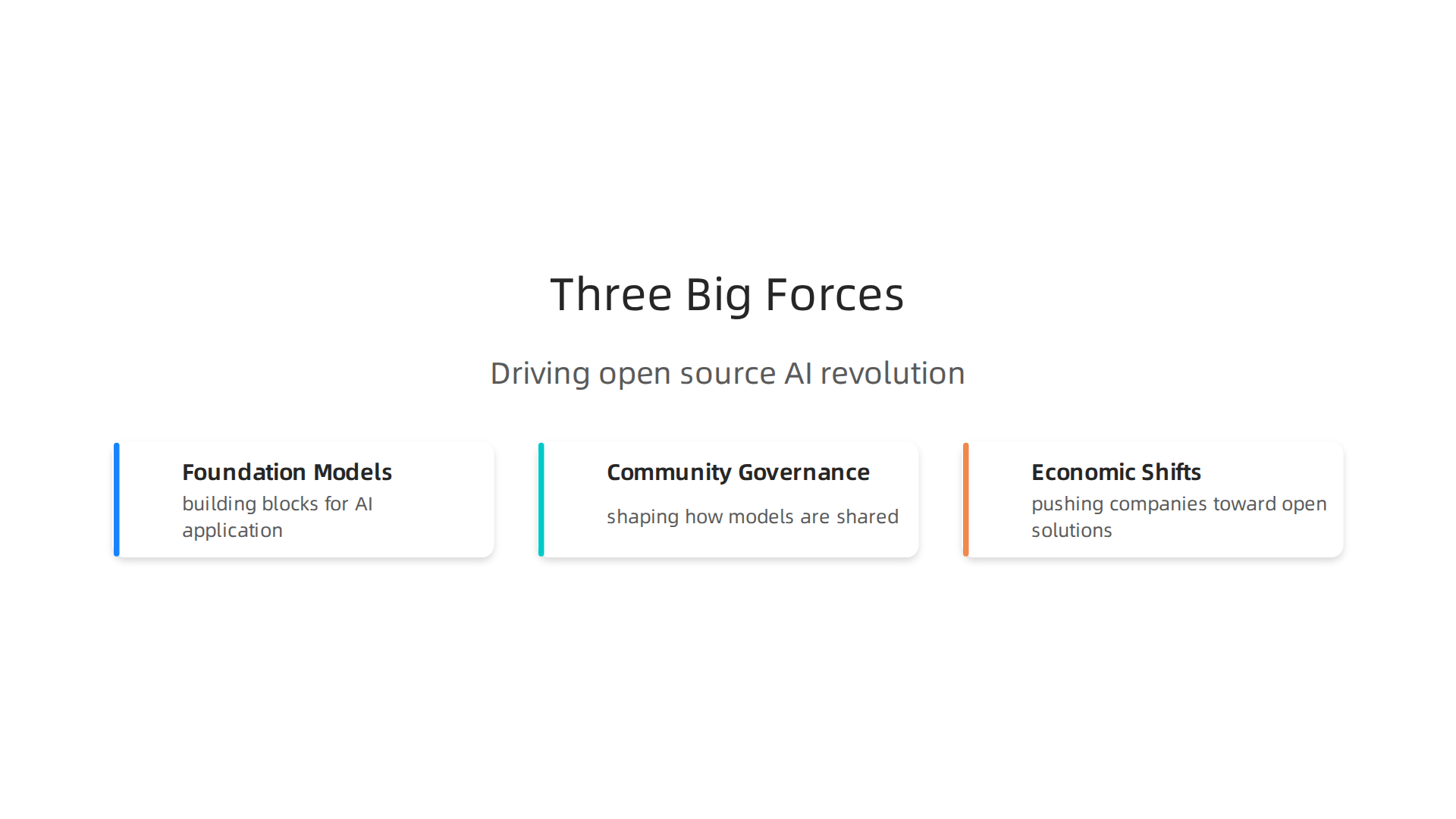
First, foundation models have become the building blocks for almost every AI application. Second, community governance is shaping how these models are shared, licensed, and improved. Third, major economic shifts are pushing more companies toward open solutions instead of closed, proprietary ones.
Understanding these changes helps you make smarter decisions about the tools and strategies your team adopts. It also gives you a clearer view of the future of AI and how to navigate it.
If you want to keep your finger on the pulse of the latest breakthroughs, The AI Newsletter Worth Reading delivers clear daily updates straight to your inbox.
Ready to dive deeper? Start with our AI overview 2026 for a complete picture of what practitioners should know this year.
The Rise of Open Source Foundation Models
The biggest shift in 2026 might be this: open source foundation models are no longer playing catch up. They have arrived. Models like Meta’s Llama, Mistral, and Google’s Gemma now match proprietary models on critical performance benchmarks within a point or two. The Foundation Model Landscape in 2026 shows that frontier models have converged. The gap between the top-ranked open and closed models has never been smaller.
This is not a fluke. It is the result of massive investment and community effort. The number of open source model releases keeps accelerating. Hugging Face now hosts over 2 million public models, and uploads more than tripled between 2023 and 2025, reaching 332,000 in a single quarter. That is the real scope of the open source AI revolution.
Smaller models are driving the bulk of this growth. While huge frontier models still get the headlines, most teams download and deploy models with 1 to 9 billion parameters. Why? Because they are cheaper, faster, and easier to customize. That is exactly where fine-tuning gives enterprises a real edge. A team can take an open model, fine tune it on their own private data, and get a custom solution that outperforms a generic closed model in their specific domain.
Take healthcare and financial services. These industries need to keep sensitive data on premises.

Open models let them do that. A health insurance company, for example, can fine tune a model on internal claims data without ever sending that data outside its own servers. The CB Insights report on foundation model investment highlights how smaller, open models are gaining traction in regulated sectors where privacy is non-negotiable.
The economics are compelling too. The open source AI model market is projected to reach $23.08 billion in 2026 and grow to over $50 billion by 2030. That kind of growth does not happen without real demand. Enterprises are voting with their budgets.
This shift in performance and adoption is one of the biggest forces shaping the future of AI. Teams that understand how to fine tune and deploy open foundation models will have a serious advantage. If you want practical artificial intelligence guidance on choosing the right model for your use case, check out our guide on choosing AI tools types evaluation and workflow for 2026. It breaks down exactly what to look for.
Democratization of AI Training and Deployment Tools
Having powerful models available is one thing. Being able to actually use them is another. And that is where the real democratization of open source AI has happened in 2026.
Open source libraries and platforms have torn down the barriers that once made AI training and deployment a game for only the biggest tech companies. Tools like Hugging Face Transformers, PyTorch, and JAX have become the industry standard. They give any team a starting point that used to require millions of dollars and a dedicated research lab.
The Hugging Face ecosystem is a perfect example.
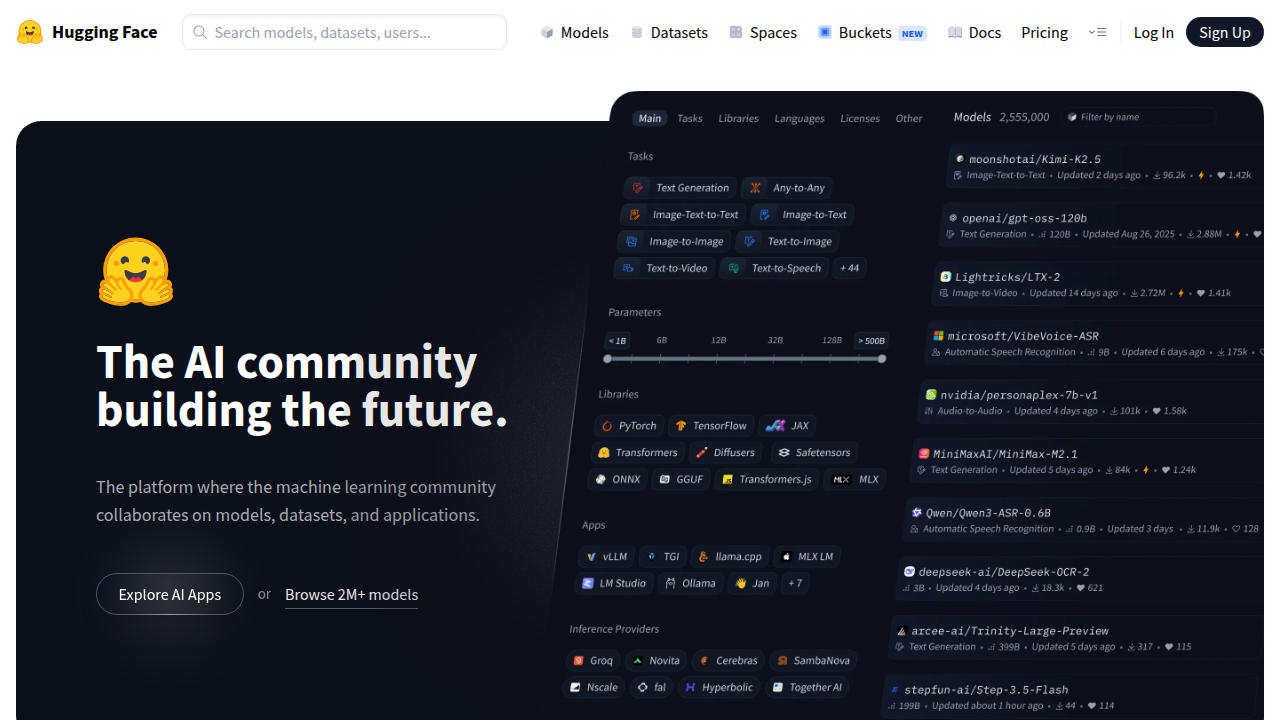
Their Transformers library lets you load a state-of-the-art model with just a few lines of code. The State of Open Source on Hugging Face: Spring 2026 shows just how massive this ecosystem has grown over the past few years. Developers are no longer writing training loops from scratch. They are standing on the shoulders of the open source community.
But it goes deeper than just loading a model. The ecosystem now includes accessible tools for fine-tuning, evaluation, and serving.
A team can use Parameter-Efficient Fine-Tuning (PEFT) and LoRA to adapt a 7-billion parameter model on a single GPU. Evaluation tools like LM Evaluation Harness have become standard. Serving tools like vLLM and Text Generation Inference make deployment fast and reliable.
This shift means a single developer or a small startup can now do what entire teams could not do just a few years ago. They can take an open model, customize it with their own data, and deploy it without giving up control of their private information.
If you are building pipelines or want to cut down on delays, check out this guide on how to optimize your machine learning workflow to cut bottlenecks and speed up model delivery.
The future of AI is not just about the smartest model on a leaderboard. It is about who can actually use these tools to solve real problems. Keeping up with the rapid changes in open source AI can be tough. That is why you might want to get clear daily AI updates from The Deep View Newsletter. It helps thousands of professionals stay ahead of the curve without the information overload.
Open Source MLOps and Infrastructure Revolution
Building a machine learning model is hard. Getting it into production and keeping it running is even harder. That is where MLOps comes in. And in 2026, the open source world has completely changed how teams manage this mess.
Gone are the days of fragile scripts and manual handoffs. Now, most scalable ML pipelines run on open source infrastructure. Kubernetes handles the heavy lifting for scaling. MLflow has become the go to tool for tracking experiments and managing model registries. Kubeflow ties it all together with orchestration on Kubernetes. These tools are no longer just nice to have. They are the default way to build production ML systems.
Why does this matter for you? Because open source MLOps gives you freedom. You are not locked into a single vendor. You can run your pipelines on your own servers, in the cloud, or a mix of both. You get reproducibility: every experiment, every data version, every model is tracked and can be recreated. You get collaboration: your whole team can work from the same shared registry and pipeline definitions.

And you get cost efficiency: no per-user license fees or surprise bills.
The list of top open source MLOps tools in 2026 is long and growing. MLflow, Kubeflow, DVC, Metaflow, ClearML, ZenML, Seldon Core and many more are mature and battle tested. The ecosystem now includes specialized tools that were missing just a couple years ago. Feast is the leading open source feature store. Evidently and NannyML help you monitor model drift and data quality in production. Langfuse and Arize Phoenix handle observability for LLM based applications. All of these are open source and self hostable.
This infrastructure revolution means you can build a complete production ML stack without spending a dime on software licenses. You just need the compute resources and the know how. And as the future of AI unfolds, these open source foundations will only become more important. Teams that invest in understanding them now will have a huge advantage.
For practical artificial intelligence guidance on building your ideal stack, check out this guide on how to choose an AI powered collaboration platform for your ML team. It walks you through the key decisions.
Community Governance and Ethical Frameworks for Open Source AI
Now that you can build an entire AI system with free tools, a big question pops up. Who makes sure these models are safe and fair? Who decides what is okay and what is not? This is where community governance comes in.

In 2026, open source AI is not just about code anymore. It is also about how communities manage that code responsibly. The old way was one leader calling the shots. That model is fading. Instead, we are seeing decentralized and community-led governance models where many people have a say. These structures make the whole process more transparent and inclusive. Nobody wants a single company or person controlling the rules for something this powerful. As one analysis of the future of open source AI governance explains, distributed governance prevents policies from being dictated by any single entity.
Alongside new governance structures, licensing is evolving too. Old open source licenses let anyone do anything with the code. That is great for collaboration but risky for safety. Now we see innovations like the RAIL license and MIT with conditions. These licenses try to stop bad actors from using open source AI for harmful things like surveillance or weapons. They keep the spirit of openness alive while adding guardrails. This shift is part of a bigger trend where projects are increasingly designed with compliance in mind, making them safer for regulated industries.
Transparency and auditability are also becoming major selling points for open source AI. When you can see the training data, review the model weights, and check the code yourself, you build trust. This is something proprietary models cannot offer. In 2026, many teams choose open source models precisely because they can audit everything. Independent researchers can poke around and find biases or security holes before anyone gets hurt. As AI governance experts point out, trust is built through transparency and continuous bias evaluation.
These ethical frameworks are not just nice to have. They are becoming requirements for serious teams. If you are building with open source AI, understanding these governance practices will help you stay ahead of regulations and earn trust from users.
To keep up with these fast-moving governance shifts, consider getting clear daily AI updates from The Deep View Newsletter. It helps you stay informed without the noise.
Economic and Business Implications of Open Source AI
The governance and ethics ideas we just covered might sound abstract. But they have real power to change how money flows in the AI world. In 2026, open source AI is becoming a serious economic engine. Let’s look at three big ways it’s reshaping business.
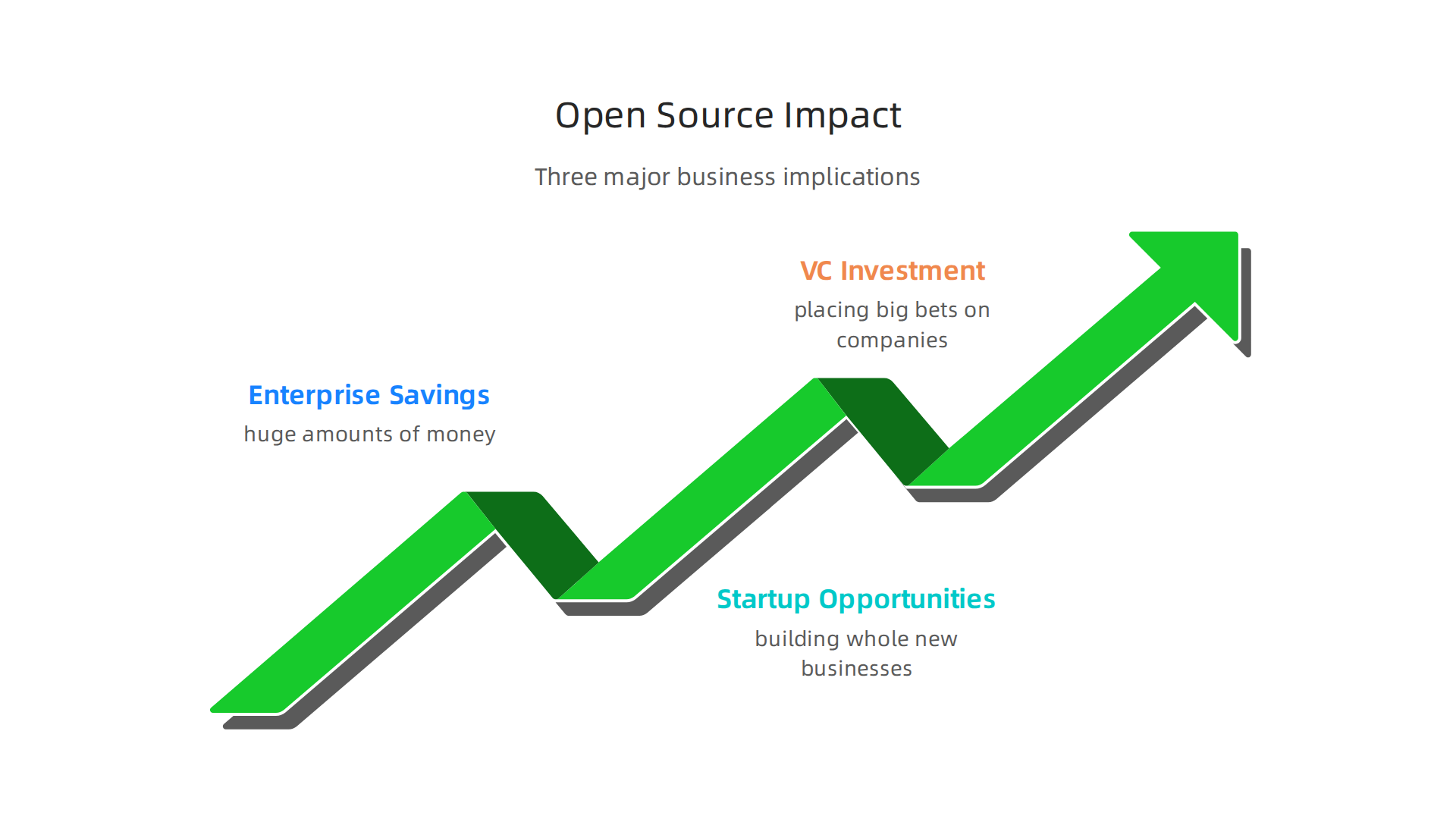
First, enterprises are saving huge amounts of money by switching to open source models. When you use a closed API, you pay per token. That cost adds up fast when you process millions of tokens a day. Open source models let you self-host. You pay for the servers and the team, but the model itself is free. Once you cross about 500,000 to 1 million tokens per day, self-hosting often becomes cheaper. And you avoid vendor lock-in. You are not stuck if a provider raises prices or changes their rules. According to the complete guide to open source AI models for enterprise, models like GLM-4.7 and Mistral Large 3 now use the Apache 2.0 license, which means you can use them for any commercial purpose with no restrictions. That changes the game for budgeting and planning.
Second, startups are building whole new businesses around open source AI. They are not just using the models. They are creating services on top. Think fine-tuning consulting, custom AI agents for specific industries, and managed hosting. Some founders build micro-SaaS tools that solve one narrow problem and charge $20 to $50 per month. Others create automation agencies that use AI workflows to help small businesses save time. The 3 AI business models actually working in 2026 show that you can start with almost no money and get paying customers in weeks. The barrier to entry has never been lower.
Third, venture capital is placing big bets on open source AI companies. Investors see that open source models are not just toys anymore. They are becoming reliable infrastructure. For example, Mistral AI, which develops mostly free open source models, is a key player on the Forbes AI 50 list of top AI companies. That list includes companies like OpenAI and Databricks, but now open source firms are standing right beside them. This signals long-term confidence that open source AI will be a cornerstone of the industry.
So whether you are a large enterprise watching your API bill or a startup founder looking for your next move, open source AI offers real economic advantages. If you want to stay ahead of these trends, check out our AI predictions for 2026 what business leaders need to know for a deeper look at where the market is heading.
Challenges and Risks in the Open Source AI Ecosystem
The economic upside is real, but open source AI comes with serious risks you need to know about. Jumping in without understanding the downsides can cost you time, money, and trust. Let’s break down the three biggest challenges.
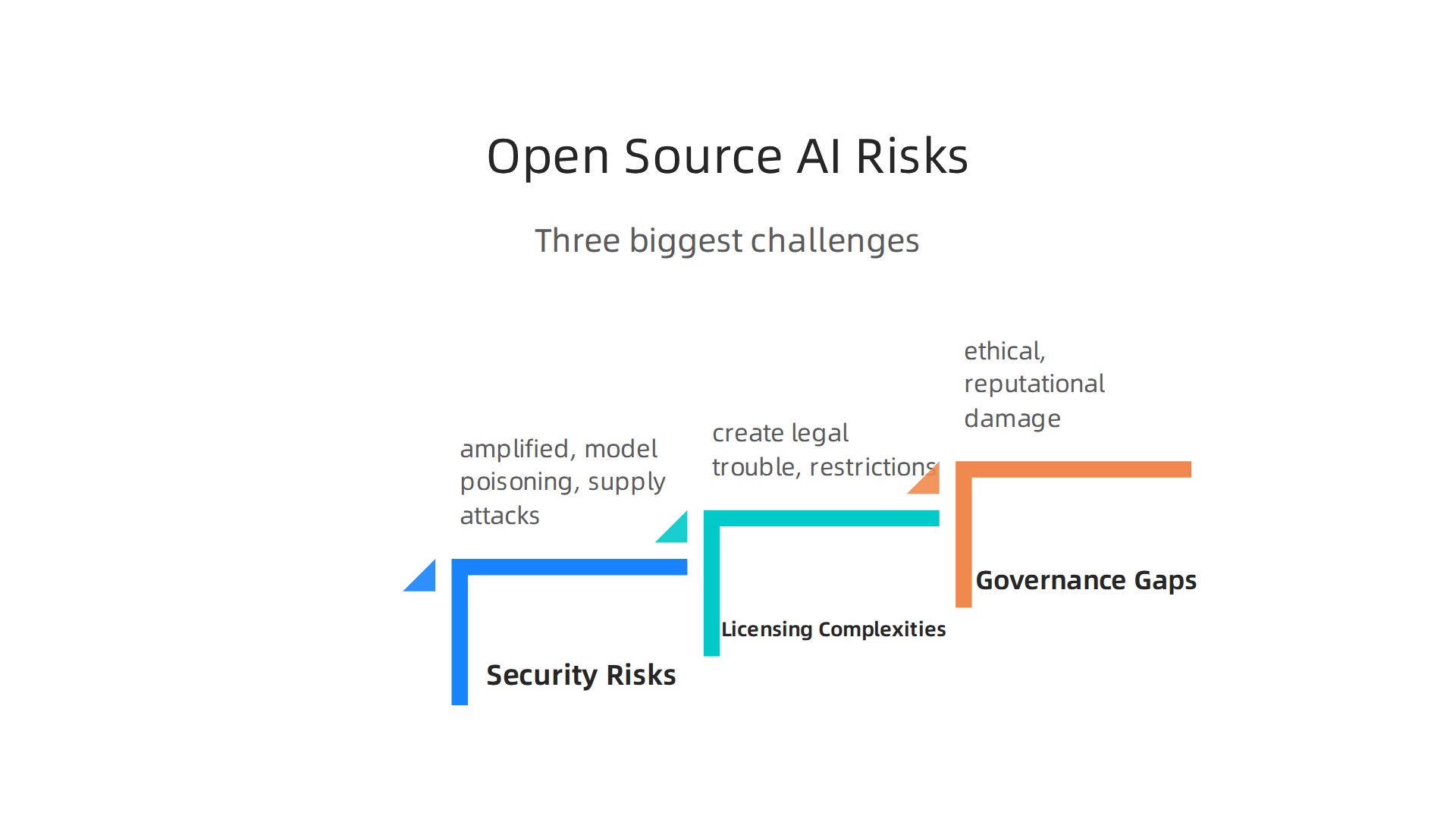
Security risks are amplified in open source. Because the model code is public, bad actors can study it to find weaknesses. Model poisoning is a real threat. Someone could sneak harmful changes into a model’s training data or weights. Supply chain attacks are also a growing concern. If you pull a model from a repository, you need to trust every step of how it got there. The Emerging Trends in Open Source Development for 2026 report highlights that projects are now adopting zero-trust architectures and Software Bill of Materials (SBOMs) to fight this. But many smaller projects still lack these safeguards.
Licensing complexities can create legal trouble. Not all open source licenses are the same. Some allow free commercial use. Others have restrictions that can trip you up. If you use a model under a research-only license in a commercial product, you could face a lawsuit. Even with permissive licenses like Apache 2.0, you need to track dependencies. A single library with a conflicting license can cause problems. The Top 7 open source LLMs for 2026 guide notes that license: Apache 2.0 is common now, but always double-check before you deploy.
Governance gaps can lead to ethical and reputational damage. Many open source projects run with loose oversight. Who decides what the model learns? Who audits it for bias? Without clear governance, models can produce harmful outputs or reinforce stereotypes. If you adopt such a model and something goes wrong, the blame falls on you. You need your own artificial intelligence guidance to stay safe. That means setting policies for model updates, access control, and compliance documentation before you start.
Want to stay ahead of these risks? The The AI Newsletter Worth Reading delivers clear daily updates on AI governance and security so you never get caught off guard.
The Road Ahead: Predictions for Open Source AI in 2026 and Beyond
The challenges are real, but the momentum behind open source AI is stronger than ever. So what comes next? Here are three big predictions for 2026 and beyond.
Open source will dominate model innovation with vertical specialization. Instead of a few giant models doing everything, we are seeing a wave of targeted open source models built for specific industries. Healthcare, finance, manufacturing, and legal are getting their own tuned models. The Open-Source AI Model Market Research Report 2026 shows the market will reach $23.08 billion this year, growing 21% year over year. This growth is driven by businesses that need models they can control, customize, and keep private. Specialized open source models will become the norm.
Edge AI and small models will take off thanks to open source frameworks. Big models are powerful but expensive and slow. Smaller models are winning in the real world. The State of Open Source on Hugging Face Spring 2026 report shows that models under 9 billion parameters are downloaded and used much more often than huge systems. Open source tools make it easy to run these small models on phones, sensors, and other edge devices. That means AI can work offline, on cheap hardware, and in places with limited internet. For example, you can already run open source AI on your phone. Check out Samsung Galaxy AI on-device machine learning to see how that works in practice.
Collaborative research and federated learning will become mainstream. Open source is not just about code. It is about people working together across borders. Federated learning allows organizations to train models on sensitive data without ever sharing that data. Open source projects are making this type of training accessible to everyone. The 2026 AI Index Report from Stanford highlights that open source development is now redistributing participation globally. Independent developers and small teams now account for 39% of all downloads. This shift leads to more diverse models that reflect different languages and cultures. The future of open source ai is collaborative, where researchers from around the world contribute to shared goals.
These predictions show that the next few years will be exciting. Open source AI is not just catching up. It is shaping the future of the entire field. Keep your artificial intelligence guidance updated, and you will be ready for what comes next.
Summary
Open source AI has moved from hobbyist experiments to mainstream infrastructure in 2026, driven by competitive foundation models, accessible tooling, and community governance. This article explains how open models like Llama, Mistral, and Gemma now rival proprietary systems, why smaller (1–9B parameter) models dominate real-world deployments, and how fine‑tuning on private data gives firms an edge in regulated industries. You’ll learn which libraries and MLOps stacks (Hugging Face, PyTorch, Kubernetes, MLflow, vLLM) make training and serving realistic for small teams, the economic tipping points for self‑hosting versus API usage, and the governance and licensing pitfalls to avoid. The piece also covers security threats, supply‑chain and licensing risks, and practical mitigation steps, then closes with market and technical predictions for specialization, edge AI, and collaborative training. After reading, you’ll know what tools to adopt, what questions to ask about licenses and provenance, and how to prioritize investments for safe, cost‑effective open source AI.