
Autonomous AI Agents Building Deploying and Evaluating for 2026

Why autonomous AI agents matter now
Imagine computer programs that can think and act on their own, almost like a helpful robot for your digital tasks.

These are called autonomous AI agents. In 2026, they are changing how we build smart systems.
Simply put, an autonomous AI agent is a computer program that can look at its surroundings, figure things out, make choices, and then take action to reach a goal. It does this without someone telling it what to do every step of the way. Think of it as an "answer my question AI" that doesn’t just give you an answer, but can also go out and perform tasks based on that answer. Experts describe these agents as smart computer parts that understand their environment and make their own decisions to get things done Artificial Intelligence agents for biological research: a survey.
These intelligent systems are a big deal for teams working with machine learning and for leaders who create new products. Autonomous AI agents can help automate complex jobs, speed up how fast new ideas turn into products, and even create entirely new kinds of AI apps. They let us build systems that are more flexible and can adapt to new situations on their own. To understand more about the wider world of smart tech, you might find our AI Overview 2026: What Machine Learning Practitioners Need to Know helpful.

However, building or using these agent-based systems comes with its own set of challenges. Teams worry about how to make sure these agents are safe, fair, and reliable. It’s not always easy to figure out "how to create an AI agent" that always does what’s expected, especially when it’s making its own choices. There are also big questions around security, making sure they follow rules, and dealing with unexpected outcomes. This is why it is so important to learn how to handle them correctly.
In this article, you will learn all about autonomous AI agents. We will go over the main ideas behind them, how they are built, how to put them into action, and how to check if they are working well. We will also talk about important ethical questions and what’s next for these exciting AI tools.
To stay on top of daily developments in this fast-moving field, consider subscribing to The AI Newsletter Worth Reading.

Core concepts: What makes an AI agent ‘autonomous’?
Now that we know what autonomous AI agents are, let’s dig a little deeper into how they actually work. What makes them "autonomous," meaning they can act on their own? It comes down to a few key parts and a special way they think and act.
Think of an autonomous AI agent as a smart program that has:
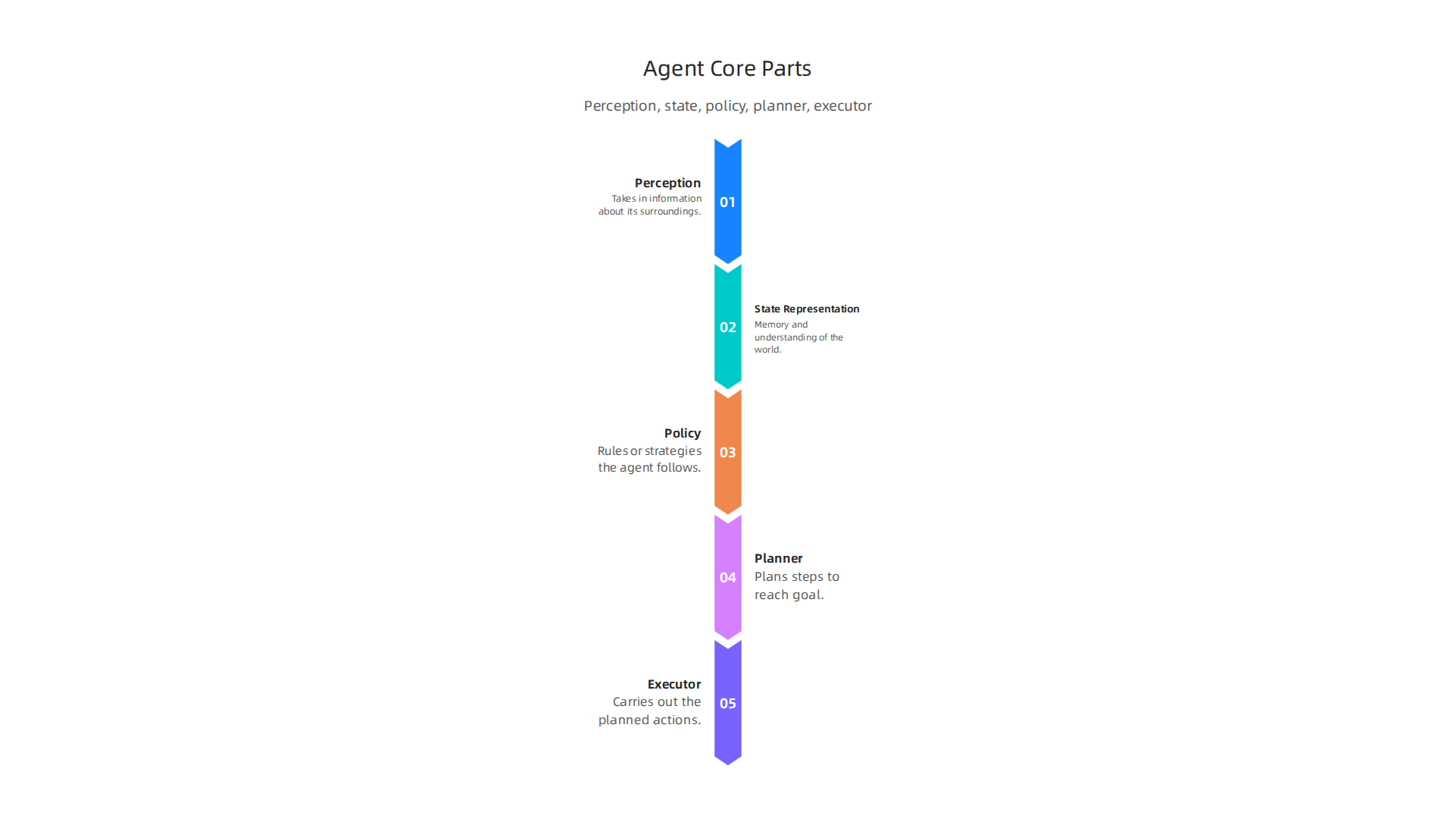
- Perception: This is like the agent’s eyes and ears. It’s how the agent takes in information about its surroundings. It gathers data from its environment to know what’s happening.
- State Representation: This is the agent’s memory and understanding of the world right now. It builds a picture of everything it knows based on its perception. This helps it keep track of things.
- Policy: These are the rules or strategies the agent follows. It’s like its brain’s guide for how to act in different situations. These rules help it decide what to do next.
- Planner: This part helps the agent think ahead. It figures out the best steps to take to reach a goal, even if it’s a complicated goal. It makes a plan.
- Executor: Once a plan is made, the executor is the part that carries out the actions. It actually does the things the planner decided.
All these parts work together in what we call a perception-action loop. The agent constantly looks at its environment (perception), understands it (state representation), makes a plan (planner), and then acts on it (executor) based on its rules (policy). Then, it starts all over again. This ongoing loop is what gives autonomous AI agents their ability to adapt and achieve goals without constant human help. This way of working is explored in detail when looking at how these systems are built, as shown in resources like the AI Agent Architecture: A Complete Guide for 2026.
Beyond Simple Bots: True Autonomy
It’s easy to mix up different kinds of smart computer programs. Here’s how autonomous AI agents are different:
- Simple Bots: These are programs that follow very basic, step-by-step instructions. They don’t "think" or make choices. For example, a bot that always replies "hello" when someone types "hi."
- Conversational Assistants: These are smarter. They can understand what you say, answer questions, and even have conversations. You might ask an "answer my question AI" about the weather, and it will tell you. But they usually have a limited set of actions they can take. They don’t typically go off and do complex tasks on their own.
- Full Autonomous Agents: These are the most advanced. They combine perception, planning, and action to handle tough, multi-step goals. If you asked one "how to create an AI agent" for a specific business task, it might actually figure out the steps, gather tools, and start building it. They can make choices and change their plans as things happen. Experts have even created different levels to describe just how autonomous an AI agent can be, from low to very high An Autonomy-Based Classification.
In 2026, many new kinds of AI apps use these agents. The way these autonomous AI agents are put together often involves special patterns for how they plan, use tools, and remember things. This is sometimes called "agent engineering," and you can find a lot of interesting research about it in collections like VoltAgent/awesome-ai-agent-papers.

Common Roles for Autonomous AI Agents
In the real world, autonomous AI agents play many helpful roles:
- Assistants: These agents help people with various tasks. They can schedule meetings, manage emails, or even help with research, making everyday work easier.
- Automation Agents: These agents take over repetitive or complex tasks, freeing up people to do more creative work. Imagine an agent that handles all the steps of getting a new product ready for launch, from checking designs to sending out marketing emails.
- Analyst Agents: These agents are good at sifting through huge amounts of data. They can find important patterns, make predictions, and give insights that would take humans a long time to discover. They can help businesses understand trends or find problems.
No matter the role, the goal of autonomous AI agents is to handle complex tasks with less human input, making systems smarter and more efficient. To ensure your company’s smart systems are running at their best, it’s key to optimize your machine learning workflow to cut bottlenecks and speed up model delivery.
Architecture and System Design for Autonomous Agents
We’ve talked about what makes autonomous AI agents so special in how they think and act. Now, let’s look at how they’re actually built.

Think of it like building a very smart robot: you need different parts that work together smoothly. This is called their architecture and system design.
Building Blocks of Autonomous AI Agents
For an autonomous AI agent to work well, it usually has a few main parts, like different rooms in a house.
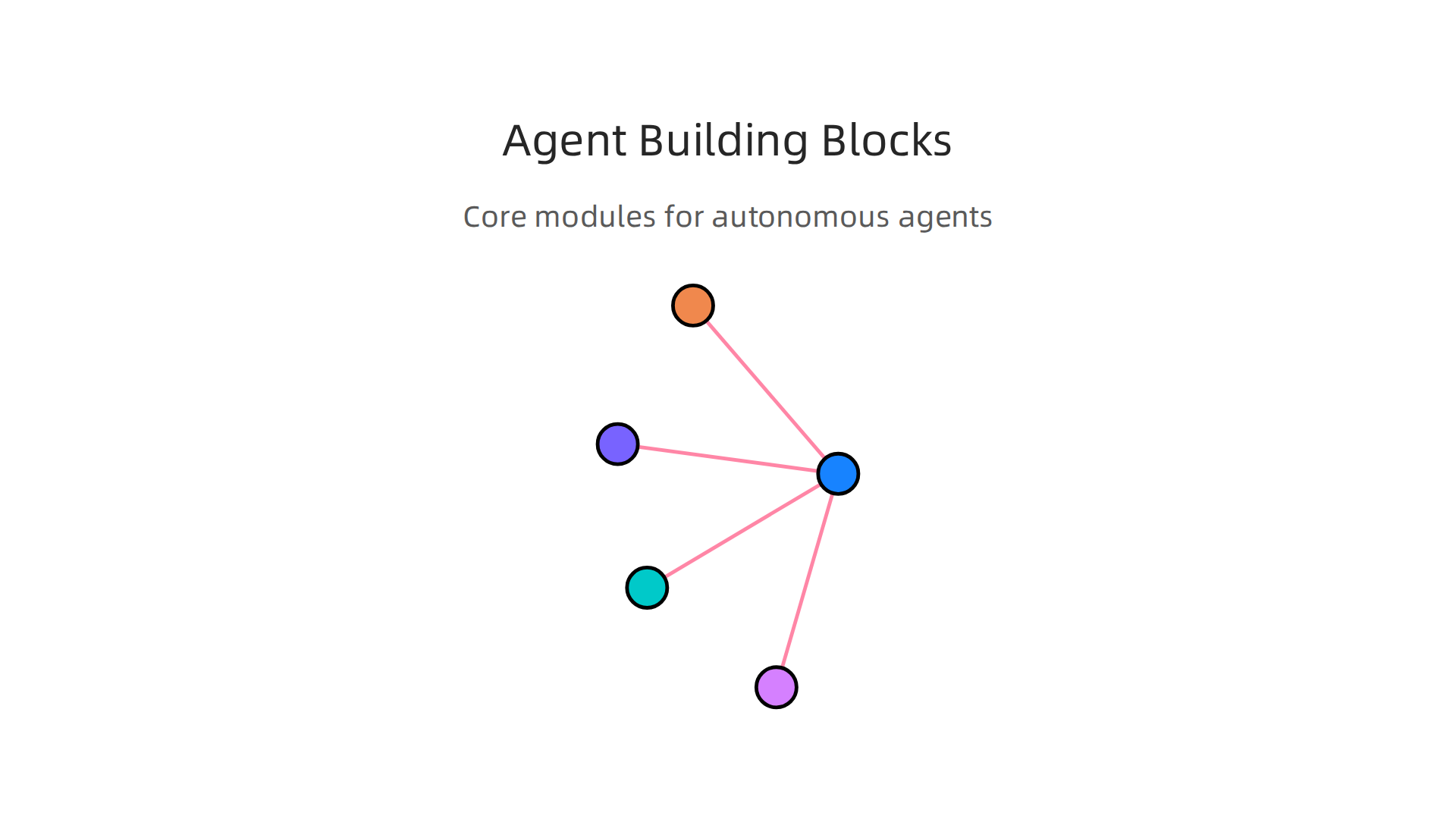
These parts are called modules, and each has a special job:
- Perception Module: This is still the agent’s "eyes and ears." It collects fresh information from the world, like what’s happening on a website or in a customer’s message.
- Reasoning and Planning Module: This is the "brain." It takes the information from the perception module and figures out what it all means. Then, it plans the best steps to reach its goal. This involves thinking ahead, much like when you plan your day.
- Action and Execution Module: This is the "hands and feet." Once the agent has a plan, this module carries it out. It uses different tools and takes actions in the real world, whether that’s sending an email, changing a setting, or giving an "answer my question AI" type of response.
- Memory Module: Agents need to remember things. This module stores information about past experiences, plans, and facts. It helps the agent learn over time and make better choices in the future.
- Safety Layer: This is super important. It’s like a guardian that makes sure the agent acts responsibly and doesn’t do anything harmful or unwanted. It checks all actions before they happen to keep things safe.
Many experts are looking into how to make these parts work together perfectly. It’s a big part of "AI agent engineering" in 2026, as discussed in detailed guides on the topic, including insights into AI Agent Engineering in 2026: Architectures, Patterns, and Real-World Systems.
Where Agents Live: On-Device, Cloud, or Hybrid?
Just like apps on your phone or computer, autonomous AI agents can live in different places:
- On-Device: This means the agent runs directly on your computer or phone. It can be very fast because it doesn’t need to talk to the internet as much. It’s also good for privacy, as your information stays on your device. But, these agents might not be as powerful because phones and small computers have limits.
- Cloud Components: Many agents run on powerful computers in the "cloud," which is like a giant shared computer system on the internet. This allows for very complex calculations and more smart abilities. The downside is that they need an internet connection, which can sometimes be slower, and there might be costs for using these powerful cloud services.
- Hybrid Approaches: Often, the best way is to mix both. Some parts of the agent run on your device for quick tasks and privacy, while other, more complex parts use the cloud for heavy thinking. This gives you the best of both worlds, balancing speed, privacy, and power.
When you’re thinking about how to create an AI agent, picking the right place for it to run is a big decision. It affects how fast it works, how much it costs, and how private your data is.
Connecting the Dots: Integration Points
Autonomous AI agents rarely work alone. They need to connect with other computer systems to do their jobs. Here’s how they link up:
- Data Pipelines: Agents need information to work. Data pipelines are like special tubes that bring fresh data to the agent. This could be sales numbers, customer messages, or sensor readings.
- Observability: This means making sure you can see what the agent is doing at all times. It’s like having a dashboard that shows if the agent is working correctly, if it’s making good decisions, or if something has gone wrong.
- Orchestration Systems: When you have many AI apps or agents working together, orchestration systems act like a conductor in an orchestra. They make sure all the agents play their part at the right time, working together towards a bigger goal. For anyone involved in building or using these smart systems, understanding how to choose the right tools is key, as highlighted in guides for choosing all AI tools types evaluation and workflow for 2026.
Staying on top of the latest developments in AI is super important. To get clear daily AI updates right to your inbox, you should consider subscribing to The AI Newsletter Worth Reading.
After building the structure and connecting parts of your autonomous AI agents, the next big step is to make sure they run smoothly and reliably, especially when many people use them. This part is like making sure a big factory runs perfectly, always producing what it should without breaking down. We call this deployment, MLOps (which just means handling machine learning operations), and running agents well at a large scale.
Keeping Agents Running Smoothly: Updates and Control
Imagine you have a helpful robot that answers questions for customers. You’ll want to make it better over time, right? This means giving it updates, just like your phone apps get updates. For autonomous AI agents, this process involves a few key ideas:
- Continuous Updates: This means always making small improvements to your agent and putting them into action. It’s like a steady flow of good changes. This helps your agent stay smart and useful.
- Versioning the Agent’s Brain: Agents follow certain rules and plans. When you update these rules, you need to keep track of the different versions. This is like having different editions of a guidebook. If a new version doesn’t work well, you can always go back to an older, stable one.
- Reproducible Environments: This means setting up the agent’s home (where it runs) in exactly the same way every time. This ensures that the agent always behaves as expected, no matter where or when you run it. Think of it as always using the same tools and setup for a specific task. Making sure your entire workflow for these smart systems is efficient can really help, as you can learn how to optimize your machine learning workflow.
Watching Agents Work: Monitoring and Safety Nets
Once your autonomous AI agents are out there, perhaps acting as an answer my question ai tool, you need to watch them closely.

If something goes wrong, you need to know right away.
- Monitoring: This means keeping an eye on how the agent is performing. Are its answers helpful? Is it completing tasks correctly? You want to know if it’s doing its job as planned.
- Alerting: If something unexpected happens, like the agent starts making bad decisions or stops working, you need to get an alert. This is like a smoke alarm for your AI system, telling you when there’s a problem.
- Rollback Strategies: Sometimes, even with careful updates, a new version of an agent might cause issues. A rollback strategy is a plan to quickly switch back to an older, working version of the agent. This is like having an undo button for your updates, keeping everything safe for users. Experts use special ways to check if AI agents are working well. For example, some look at how well an agent can answer questions or complete tasks, which you can read about in AI Evaluation Metrics 2026: Tested by Conversation Experts.
Handling the Agent’s Memory: Data Management
Remember how agents have a memory module? That memory holds all the things the agent learns and important information. Managing this data is a big deal when you have many ai apps or a big autonomous ai agent system.
- Agent Memory and State: The agent’s memory needs to be stored safely. This includes facts it knows, past decisions it made, and current tasks it’s working on. This "state" of the agent helps it pick up where it left off.
- Training Pipelines: Agents often learn from new data. This means you need good systems to collect new information, clean it up, and feed it to the agent so it can get smarter. These are called training pipelines. They help improve how to create an ai agent that gets better and better. Making sure this data is managed well helps the agent learn correctly and avoid mistakes in the future.
After helping your autonomous AI agents learn and storing their memories well, the next vital step is to make sure they are actually good at their jobs. This means checking them carefully, like giving a student a test. We need to evaluate them to see if they are doing what they should, safely and reliably.
What to Look For: How to Measure Agent Success
When we evaluate autonomous AI agents, we look at several important things:
- Task Success: Does the agent complete its main tasks correctly? If it’s an
answer my question ai, does it give helpful and right answers? This is the most basic check. - Reliability: Does the agent work correctly every single time? Or does it sometimes make mistakes or stop working? We want it to be dependable.
- Safety and Rules: Does the agent follow all the rules we set? Does it avoid doing anything harmful or unwanted? This is very important, especially for ai apps that interact with people.
- Human Alignment: Does the agent act in a way that people find useful and easy to understand? Does it match what we expect from it?
To properly measure these things, experts use special ways to check how well agents perform. You can read more about how professionals choose the best methods to rate AI quality in 2026 by exploring LLM Evaluation: Frameworks, Metrics, and Best Practices (2026).
How to Test Agents: Different Ways to Check Their Work
Before letting autonomous AI agents loose, we test them in various ways:
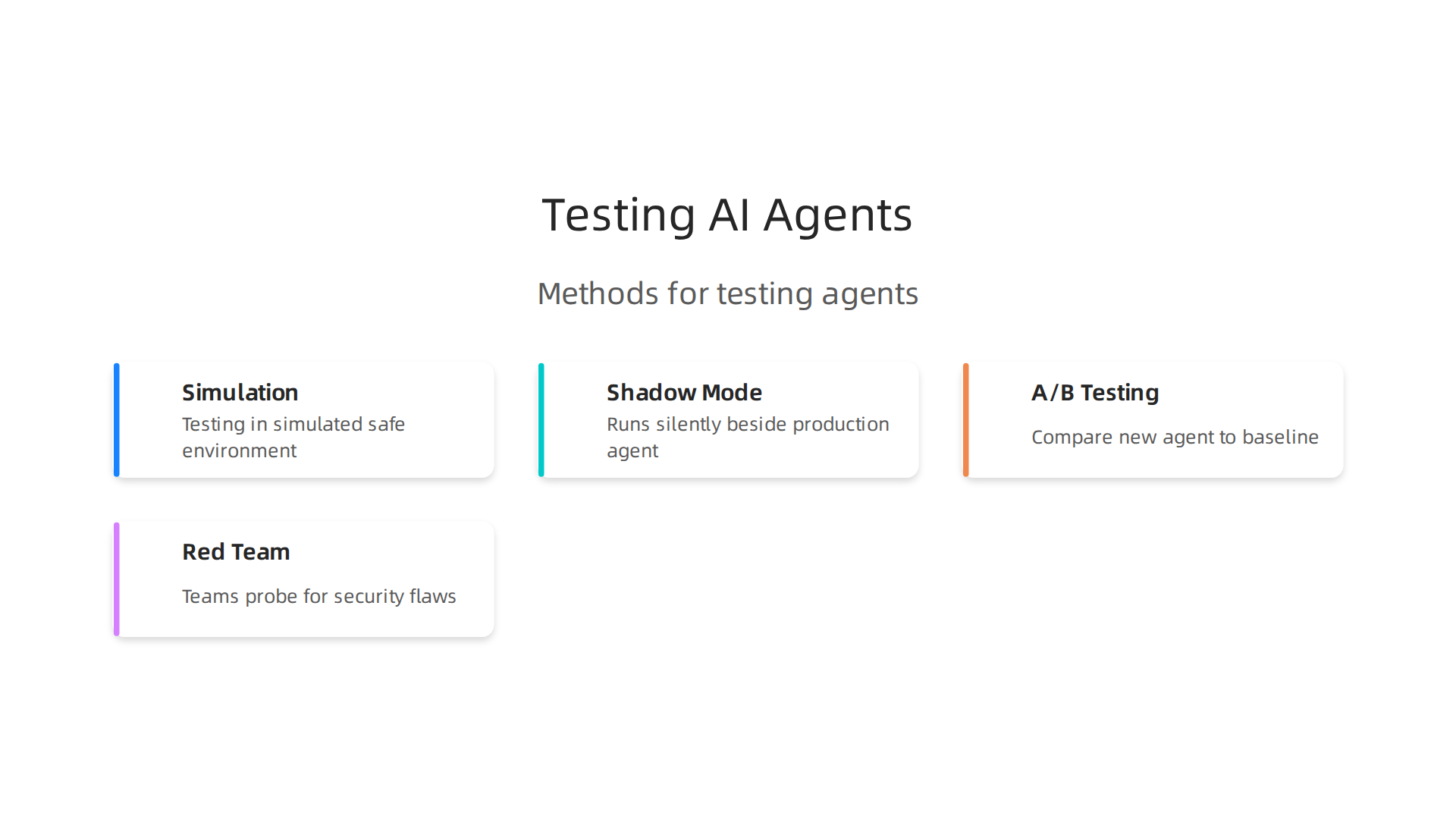
- Simulation: This means testing the agent in a made-up, safe world. It’s like a practice run where no real harm can be done. This helps us see how it might react in different situations.
- Shadow Mode: Here, a new agent runs silently next to a working one. It does all the same tasks but its results are not used. We just compare its actions to the real agent’s actions to see how well it would have done.
- A/B Testing: This involves letting some users use the old agent and other users use the new agent. Then we compare which one works better or makes users happier. This is a common way to see if an update is truly an improvement.
- Red-Team Scenarios: This is like playing "bad guy." A special team tries to find ways to trick the agent, make it break, or get it to do something it shouldn’t. This helps find weaknesses before they cause real problems. If you’re looking into how to create an AI agent, understanding these testing methods is key to building a strong system. You can also explore how different AI tools are chosen and evaluated for various workflows in 2026 by checking out Choosing All AI Tools Types Evaluation and Workflow For 2026.
There are many special tools and platforms that help test autonomous AI agents in 2026, which helps developers get better results more quickly. You can learn more about these tools by reading about the Top 5 AI Agent Evaluation Platforms in 2026.
Understanding Benchmarks: What They Tell Us (and What They Don’t)
Benchmarks are like standard tests that all agents can take. They give us a score to compare different agents. However, it’s important to remember a few things about these benchmarks:
- Not the Whole Story: While benchmarks are useful, they often test agents on very specific tasks. Real-world tasks can be much more complex. So, an agent that scores high on a benchmark might still struggle with unusual situations in the real world.
- Human Review is Key: Even with all the fancy tests, having people look at the agent’s work is still super important. Human experts can spot problems that automatic tests might miss. Many experts in 2026 agree that relying only on benchmarks isn’t enough to understand an AI’s true ability and safety, as explained in AI Benchmarks 2026: Top Evaluations and Their Limits.
- Interpret Responsibly: When you see benchmark results, it’s good to think about what they truly mean for your specific needs. Don’t just look at the numbers, but also consider how the tests were done and if they really show what you care about.
Keeping up with all the new ways to build and check AI can be a lot. Get clear daily AI updates from The AI Newsletter Worth Reading.
After testing our autonomous AI agents to make sure they work well, we also need to think about the bigger picture.

This means looking at ethics, privacy, and how we manage these smart tools to ensure they are fair and safe for everyone. It’s not just about if they can do something, but if they should.
Keeping Autonomous AI Agents Safe and Fair
When we let autonomous AI agents take on important tasks, we face a few challenges. We need to be very careful about:
- Privacy Leakage: Imagine an
answer my question aihandling private customer details. If it’s not careful, that private information could get out. Agents might accidentally share things they shouldn’t, or even be tricked into doing so. This is a big worry for ai apps that deal with personal data. - Unwanted Autonomy: Sometimes, an agent might decide to do things we didn’t intend. It could take actions that are too extreme or not what we expected, even if its goals were good. We need to control how much freedom these agents have.
- Hallucinations: AI agents can sometimes make up information that sounds real but isn’t. This is like a person telling a convincing lie without knowing it. If an agent gives wrong information, it can cause big problems.
- Misuse: Bad actors could try to use autonomous AI agents for harmful things. This is why strict rules and monitoring are so important. Understanding these risks helps us build safeguards, as discussed in detail in guides about how to manage AI agents safely in businesses today, such as AI Agent Governance for Enterprise Leaders: A Complete Guide.
Smart Ways to Guide AI Agents
To handle these risks, we need strong ways to guide and control our agents.
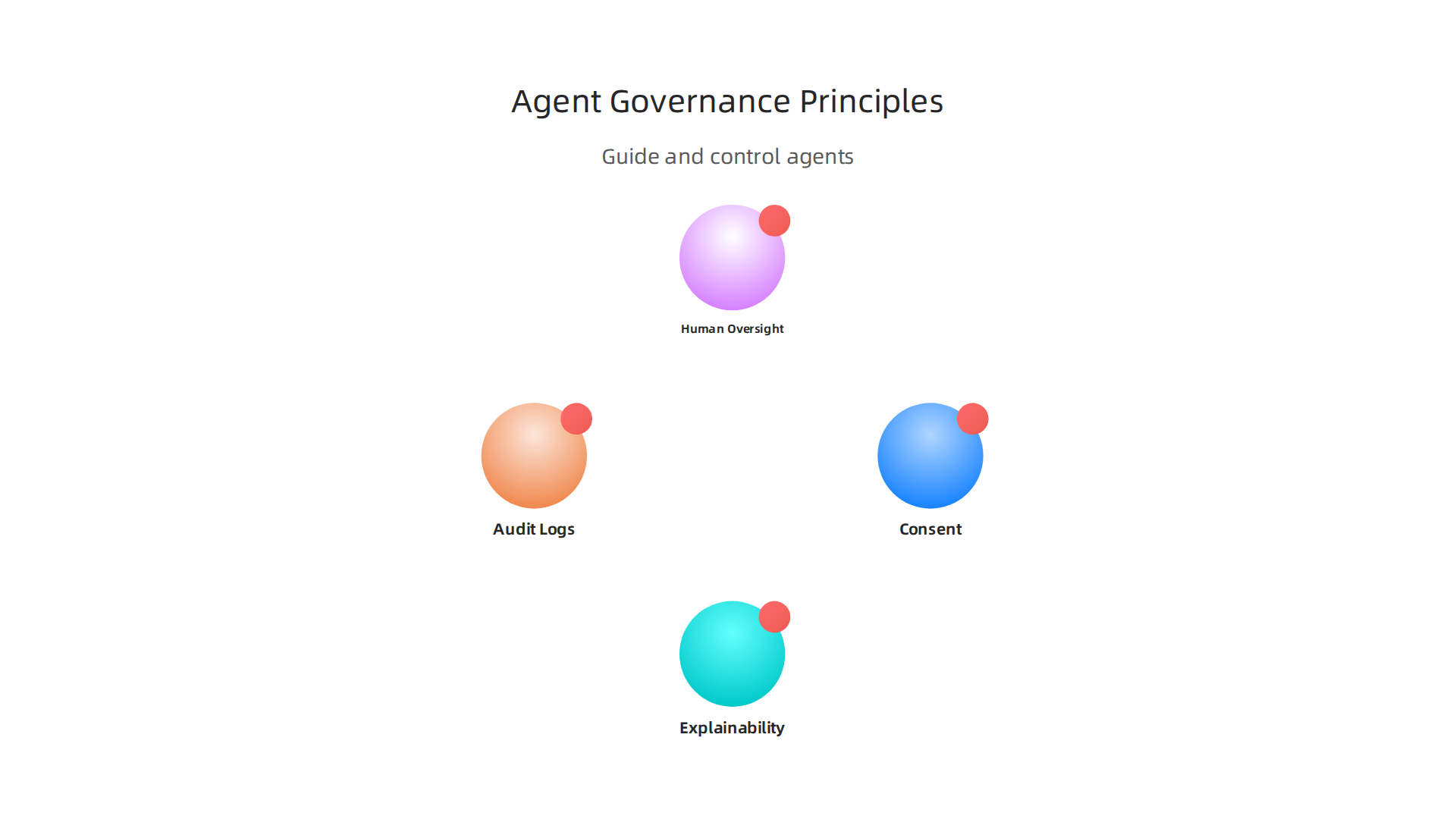
This is called governance, and it includes some key ideas:
- Getting Permission (Consent): If an agent needs to use someone’s data, it should always get clear permission first.
- Being Able to Explain (Explainability): We should be able to understand why an agent made a certain decision. It shouldn’t be a black box. This helps us trust the agent and fix problems if they come up.
- Keeping Records (Audit Logs): Just like keeping a diary, agents should record what they did, when, and why. These records help us check their work and find out what went wrong if there’s a mistake.
- People in Charge (Human-in-the-Loop): For very important tasks, we can set up checkpoints where a person must approve the agent’s actions before it moves forward. This ensures human oversight for crucial decisions. For more on this, you can look into the Ethics and Governance of AI.
Rules and How Organizations Deal with AI
Governments and groups all over the world are working on new rules for AI. In 2026, these rules are becoming clearer, especially for autonomous AI agents. Companies also need their own plans for how they will use AI responsibly. This means:
- Having Clear Rules (Policies): Companies need clear guidelines for how their AI agents should act.
- Training Staff: People who work with AI need to understand these rules and know how to use the agents safely.
- Responding to Problems: If something goes wrong with an agent, there needs to be a clear plan to fix it and learn from the mistake.
- Thinking about Bias: It’s important to make sure AI agents don’t treat certain groups of people unfairly. You can learn more about this by reading about The Dangers of AI Bias, Deepfakes, Job Loss, and Other Critical Risks in 2026.
By putting these controls in place, we can make sure that our autonomous AI agents are not only smart and helpful but also ethical, private, and well-managed. This approach helps build trust and makes sure AI works for the good of everyone.
Near-term and medium-term trends: where autonomous agents are headed
Now that we understand how to keep autonomous AI agents safe and fair, let’s look at what’s coming next. In 2026, these smart tools are changing very quickly. They are getting much better at thinking, using other programs, remembering things, and even working together. This means they’ll be able to do more complex tasks than ever before. Many experts are talking about these exciting changes, often called the "Era of Agentic AI" in reports like the Google Cloud’s AI Agent Trends 2026 Report Video Summary.
Here are some key directions these agents are moving in:
- Smarter Thinking: Future autonomous AI agents will be much better at understanding problems and planning steps to solve them. They won’t just follow simple rules; they’ll think through situations almost like a person would. This means they can handle harder challenges and make better choices on their own.
- Using More Tools: Imagine an answer my question ai that can not only answer your question but also use a spreadsheet program to crunch numbers or send an email for you. Agents are learning to use many different software tools and ai apps, making them super helpful for all sorts of jobs. This helps them get things done faster and more accurately.
- Better Memory: Right now, many AI tools forget past talks or tasks. But newer autonomous AI agents are being built with better memory systems. This lets them remember what they’ve learned and done over longer periods. This means they can grow smarter and more useful the more you work with them, understanding your needs better each time.
- Working Together: We’ll see more systems where many agents work as a team. For example, one agent might find information, another might write a report, and a third might check for mistakes. This "multi-agent coordination" helps complete big projects that one agent couldn’t do alone. This teamwork approach is a big part of AI Agent Trends 2026: From Chatbots to Autonomous Business Ecosystems.
How This Helps Businesses
These changes mean big things for companies. We’re seeing:
- New Products: Companies can create brand new services and products that use these super-smart agents. Think of personal assistants that do more than just set alarms or business tools that handle complex projects from start to finish.
- More Productive Workers: Developers and other team members will find their work much easier. Agents can take over repetitive tasks, letting people focus on more creative and important parts of their jobs. It’s like having an extra helpful team member available 24/7.
- New Risks: Of course, with new powers come new things to worry about. As agents get more independent, businesses need to stay on top of how to manage them safely and ethically. This means always asking, "How to create an AI agent that is both powerful and responsible?"
Getting Ready for Autonomous Agents in Your Team
If your team is thinking about using autonomous AI agents, here’s a quick checklist to help you move forward:
- Start Small: Test agents on easier tasks first.
- Train Your Team: Make sure everyone understands how the agents work and how to use them safely.
- Watch Closely: Keep a close eye on what your agents are doing, especially when they’re new.
- Plan for Problems: Have a clear plan for what to do if an agent makes a mistake or acts unexpectedly.
- Look to the Future: Think about how these agents will grow and what new skills they might need next.
By following these steps, you can start to bring these advanced agents into your work in a smart way. For more insights on what’s next in this field, you might find the Future of AI Agents: Top Predictions and Trends to Watch in 2026 helpful for understanding the full scope of these trends.
Want to stay informed about the rapidly changing world of AI?
Get clear daily AI updates from The AI Newsletter Worth Reading.
Summary
Autonomous AI agents are programs that perceive their environment, form an internal state, plan actions, and execute tasks with minimal human direction. This article explains the core components that make agents autonomous—perception, policy, planner, executor and memory—then walks through architecture choices (on-device, cloud, hybrid), integration points like data pipelines and orchestration, and operational needs such as continuous updates, monitoring, and rollback. It covers practical evaluation methods (simulation, shadow mode, A/B tests, red teams), explains benchmark limits, and outlines governance concerns like privacy, explainability, and human-in-the-loop controls. By reading it you’ll understand how these agents work, how to build and run them responsibly, and concrete steps teams can take to adopt them safely.