
Build and Manage Trustworthy AI Systems in 2026

The world of artificial intelligence is moving incredibly fast in 2026. Every day, new discoveries are made, and new ways to use AI come out. This quick pace means there’s a lot of information to keep up with.

It can feel like a flood, making it hard for anyone to know what’s truly helpful and how to use these new ideas in a smart, trustworthy way.
It’s a big challenge to turn all this new research into real tools and systems that work well. For example, understanding the different kinds of AI agent architecture or deciding between various AI agent platform choices can be confusing. Many experts have written about this fast growth, including detailed surveys that look at everything from how AI agents think to how they work together, showing just how complex these AI systems are becoming.
This article is here to help you cut through the noise. We will give you a clear, step-by-step guide. It’s a roadmap to help you design, check, use, and manage your AI systems and agents in a way you can trust. You’ll learn the best ways to build them, how to make sure they work correctly, and how to keep them safe and fair. We want to make sure you have the knowledge to succeed in this exciting field.
Get clear daily AI updates from The AI Newsletter Worth Reading.
Foundations: What counts as an ‘AI system’ and how agents fit in
When we talk about artificial intelligence, it’s easy to think only about the smart computer program itself, like a chatbot. But an "AI system" is much bigger than just that one program. Think of it like a whole factory, not just one machine. An AI system includes many parts working together. It starts with data coming in, then the AI model uses that data to make sense of things or make predictions. After that, it might send out new data or take an action. Humans are also a key part of many AI systems, guiding the process or stepping in when needed. These systems also connect to other tools and information, like a special ai database or other computer programs. This allows them to do useful things in the real world.
Now, let’s talk about "AI agents." An AI agent is a special kind of AI system that can act on its own. It’s like a small worker within the larger factory, but it has its own brain and hands. The main difference between simple AI models and AI agents explained is their ability to make decisions and carry out tasks without constant human help.
Here’s what makes AI agents special:
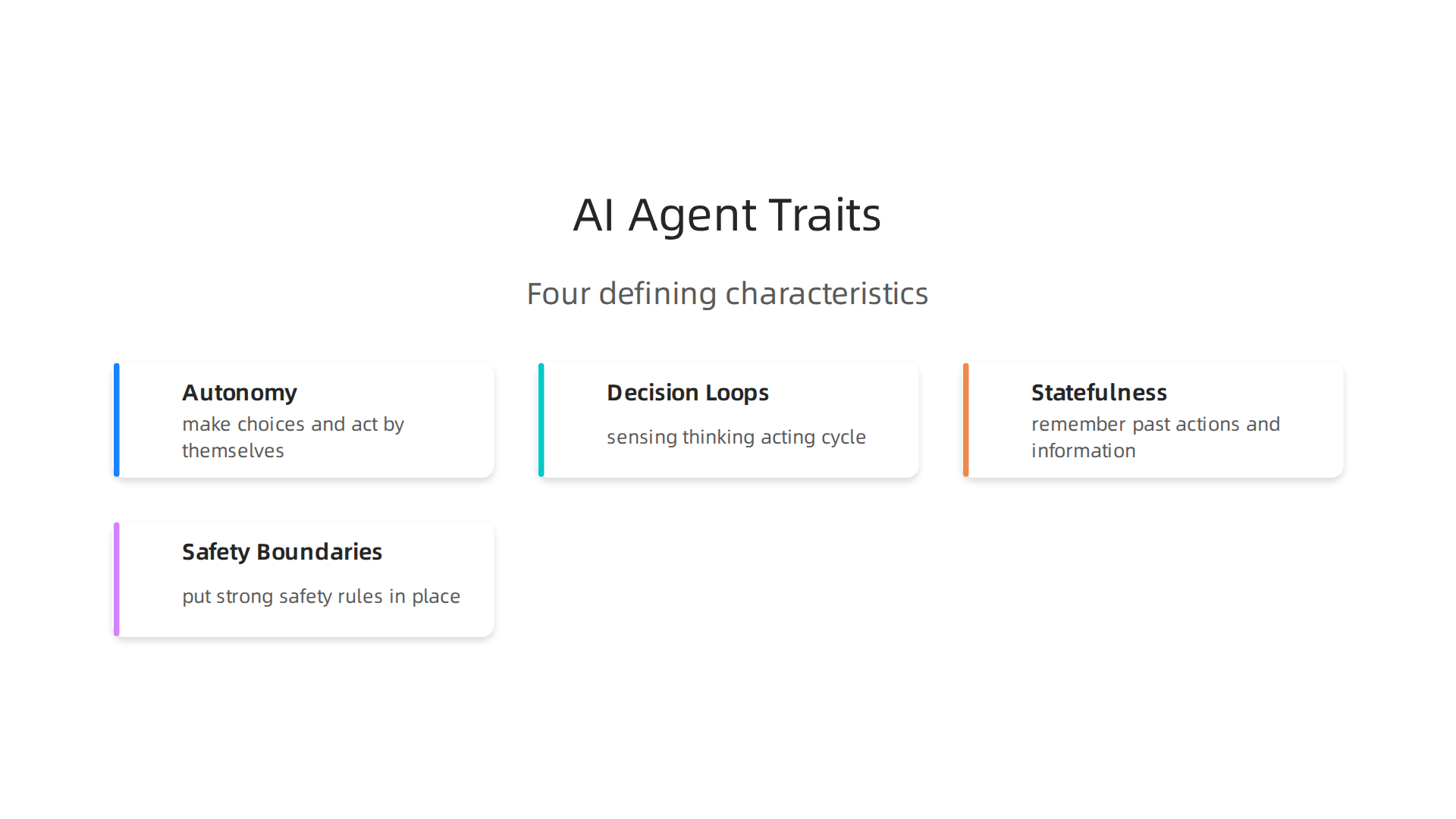
- Autonomy: This means they can make choices and act by themselves to reach a goal. They don’t need someone to tell them every single step.
- Decision Loops: An AI agent works by sensing its environment, thinking about what to do, and then taking action. This cycle repeats, allowing it to adapt to changes.
- Statefulness: Agents remember past actions and information. This "memory" helps them learn and make better decisions over time.
- Safety Boundaries: Because agents can act on their own, it’s super important to put strong safety rules in place. These rules prevent them from doing things that are harmful or unwanted. Building safeguards and guidelines is a critical part of working with agentic AI, making sure they operate within safe limits. Experts even create detailed guides, like an AI Agent Governance Checklist, to help manage risks.
Understanding the difference between a simple AI model, a full AI system, and an autonomous AI agent is the first step toward building and managing these powerful tools in a responsible way. You can learn more about how these different types of AI fit together.
The world of artificial intelligence changes very quickly. Because AI systems and agents are always getting better, it’s a big job to stay updated on all the new ideas, tools, and research. But don’t worry, there are good ways to keep up.
Simple Steps to Filter and Learn About AI Systems
For anyone working with AI, it’s important to have a plan for learning new things. Think about how you can keep an eye on new research and tools for building AI systems.
- Read Short Summaries and Overviews: Instead of diving into every single research paper, start with papers that review many others. For example, in 2026, there are helpful surveys that look at different AI agent architectures and how to design agentic AI systems. These kinds of summaries can give you a quick look at what’s new. They cover how AI agents think, plan, and use other tools.
- Follow Trusted News Channels: Find websites and newsletters that share simple updates about AI every day. This helps you get the main ideas without getting lost in too much detail. Keeping up with these quick updates means you’ll know about important changes in AI systems and how they work.
- Explore New Tools and Platforms: New tools for building and managing an AI agent platform come out all the time. Make time to try them out. Seeing how they work can teach you more than just reading about them. You can also learn how to build production AI agents with hands-on machine learning.
Staying informed about the latest in AI doesn’t have to be a struggle. Get clear daily AI updates from The AI Newsletter Worth Reading.
Learning Together as a Team
When everyone on a team learns together, it makes the whole team stronger.

Here are some ways teams and companies can keep learning about AI systems:
- Share What You Learn: Have short meetings where everyone shares one new thing they learned about AI that week. This could be a new tool, a interesting research finding, or even a tricky problem they solved. This helps everyone understand the big picture of how AI is changing.
- Set Aside "Learning Time": Give your team specific time each week or month to explore new AI technologies. This could involve looking into different types of AI agent architecture or understanding the differences between AI agents vs agentic AI.
- Build a Shared Knowledge Base: Create a central place where everyone can save useful articles, guides, or notes on new AI tools. Think of it like a smart AI database for your team’s knowledge. This helps new team members get up to speed quickly and makes sure important information isn’t lost.
- Learn About Governance and Safety: Since AI agents can act on their own, understanding how to control them safely is very important. Teams should study new guidelines and practices for managing AI automation tools and ensuring they do not cause harm.
By setting up these workflows and learning habits, individuals and teams can better understand the fast-paced world of AI systems and use new developments wisely.
Learning about new AI ideas is great, but it’s just as important to make sure these AI systems work well and are safe. This means we need to check them carefully to make sure they do what they are supposed to, every time.
How We Check AI Systems
When we design AI systems, we need to look at a few main things to make sure they are dependable.
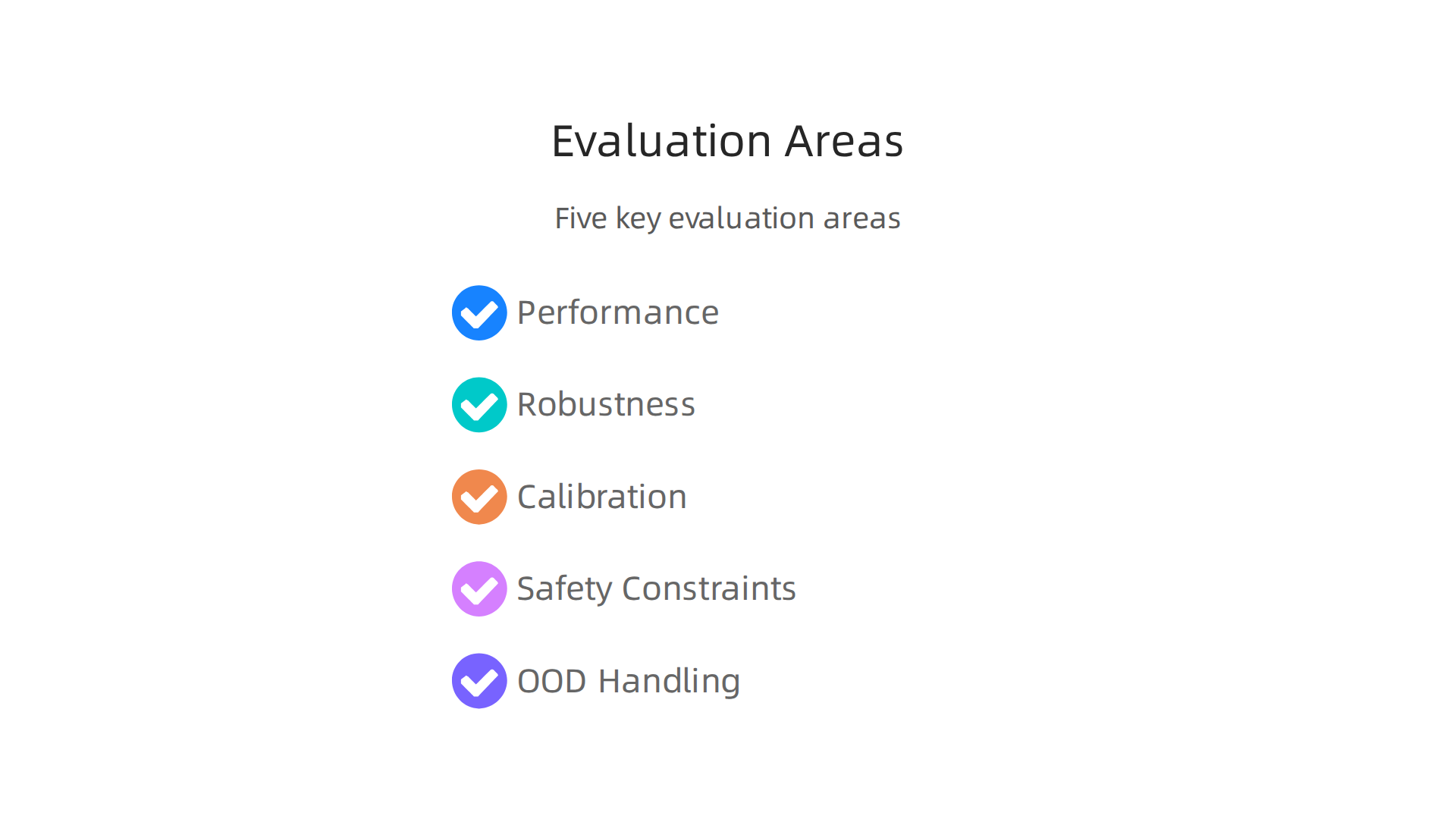
- How well it works (Performance): Does the AI do its job accurately and quickly? This is about how good the AI is at its main task. Companies often use special tests, called benchmarks, to compare how different AI systems perform against each other. For example, in 2026, many use these benchmarks to check how well AI works in different settings Expanding the AI Evaluation Toolbox with Statistical Models.
- How strong it is (Robustness): Can the AI still work well even if things change a little or if someone tries to trick it? We need to know if an AI agent architecture can handle unexpected things. This also means making sure it’s not easily fooled by bad information Beyond Performance: Comprehensive Evaluation ….
- How sure it is (Calibration): When the AI says it’s 90% sure about something, is it really right 90% of the time? This helps us trust the AI’s predictions.
- Safety rules (Safety Constraints): Does the AI follow important safety rules? This is very important for AI agents that act on their own. The 2026 International AI Safety Report talks a lot about checking for risks International AI Safety Report 2026.
- Dealing with new things (OOD Handling): What happens if the AI sees something it has never seen before? Can it still make good choices, or does it get confused?
Checking these areas helps us understand an AI system deeply. It is key to making sure that any AI agent platform we build is reliable and trustworthy.
Smart Ways to Test AI
To make sure AI systems are dependable, we use different testing methods.
- Small part checks (Unit Tests): We test each small piece of the AI separately to make sure it works correctly on its own.
- Putting it all together (Integration Tests): We check how all the different parts of the AI work together. This is like making sure all the puzzle pieces fit perfectly.
- Tricky situation tests (Scenario-Based Stress Testing): We put the AI in difficult or unusual situations to see if it breaks or makes mistakes. This helps find problems before they become big issues, especially with complex AI agents vs agentic AI setups.
- Always checking (Continuous Evaluation): We don’t just test AI once. We keep checking it regularly as it runs to make sure it stays safe and performs well over time. This includes making sure AI-generated code is dependable AI-Generated Code Is Not Reproducible (Yet): An Empirical …. Ensuring that machine learning models can be reproduced is also a big part of testing achieve reproducible machine learning with venv python.
By using these ways to test and check, we can build AI systems that are strong and reliable. This helps everyone feel more confident about using AI every day. It also helps us think about AI ethics for machine learning teams as we build these tools.
Making sure AI systems work well in the lab is only half the battle. The next big step is taking those tested ideas and making them ready for real-world use. This means moving from research to production. It’s like taking a recipe that works in your kitchen and making sure it can be cooked perfectly in a big restaurant every single time.
Bridging Research to Production: Prototyping, Reproducibility, and Case Study Patterns
To make sure new AI ideas can truly help people, we first use quick ways to test them. This is called prototyping.
Quick Checks with Prototyping
Prototyping is about building simple versions of our AI systems to see if an idea is good before we spend a lot of time and money on it. We run small, focused experiments. For example, if we have a new idea for an AI agent platform, we might build a basic version to see if it can handle simple tasks. This helps us find out quickly what works and what does not. It’s a key part of the larger journey described in an AI development roadmap for 2026 research MLOps and governance.
This step is very important for new kinds of AI systems. It helps us quickly see if an AI agent architecture or a specific design for AI agents vs agentic AI will work as expected when we try it out. You can think of it as trying out a small model airplane before building a real one.
Making AI Work the Same Way Every Time
After we find a good idea through prototyping, we need to make sure that anyone can get the same results if they follow our steps. This is called reproducibility. It means that if someone else uses the same data, code, and settings, they should get the same outcome as you did. This is very important for trust, especially when AI systems are used in important jobs.
Many people are working to improve how reproducible AI is. It’s still a challenge, with some studies showing that AI-generated code is not always reproducible even when asked for. Also, researchers highlight that reproducibility in machine learning means independent investigators should be able to reach the same conclusions by following the shared instructions and data 2025 Reproducibility in Machine Learning-based Research.
How to Make AI Reproducible
To make sure our AI systems are reliable and reproducible, we follow a checklist:
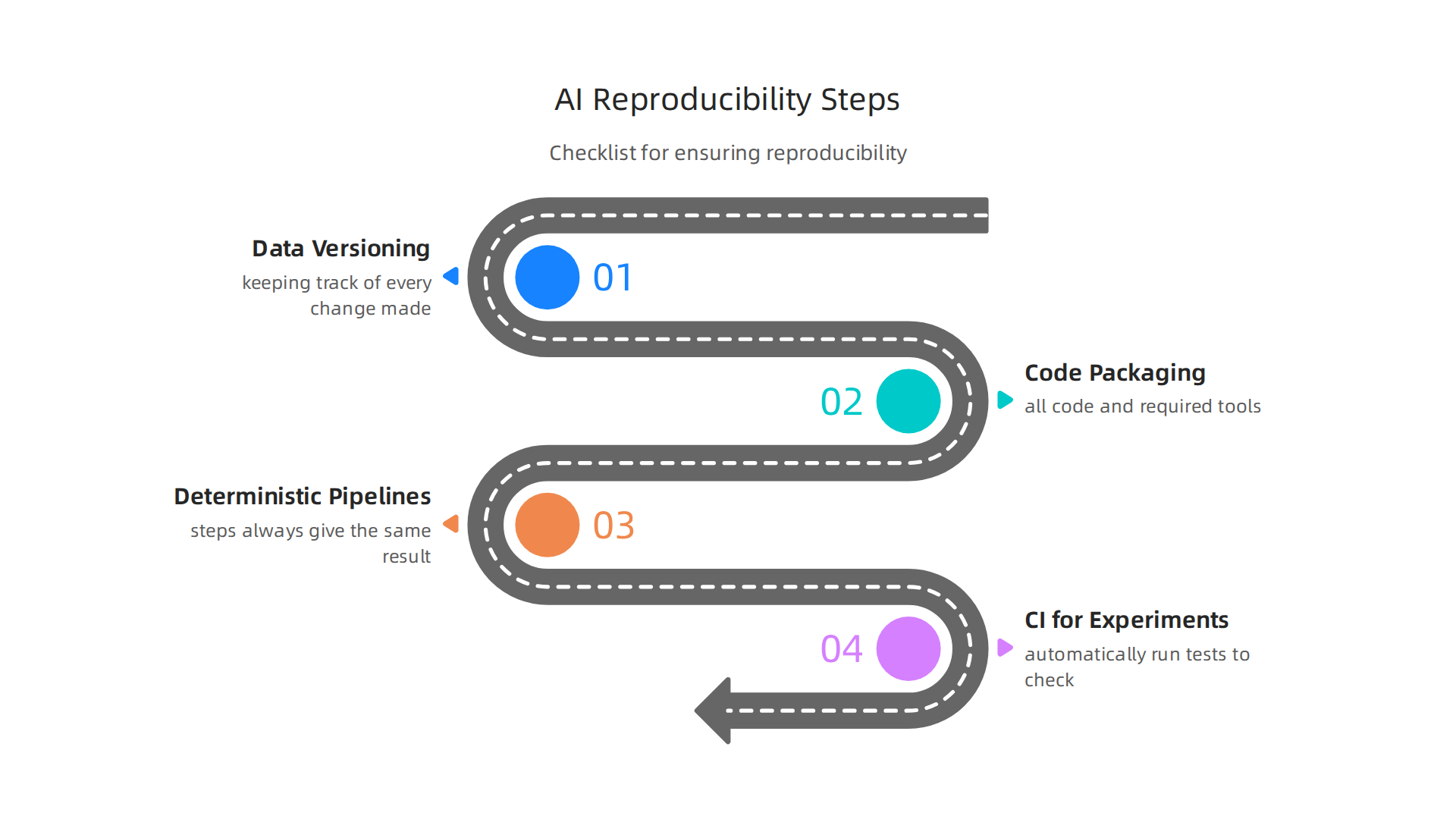
- Data Versioning: This means keeping track of every change made to the data. Just like you might save different versions of a school paper, we save different versions of the data used to train AI. This ensures that we know exactly which data was used for which result.
- Code Packaging: We make sure that all the code and its needed tools are bundled together. This way, the code can run in different places without problems. Think of it like packing all your art supplies in one box so you can paint anywhere.
- Deterministic Pipelines: This means setting up our AI development steps so they always give the same result if given the same starting information. There are no surprises, which is crucial for building a strong MLOps System Design. This ensures that the process from data to final AI model is always consistent.
- Continuous Integration (CI) for Experiments: Every time someone makes a change to the AI system, we automatically run tests to check if it still works and gives the same results. This helps us catch problems early. If you want to learn more about how to set up your projects for this, there’s a good guide on Cookiecutter Data Science Project Structure for Reproducible ML.
By using these methods, we can make sure that our AI ideas not only work well during testing but also perform reliably and consistently when they are put to work in the real world. This is how we build trust in advanced AI agent architecture and other complex AI systems that handle our data.
Making sure our AI systems are reliable and reproducible is a big win. But the real work begins when we put these systems to use in the world. This is where MLOps, deployment, and observability come in. Think of it as the whole process needed to run and keep an AI system healthy over time.
MLOps, Deployment, and Observability: Pipelines for Agents and Systems
Getting AI ideas from the lab to real users needs a clear set of steps, like a factory line. This is what we call an MLOps pipeline. It’s a series of automated actions that help us build, test, release, and manage AI systems easily. Many experts agree that understanding this process is key for anyone working with AI in 2026, as outlined in the MLOps in 2026 — The Definitive Guide.
Here are the main parts of these pipelines:
- Data Pipelines: First, we need good data. Data pipelines are like special tubes that collect, clean, and prepare data for our AI models. This often involves processes for electronic data gathering and retrieval for machine learning pipelines in 2026.
- Model Training: This is where the AI learns from the data. The pipeline makes sure the training process is repeated exactly the same way each time, which helps keep our AI systems consistent.
- Continuous Integration and Deployment (CI/CD): This sounds fancy, but it just means we constantly check and update our AI. Continuous Integration checks new code changes to make sure they don’t break anything. Continuous Deployment means we can safely put new, improved versions of our AI into use without causing problems.
- Orchestration: This is like the conductor of an orchestra, making sure all parts of the AI system work together smoothly. It manages when data pipelines run, when models train, and when new versions are deployed. For a complex ai agent platform, orchestration is super important.
- Runtime Monitoring: Once our AI is live, we need to watch it closely. This is runtime monitoring, which means checking how well the AI is doing its job.
For advanced AI systems, especially those called AI agents or agentic AI, looking under the hood is even more important. This is called observability. Unlike simpler AI that just gives one answer, AI agents can make many decisions and interact with the world. This means we need special ways to understand what they are doing. If you’re building an autonomous AI agents building deploying and evaluating for 2026, these steps are crucial.
Here’s what makes observability for AI agents unique:
- Interaction Traces: These are like footsteps an AI agent leaves behind. They show us every step the agent took, every tool it used, and how it made decisions. This helps us see the full "thought process" of an ai agent architecture.
- Decision Logs: This is a record of every important choice the agent makes. If an AI agent vs agentic AI is designed to solve a problem, the decision logs tell us how it decided to solve it.
- Latency and Cost Telemetry: We need to know how fast our AI agents are working and how much it costs to run them. These metrics help us make sure the AI is efficient.
- Behavior Drift Detection: This means looking for changes in how an AI agent acts over time. Sometimes, an AI might start behaving differently because of new data or changes in its environment, which traditional monitoring might miss. We track this to ensure the AI stays helpful and doesn’t start making bad choices, as traditional methods can miss subtle changes in behavior, according to experts in Why traditional observability misses AI agent failure. Monitoring these specific aspects is vital for keeping AI systems running well in production. You can read more about what to track in MLOps and Observability for Agentic Systems: Monitoring.
By putting these pipelines and observability methods in place, we can ensure our AI systems are not only robust but also trusted and truly helpful in the real world.
Stay informed about the fast-moving world of AI. Get clear daily AI updates. The AI Newsletter Worth Reading.
Now that we understand how to watch our AI systems to make sure they work right, let’s talk about the special tools and platforms we use to build them. Making strong AI agents needs good building blocks and a clear plan.
Tooling and platforms for agent development: frameworks, SDKs, and orchestration
Building intelligent AI agents is a big task.

Think of it like building a house. You don’t just start with raw materials. You use blueprints, special tools, and machines to help you. In the world of AI, these blueprints and tools come as frameworks, Software Development Kits (SDKs), and powerful platforms. These help us create complex AI systems that can reason, plan, and use tools. Many different ways to design these AI systems exist, as shown in reports like the AI Agent Systems: Architectures, Applications, and Evaluation survey for 2026.
Here are the main things teams need:
- Frameworks and SDKs: These are like ready-made toolkits and guides. Frameworks give you a basic structure for your AI agent, so you don’t have to start from scratch. SDKs provide special tools and code snippets that let your AI agent talk to other programs or systems. They make it much easier to develop and test new features. If you are looking to build robust AI solutions, learning to build production AI agents with hands-on machine learning is a great step.
- Orchestration Platforms: As AI agents become more complex, especially when many agents work together, we need something to manage them. This is where orchestration comes in. It’s like a central control center that makes sure all parts of your AI agent platform work together smoothly. It helps agents know when to act, how to share information, and what tools to use. For example, some platforms offer strong tools for Enterprise Agent Platforms 2026 to centralize this control.
- Sandboxing: This is like a safe play area for your AI agents. Before you let an AI agent loose in the real world, you want to test it in a controlled environment. Sandboxing lets you do this without fear of the agent causing problems or breaking things. It’s crucial for understanding how an AI agent architecture behaves under different conditions.
When choosing the right tools and platforms for your AI systems, there are a few important things to think about:
- Openness: Can you easily change parts of the framework or SDK to fit your specific needs? Open tools often have bigger communities that share ideas and improvements. Surveys like Designing and Building Agentic Systems: A 2026 Survey of … show the value of flexible design.
- Observability Hooks: Does the platform make it easy to see what your AI agent is doing? This links back to our talk about observability. Good tools will have "hooks" or places where you can easily plug in monitoring systems to track decisions and actions. This helps you understand an AI agent vs agentic AI and debug them when things go wrong.
- Security: How well does the platform protect your data and your AI agent from bad actors or mistakes? Security is always very important, especially when dealing with sensitive information or critical tasks.
- Community Support: Is there a group of people using and helping to improve the tool? A strong community means you can find help, examples, and new ideas easily. This is often highlighted in resources like AI AGENTS IN 2026: A Comparative Guide to Tools, Frameworks ….
Picking the right tools for your mastering AI automation tools selection deployment and governance 2026 can make a huge difference in how quickly and well you can bring your AI agent ideas to life. It helps you focus on solving problems rather than getting stuck on basic setup.
After choosing the right tools for building AI systems, the next big step is making sure these systems are used in a fair, safe, and honest way. This means setting up clear rules, thinking about right and wrong, and following new laws.

It’s all about making sure our AI agents are trustworthy.
Governance, ethics, and regulation: operationalizing trustworthy AI
When we talk about making sure AI systems are trustworthy, we need to think about how they are controlled, what is right or wrong, and what rules or laws they must follow. This is called governance, ethics, and regulation. It helps us use AI in a way that benefits everyone and avoids problems.
Practical Governance Controls for AI Systems
Good governance means having a clear plan for how your AI systems work. It’s like having traffic rules for your AI agents.
- Clear Roles and Responsibilities: Everyone involved with an AI system needs to know their job. Who builds it? Who checks it? Who decides if it’s ready to be used? This makes sure someone is always in charge of different parts of the AI agent platform.
- Approval Gates: Before an AI system can do important tasks, it should pass checks. Think of it as a quality control step. An AI Agent Governance Checklist: 12 Critical Controls can help make sure everything is covered, from human oversight to permissions.
- Risk Assessment: We must think about what could go wrong. What if an AI system makes a mistake? What kind of harm could it cause? Finding these risks early helps us make the AI safer. The International AI Safety Report 2026 explains that this means figuring out how risky an AI model is and seeing if it meets safety standards.
- Incident Response: Even with the best plans, things can sometimes go wrong. So, we need a plan for what to do if an AI system causes an issue or acts unexpectedly. This is called incident response. It means we can quickly find the problem, stop it, and fix it. For example, good governance best practices include having a plan for detecting, containing, and fixing agent failures.
These steps help to make sure that any AI agent architecture or complex AI system operates correctly and safely.
Regulatory and Ethical Considerations for Autonomous Agents
As AI agents become more independent and make more decisions on their own, new rules and ethical questions pop up. It’s important to understand the AI ethics for machine learning teams to build trust.
- Laws and Policies: Many countries and groups are creating laws for AI. These laws aim to protect people from harm, ensure fairness, and make sure AI systems are transparent. In 2026, many places expect companies to identify where AI is used in making decisions and to assess risks to people’s rights, as noted in a Governing AI in 2026 report. This includes rules about data privacy and how AI should not discriminate. You can learn more about these broader trends in an AI development roadmap.
- Ethical Guidelines: Beyond laws, there are ethical ideas. These are about what is right and fair, even if there isn’t a law yet. For autonomous agents, this means thinking about things like:
- Fairness: Does the AI treat everyone equally? Does it avoid bias?
- Transparency: Can we understand how the AI makes its decisions?
- Accountability: If an AI agent does something wrong, who is responsible?
- Human Oversight: How much control should humans keep over an AI agent? A model AI governance framework for agentic AI suggests human oversight should be backed by real-time monitoring to catch unexpected behavior.
- Safety Benchmarks: To ensure safety, we use special tests called benchmarks. These tests help us measure how safe and secure an AI agent is, especially when it deals with sensitive information or critical tasks. For example, a Security Evaluation Benchmark for AI Agents defines ways to test the security of these systems. This helps to prevent real-world harms, risks, and dangers of AI.
By putting these practical controls and ethical rules in place, we can ensure that our advanced AI systems, whether they are simple AI agents or complex "ai agents vs agentic ai" setups, are truly trustworthy and work for the good of all.
To stay on top of all these important changes in AI, from new technologies to regulations, it helps to have a trusted source for daily information. You can get clear daily AI updates by signing up for The AI Newsletter Worth Reading.
Summary
This article cuts through 2026’s fast-moving AI landscape by mapping how to design, test, deploy, and govern AI systems and agents you can trust. It explains the difference between models, systems, and autonomous agents and highlights core agent properties like autonomy, decision loops, statefulness, and safety boundaries. You’ll get a compact learning plan for individuals and teams, practical testing methods (unit, integration, stress, continuous evaluation), and concrete reproducibility practices including data versioning, code packaging, and CI for experiments. The guide also covers MLOps pipelines, runtime observability for agent traces and decision logs, and how to choose frameworks, SDKs, and orchestration platforms. Finally, it lays out governance controls, ethical principles, and regulatory checkpoints to manage risk and maintain accountability when agents act autonomously. After reading, you’ll know what to test, how to move prototypes to production reliably, and how to operationalize trustworthy, observable AI agents.