
Navigating Machine Learning as a Service for AI Success

Why MLaaS matters now: opportunities and common pitfalls
In 2026, artificial intelligence (AI) and machine learning (ML) are everywhere, changing how businesses work and helping us solve big problems. But building these smart systems from scratch can be very hard and expensive. This is where machine learning as a service, or MLaaS, comes in.
MLaaS is like getting a ready-to-use toolkit for AI. Instead of building all the complex parts yourself, you can use powerful online services to create, train, and use machine learning models. This shifts the focus for businesses. They no longer have to spend a lot of time and money on setting up the basic computer infrastructure. Instead, they can focus on what really matters: how AI can help their business grow and serve customers better. For example, using MLaaS might help develop an AI powered content creation platform or improve existing social media analytics tools with advanced features.
The MLaaS market is growing very fast. Experts expect its size to increase from $45.76 billion in 2025 to $61.58 billion in 2026, and keep growing significantly in the years to come Machine Learning As A Service (MLaaS) Market Report. This growth shows that more and more companies want to use cloud-based ML services to get real-time insights from their data Machine Learning as a Service (MLaaS) Market Size, Share, 2034. The trend is clear: businesses are moving from just having good algorithms to needing full platforms that handle everything from data to deployment and monitoring Global MLaaS Report 2026: Key Trends in Computer Vision, NLP. This makes MLaaS an important part of applying applied data tools and analytics in today’s world.
However, choosing and using MLaaS isn’t always easy. Technical leaders often face challenges. It can be hard to know which of the many managed ML offerings is best for their company’s specific needs. They worry about how well different services will work together, keeping data safe, and understanding the costs. Also, even with easy-to-use platforms, many organizations are still just starting to try out AI projects, not yet using them widely across their whole company The State of AI: Global Survey 2026.
To truly get the most out of MLaaS, leaders need to understand both its great opportunities and its potential problems.

This way, they can pick the right tools and strategies to help their businesses succeed with AI. If you want to stay updated on all things AI, you might find The AI Newsletter Worth Reading helpful.
Getting the most out of MLaaS means knowing exactly what it is and how it works. Think of machine learning as a service as a special kind of toolbox for artificial intelligence. It lets businesses use powerful online tools to make and run smart systems without needing to build everything from scratch.
What Makes Up MLaaS?
Machine learning as a service platforms give you all the key parts you need to work with AI.
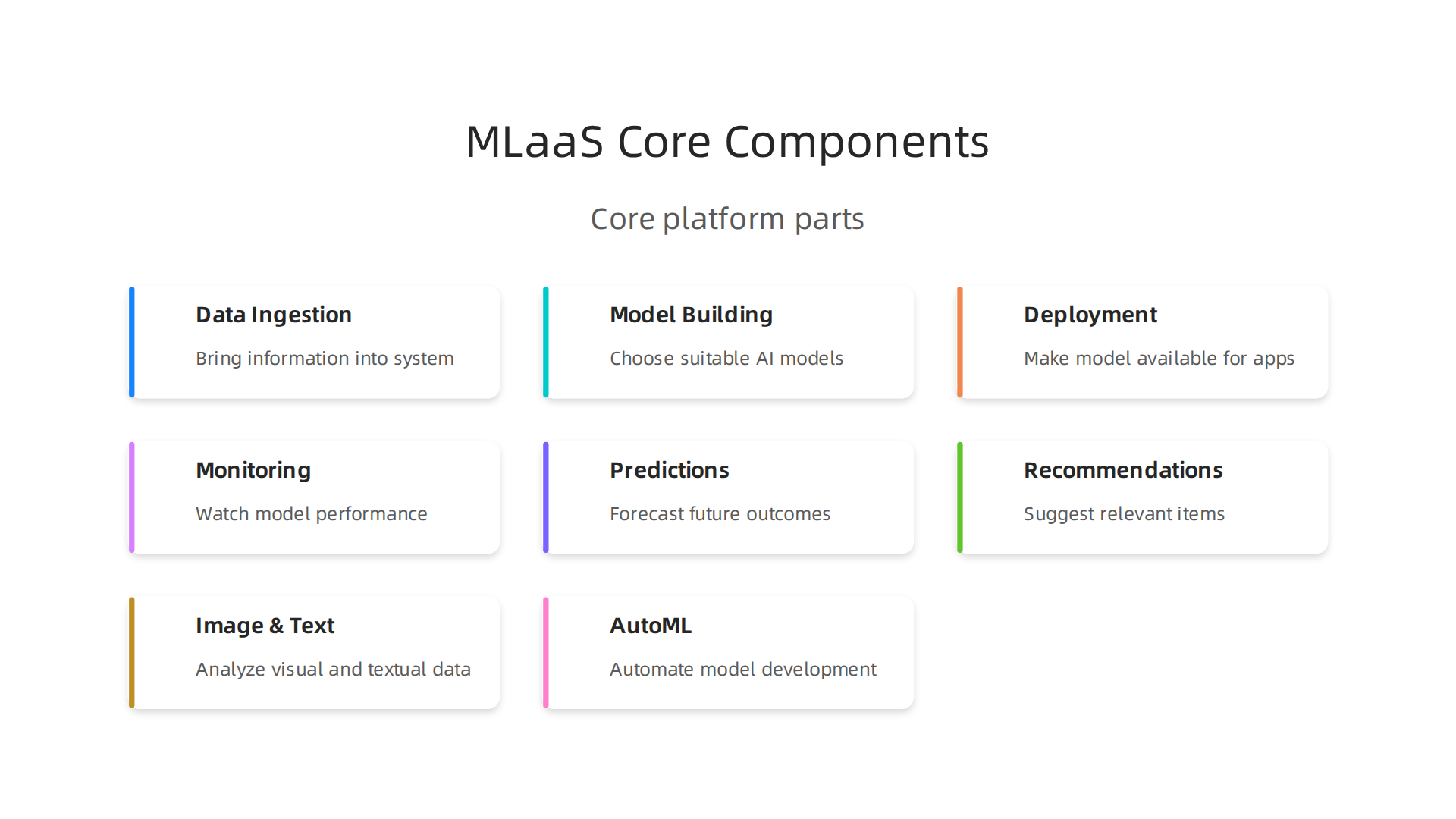
These parts are like different steps in a journey to make your AI useful:
- Getting Your Data Ready (Data Ingestion): Before any AI can learn, it needs data. MLaaS helps you bring your information into the system. This includes tools to clean up data, make it ready for learning, and store it safely.
- Building and Teaching the Model (Model Building and Training): This is where the magic happens. MLaaS offers tools to choose the right AI models for your needs. Then, you use your prepared data to "teach" these models. The service provides the computing power for this, which can be very big and fast. It’s like having a super teacher for your AI.
- Putting the Model to Work (Deployment): Once your AI model has learned, you need to use it. MLaaS makes it easy to deploy your model. This means making it available for your apps or websites to use, like an AI development roadmap for 2026 might suggest. It sets up the servers and takes care of making sure the model can handle many requests at once.
- Watching Over the Model (Monitoring and Management): An AI model isn’t a "set it and forget it" tool. MLaaS platforms help you watch how your models are doing. Are they still giving good answers? Are they acting strangely? This step lets you keep them working well over time.
These platforms are made to simplify the whole machine learning process. They give you easy-to-use tools for managing data, training models, and making them work in your daily business Gen AI Report – Machine Learning as Service (MLAAS) | PDF.
How MLaaS is Different
When we talk about machine learning as a service, it’s important to know how it stands apart from other ways of using AI.
- Compared to Building It Yourself (On-Premise): If you build AI on your own servers, you have to buy all the computers, set them up, keep them running, and hire many experts. MLaaS takes away all that heavy lifting. You just use the service, and they handle the hard parts.
- Compared to Open-Source Tools: Open-source tools are free to use, but you still need to set them up, connect them, and manage them yourself. MLaaS bundles all these tools and services together, ready to go. It makes using AI much faster and easier, especially for companies without huge IT teams.
In short, MLaaS is a way for businesses to tap into the power of AI without needing to become AI experts themselves or spend a lot on their own computer setups.

It’s all about making advanced machine learning accessible and ready to use.
It’s all about making advanced machine learning accessible and ready to use. Now, let’s look at how businesses are using this power every day.
Key MLaaS models and business use cases
Machine learning as a service helps many types of businesses solve problems. It gives them ready-made tools for different tasks.
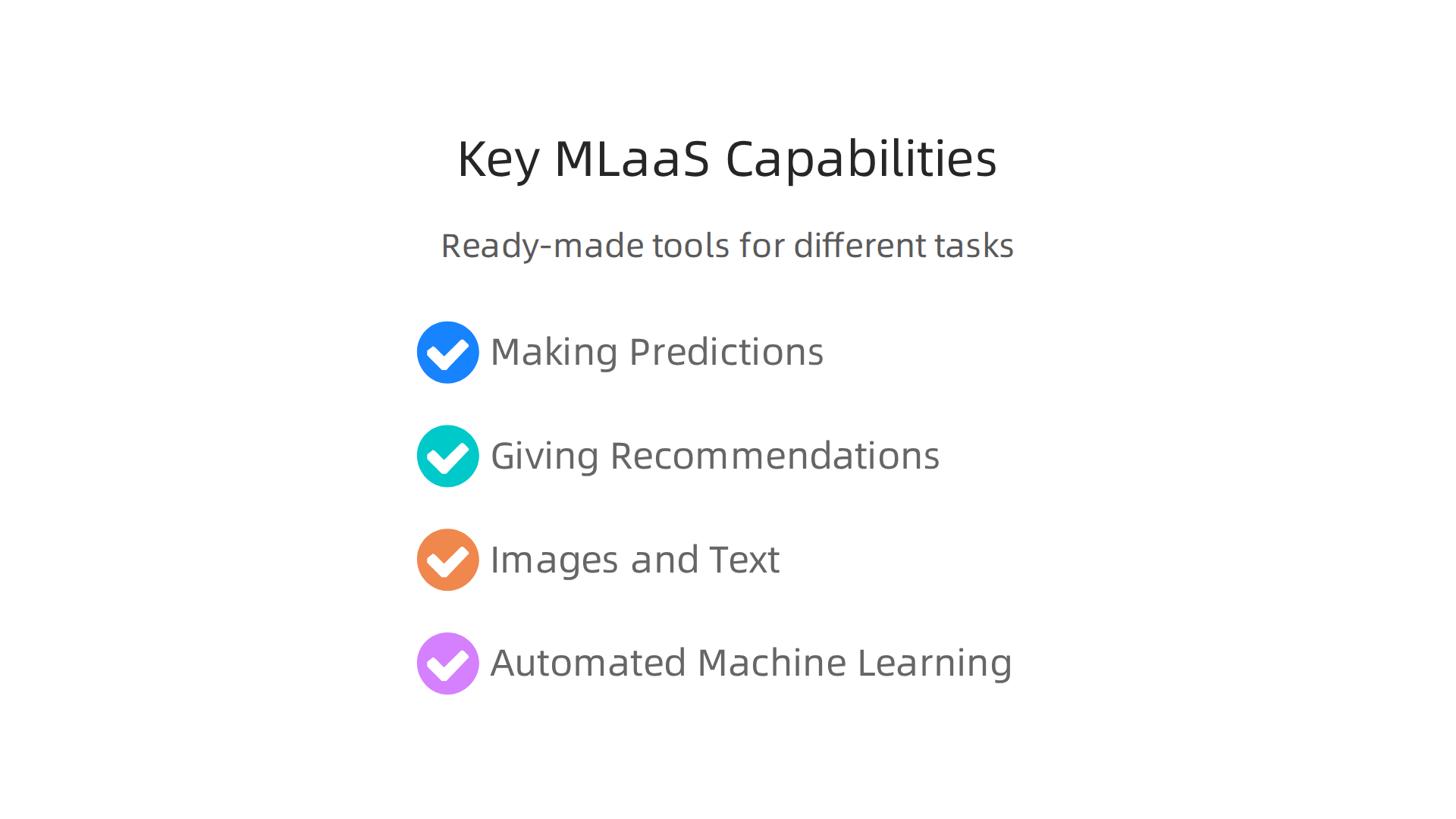
Here are some of the main ways MLaaS helps:
- Making Predictions: Many businesses need to guess what will happen next. MLaaS helps them do this. For example, a store might want to know which products customers will buy. Or a bank might want to predict if a transaction is fake. These "prediction services" are a big part of what MLaaS offers. Actually, many companies are already using MLaaS for these kinds of predictions.
- Giving Recommendations: Think about online shopping or movie sites. They suggest things you might like. This is done by recommendation systems. MLaaS platforms make it easier for companies to build and use these systems, helping them to create a Engineering Recommendation System Machine Learning for Real World Success.
- Understanding Images and Text: MLaaS provides special tools called Vision APIs and Natural Language Processing (NLP) APIs. Vision APIs can "see" and understand pictures, like finding faces or objects. NLP APIs can "read" and understand text, like figuring out what people are saying in reviews. These tools can even help build an ai powered content creation platform to write articles or ads.
- Automated Machine Learning (AutoML): This makes the hardest parts of machine learning much simpler. AutoML tools can help choose the best model and set it up, even if you’re not an expert. This means more companies can use powerful AI without needing a huge team of specialists. Many businesses are adopting cloud-based platforms for building, training, and deploying ML models, with over 64% of companies using MLaaS for prediction and personalization as of 2026. This shows how useful these tools are becoming across different industries Machine Learning-as-a-Service (MLaaS) Market Size & Share.
Real-World Examples
MLaaS solutions are used in many different industries:
- Retail: Stores use MLaaS to personalize shopping experiences. They can suggest products you might like or help manage how much stock they need.
- Healthcare: Hospitals use MLaaS to predict which patients might be at risk for certain problems, helping doctors give better care.
- Marketing: Companies use MLaaS with social media analytics tools to understand what customers want. This helps them create better ads and reach the right people. These are great examples of applied data tools and analytics in action.
- Finance: Banks use MLaaS to spot unusual patterns that could mean fraud, keeping your money safe.
By using machine learning as a service, businesses can get powerful AI working for them faster and without huge upfront costs. It helps them make smarter choices and better serve their customers.
Want to keep up with the latest in AI and machine learning?
The AI Newsletter Worth Reading
Once you see the many benefits of machine learning as a service, the next big step is to pick the best provider for your business. This choice is very important, as it affects how well your AI projects work and how much they cost. You need a good plan to choose the right partner.
Key Things to Look for in an MLaaS Provider
When you’re looking at different MLaaS companies, here are the main things to check:
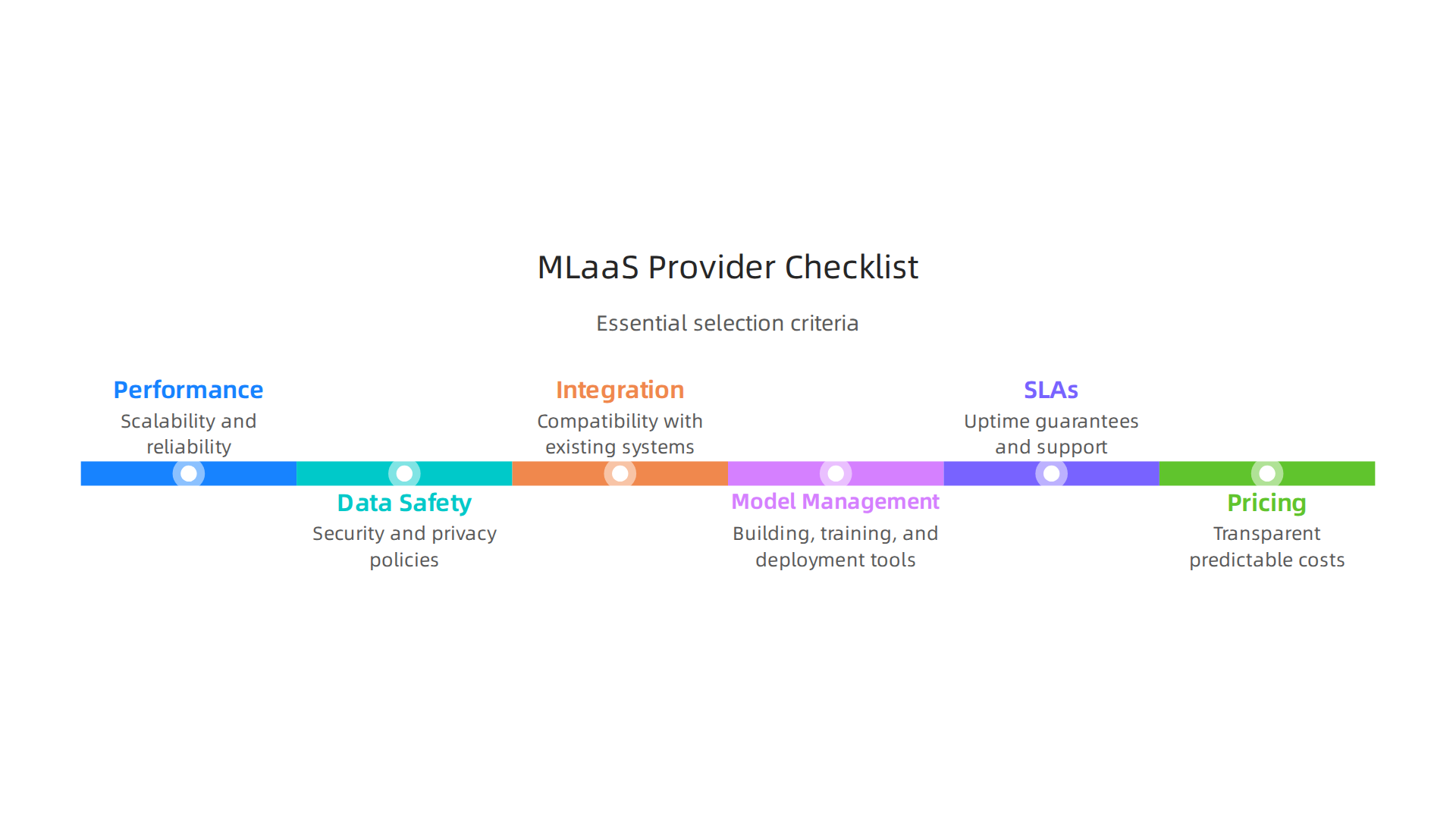
- Performance and How Big it Can Grow: Can the service handle a lot of data and many tasks at once? It’s important that the platform can grow with your needs without slowing down. Good MLaaS providers let you scale your workloads as your business changes Top 10 Best Machine Learning Cloud Services (2026 Review).
- Access to Your Data and Keeping it Safe: Make sure the MLaaS provider lets you easily connect your data. Also, ask how they protect your information. Data security is super important.
- Easy to Connect with Your Tools: The service should work well with the computer systems and programs you already use. Look for good integration options, as this saves time and trouble Comparing MLaaS providers by cost, UX and ease of use.
- How Models are Managed (Model Governance): This means how you keep track of, update, and manage your AI models over time. A good MLaaS platform offers tools for things like MLOps automation, which helps keep everything running smoothly and safely. This includes being able to see who made changes and when.
- Service Promises (SLAs): Look for clear Service Level Agreements. These are like guarantees about how well the service will perform, how much uptime it will have, and what happens if something goes wrong. Clear SLAs are key for enterprise MaaS providers How to Evaluate Enterprise MaaS Providers in 2026.
- Clear Pricing: You should understand exactly how much the service will cost. No hidden fees. Look for providers that are open about their prices, whether it’s usage-based or a set fee.
Your MLaaS Selection Checklist
To make things simple, here’s a quick checklist to guide your team when choosing a machine learning as a service provider:
- Does the provider offer the right types of models for your needs (like pre-trained models for NLP or image recognition)?
- Can it handle your current data size and grow with your business?
- Is your data kept safe and secure?
- Can you easily connect it to your existing business software?
- Does it have tools for managing your AI models and keeping them in order? You might want to explore mastering AI automation tools selection deployment and governance in 2026.
- Are the service promises (SLAs) clear and helpful?
- Is the pricing easy to understand and fair for your budget?
- Are there options for customizing models if you need specific features? Many companies want flexibility when it comes to tailoring solutions Top Machine Learning As A Service Companies & How to Compare.
By thinking about these points, you can pick a machine learning as a service provider that truly helps your business succeed in 2026 and beyond.
Choosing the right machine learning as a service (MLaaS) provider is just the start. The real work begins when you need to make these powerful AI tools work smoothly with your business. This means thinking about how to connect everything and how to keep your AI models running well over time.
How MLaaS Connects with Your Business
When you bring a new MLaaS solution into your company, it needs to talk to your existing computer programs and data. This is called integration. Good MLaaS providers make this easy with:
- APIs (Application Programming Interfaces): These are like special plugs that let different software pieces connect and share information.
- SDKs (Software Development Kits): These are toolkits that help your developers build custom connections faster.
Easy integration means you can use your machine learning as a service models to improve things like your ai powered content creation platform or your social media analytics tools without big headaches.
MLOps: Keeping AI Models Running Smoothly
MLOps stands for Machine Learning Operations. It’s a set of practices that help you build, test, deploy, and keep an eye on your AI models.

Think of it like a well-oiled machine for your machine learning projects.
- CI/CD for Models: This means Continuous Integration and Continuous Delivery. It’s about setting up automatic ways to test new changes to your models and then putting them into use. This includes testing your data, code, and the models themselves. Using strong automation here can help with scalable ML deployment in 2026.
- Feature Stores: Imagine a central library for all the "ingredients" (data features) your models use. A feature store helps make sure all your models use the same, correct ingredients, keeping everything consistent. This is a key part of building production-ready ML systems.
- Monitoring Approaches: Once your AI model is working, you need to watch it closely. Monitoring means checking if it’s still giving good answers, if the data it sees has changed (this is called "data drift"), or if the model itself is getting old and needs to be updated. It’s crucial for understanding model health and performance, which is a top MLOps best practice in 2026.
- Model Governance: This means having clear rules about how models are developed, changed, and used. It helps make sure your AI is fair, safe, and works as expected.
For more details on setting up these practices, you can explore an AI development roadmap for 2026 research MLOps and governance.
What Could Go Wrong and How to Fix It
Using a machine learning as a service provider has many good points, but there are also some things to watch out for:
- Getting Stuck with One Provider: Sometimes, it can be hard to switch from one MLaaS provider to another later on. This is called "vendor lock-in." To avoid this, make sure your data and models can be easily moved.
- Service Outages: What if the MLaaS provider’s service stops working? This could stop your AI systems. Have a plan for what to do if this happens.
- Data Security: You need to be sure that your MLaaS provider keeps your data very safe. Ask about their security steps often.
To lower these risks, always have a backup plan, keep your agreements with providers clear, and watch their service performance. Regularly reviewing your applied data tools and analytics can help you stay on top of these things. By doing so, you can effectively optimize your machine learning workflow and ensure smooth operations.
Staying informed about the fast-changing world of AI and machine learning is key to managing these challenges.
Get clear daily AI updates from The AI Newsletter Worth Reading.
When using machine learning as a service, it’s very important to protect your data and follow the rules. This is called data governance, security, and compliance. It helps make sure your AI tools are used safely and fairly.
Shared Responsibilities for Your Data
With MLaaS, both you (the customer) and the service provider have jobs to do when it comes to keeping data safe and following rules.
- What the Provider Does: The MLaaS provider is in charge of the big picture security of their cloud systems. This means they protect the computer servers, the network, and the basic software that runs the service. They usually have special certifications like SOC 2, ISO 27001, and HIPAA compliance to show they meet high safety standards. For example, many top cloud AI services offer certifications like these as of 2026, making it easier for businesses to trust them with important data, as shown in a 2026 comparison of AI services.
- What You Do: You are responsible for the data you put into the MLaaS system. This includes making sure your data is correct, choosing who can access it, and setting up how your AI models are used. You also need to make sure your specific use of the machine learning as a service fits all the relevant laws and company rules.
Important Controls for Data Safety
To keep your data secure with MLaaS, here are some key things to think about:
- Access Controls: You need to control who can see and use your data and AI models. This means giving permission only to the right people.
- Data Encryption: Think of encryption as scrambling your data so that only authorized people with a special key can read it. Your data should be encrypted both when it’s stored and when it’s moving across the internet.
- Data Location: Sometimes, laws say that certain types of data must be kept in specific countries or regions. You need to know where your MLaaS provider stores your data.
- Keeping Records: It’s important to keep logs of who accessed what data and when. This helps you check for any unusual activity and fix problems.
Meeting Important Rules (Compliance)
Different countries and industries have different rules for data. When using machine learning as a service, you need to make sure you follow them.
- GDPR (General Data Protection Regulation): This is a rule for protecting personal data for people in Europe. If your MLaaS project handles data from European citizens, you must follow GDPR.
- HIPAA (Health Insurance Portability and Accountability Act): This rule protects health information in the United States. If your AI models work with health data, HIPAA compliance is a must.
- Other Rules: There are many other rules like the EU AI Act, NIST AI RMF, and ISO 42001 that might apply. Many providers offer tools to help you manage compliance, including features for live compliance scoring against these standards in 2026, according to an AI Security Buyer’s Guide 2026. It’s crucial for you to understand these rules and ensure your AI projects follow them.
Understanding these rules and how they apply to your projects helps you in mastering AI automation tools selection, deployment, and governance, ensuring you build trustworthy and responsible AI.
Moving from the important topic of keeping your data safe and following rules, it’s also smart to think about how much machine learning as a service costs and what you get back from it.

Just like any good tool, MLaaS has different prices and ways it can help your business grow.
How MLaaS Pricing Works
When you use machine learning as a service, providers usually have different ways to charge you. Understanding these can help you manage your budget better for any AI project, from a simple ai powered content creation platform to complex data analytics.
Here are the common pricing models:
- Pay-per-use: This is like paying for electricity. You only pay for what you use. For MLaaS, this means you pay for the computing power, storage, and how many times you run your AI models. It’s great for testing new ideas or for projects that don’t need a lot of resources all the time.
- Reserved Capacity: If you know you’ll need a lot of AI power for a long time, you can often reserve a certain amount of resources. This is like buying in bulk; it can be cheaper than paying per use over time.
- Licensing or Subscriptions: Some services might charge a flat fee for access to their tools or specific AI models, especially for certain features or for a set period. Sometimes, pricing for advanced AI services might even be tied to the business results they help achieve, as discussed in an article on AI-Enabled Outsourcing: Key Contract, Pricing, and Governance from 2026.
Hidden Costs to Watch For
While the main pricing models are clear, there can be other costs you might not think about right away.
- Data Transfer: Moving your data into or out of the MLaaS provider’s system can sometimes cost money, especially if you have a lot of data.
- Data Storage: Storing your data, even if it’s not actively being used by the AI, will usually have a monthly fee.
- Extra Features: Many MLaaS platforms offer added tools like advanced monitoring, special security features, or premium support. These often come with extra costs. For example, managed security services for AI can range significantly in price depending on what’s included, according to a 2026 AI SOC Pricing Guide.
- Customization and Management: If you need to deeply customize an AI model or spend a lot of time managing your applications, these efforts also add to the total cost. Keeping track of Machine Learning Operations, or MLOps, can also have daily unit costs, as seen in some Machine Learning Operations (MLOps) services.
Figuring Out Your Return on Investment (ROI)
ROI means how much value you get back compared to what you spend. For machine learning as a service, thinking about ROI is key.
- Start Small: For new AI projects, it’s a good idea to start with a small pilot project. This helps you test the waters and see how well the AI works for your specific needs without spending too much.
- Look at the Benefits: What problems does the MLaaS solve? Does it save you time or money? Does it make your team more productive? Maybe it helps improve your social media analytics tools or makes your products better. These are all benefits.
- Compare Costs vs. Benefits: If using MLaaS costs you $100 but saves you $300 in manual work or brings in $500 in new sales, then you have a good ROI. It’s like finding a way to cut GPU costs by 80% for enterprise machine learning and save a lot of money.
- Think Long-Term: Sometimes, the benefits aren’t just about money. MLaaS can give you better insights from your data, which helps you make smarter business choices in the long run.
By carefully looking at both the costs and the benefits, you can make sure that investing in machine learning as a service is a smart move for your company in 2026.
Staying informed about the latest trends in AI can greatly impact your ROI calculations. Get clear daily AI updates by signing up for The AI Newsletter Worth Reading.
Understanding how much value you get from machine learning as a service is very important. But once you know it’s a good idea, the next big step is actually moving your existing AI work and data to these cloud services. This move, called migration, needs a clear and simple plan.
Migrating from in-house ML to MLaaS: a practical roadmap
Moving your machine learning tasks from your own computers to a machine learning as a service provider can seem like a big job. But with a good plan, it can be smooth and bring many benefits. Here’s a simple step-by-step roadmap:
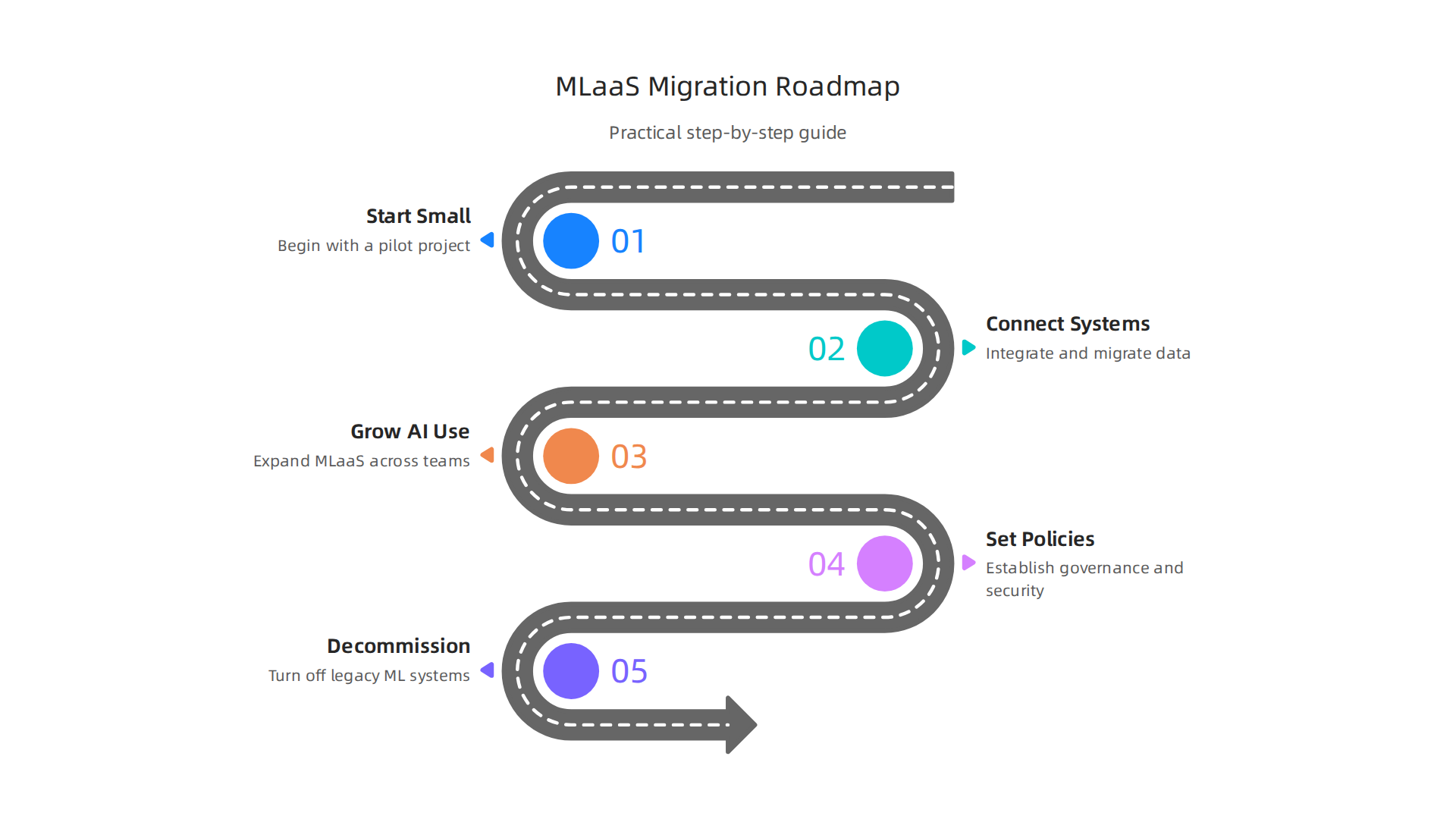
Phase 1: Start Small with a Pilot Project
Don’t move everything at once. Pick a small, less critical AI project to try out the machine learning as a service platform. This helps you learn how it works without a lot of risk. It’s like testing the waters before diving in. Many companies find success by starting small, as shown in various Cloud Migration Case Studies: Enterprise Transformation in 2026.
Phase 2: Connect Your Systems and Move Data
Once your pilot works well, you’ll need to connect the MLaaS platform with your existing tools and move your data. This often involves making sure your enterprise data systems are the backbone of AI success and can talk to the new service. You’ll work on tasks like setting up the right connections and moving all the information your AI models need.
Phase 3: Grow Your AI Use
After successful data movement, you can start using machine learning as a service for more of your projects. This means taking more AI models that used to run in-house and putting them onto the MLaaS platform. You might even begin to build production AI agents with hands-on machine learning directly on the service.
Phase 4: Set Up Rules and Keep Things Safe
As you use more MLaaS, it’s key to have rules about how your AI models are used and kept safe. This is called governance. You need to know who can do what, how models are approved, and what to do if something goes wrong. This also involves making sure you have a practical guide for building robust AI/ML pipeline security.
Phase 5: Turn Off Old Systems
When your AI projects are running well on machine learning as a service, you can slowly stop using your old in-house systems. This frees up resources and reduces costs. Make sure you have backups and plans for what to do with the old data and software.
What Can Go Wrong and How to Be Ready
Moving to machine learning as a service can have its tricky parts. Here are some common problems and how to get ready:
- Data Problems: Moving large amounts of data can be hard. Plan carefully for enterprise data migration.
- Cost Surprises: Make sure you understand all the costs, even the hidden ones we talked about before.
- Team Training: Your team needs to learn how to use the new MLaaS tools.
- Security Gaps: Always keep security in mind at every step.
Checklist for Being Ready to Operate
To make sure your move is a success, here’s a quick checklist for operational readiness:
- Data Quality: Is your data clean and ready for the MLaaS platform?
- Team Skills: Has your team been trained on the new tools and processes?
- Monitoring: Do you have ways to watch your AI models and make sure they are working correctly?
- Emergency Plans: Do you have a plan to fix things if a model breaks or acts strangely? This includes clear steps like rollback mechanisms for model deployments, as discussed in the Secure AI Model Ops – OWASP Cheat Sheet Series.
- Cost Control: Are you actively tracking spending to avoid surprises?
By following these steps and being ready for common issues, your business can smoothly move to machine learning as a service in 2026. This will help you use powerful AI technologies more easily and at a lower cost. For further guidance on building out your AI strategy, consider our AI Development Roadmap for 2026.
Summary
Machine learning as a service (MLaaS) gives businesses cloud-based toolkits to build, train, deploy, and monitor AI models without owning heavy infrastructure or hiring large specialist teams. This article explains MLaaS core components—data ingestion, model building, deployment, and monitoring—and contrasts MLaaS with on‑premise and open‑source approaches. It outlines real-world use cases across retail, healthcare, finance, and marketing, then explains how to evaluate providers for performance, integration, governance, SLAs, and pricing. You’ll get practical checklists for selection, a step‑by‑step migration roadmap, MLOps best practices, and guidance on security, compliance, and cost control. After reading, leaders will know how to pick an MLaaS partner, plan a safe migration, run production models responsibly, and avoid common vendor and operational risks.