
Navigating the Artificial Intelligence and Robotics Turning Point in 2026

Why the convergence of artificial intelligence and robotics is a turning point
Imagine a world where smart machines don’t just follow orders on a screen, but actually move and interact in our physical world. This is what happens when artificial intelligence and robotics come together. It’s a huge step forward, almost like a turning point for how we live and work.

In 2026, we are seeing more and more how machine learning research and robotics engineering are blending. This mix brings amazing new chances, but it also creates some challenges for teams trying to build real-world products.
It can be hard for companies to take a cool new idea from a lab and make it into something useful that people can apply. This is because getting AI brains to work smoothly with robot bodies (what we call physical AI) is not always easy. There are many technical hurdles, and setting up the work teams can be tricky. Also, people need to trust these new machines.
This article is here to help technical leaders understand this exciting new world. We will look at how to build these smart robots, how to manage the work that goes into them, and how to make sure everyone can trust them. We’ll explore how to move from just an idea to making and using these systems every day. This will help you manage AI integration in your projects. To get a good overview of this field, you might want to check out Foundation Models in Robotics: A Comprehensive Review, which explains many important methods and models.
If you are new to the field or need a refresher on the basics, understanding the core ideas behind AI can be very helpful. Learn more about what makes up this field in our AI overview 2026. Staying updated on the rapid changes in this area is key.
Get clear daily AI updates from The AI Newsletter Worth Reading.
Why AI and Robotics Convergence Matters Now
The coming together of artificial intelligence and robotics isn’t just a cool idea anymore. It’s a big deal right now in 2026 because of several important changes.

We’re seeing a push for more automation, costs are going down, and the machines themselves are getting much smarter. This makes the blend of artificial intelligence and robotics a hot topic for businesses and tech teams alike.
Economic and Capability Boosts
One main reason this matters so much is the strong demand for automation. Companies want to do more work faster and with fewer mistakes. Robots powered by AI can help with this. Think about factories, warehouses, or even hospitals; smart robots can take over repetitive or dangerous tasks, making things safer and more efficient. In fact, the global robotics market is expected to reach about $38 billion in 2026, showing its rapid growth and impact on many industries State of Robotics 2026.
Also, the cost of building these systems is getting lower. It’s becoming more affordable to put AI brains into robot bodies. At the same time, the capabilities of these robots are jumping ahead. They can "see" the world better, thanks to advanced sensors and improved perception tools. They can also "think" and plan their actions much more clearly. This means robots are not just following simple commands but can actually understand and react to complex situations around them.
Reshaping How We Work
The blending of AI and robotics means big changes for how companies create products, what research they focus on, and even what kinds of skills people need to have.
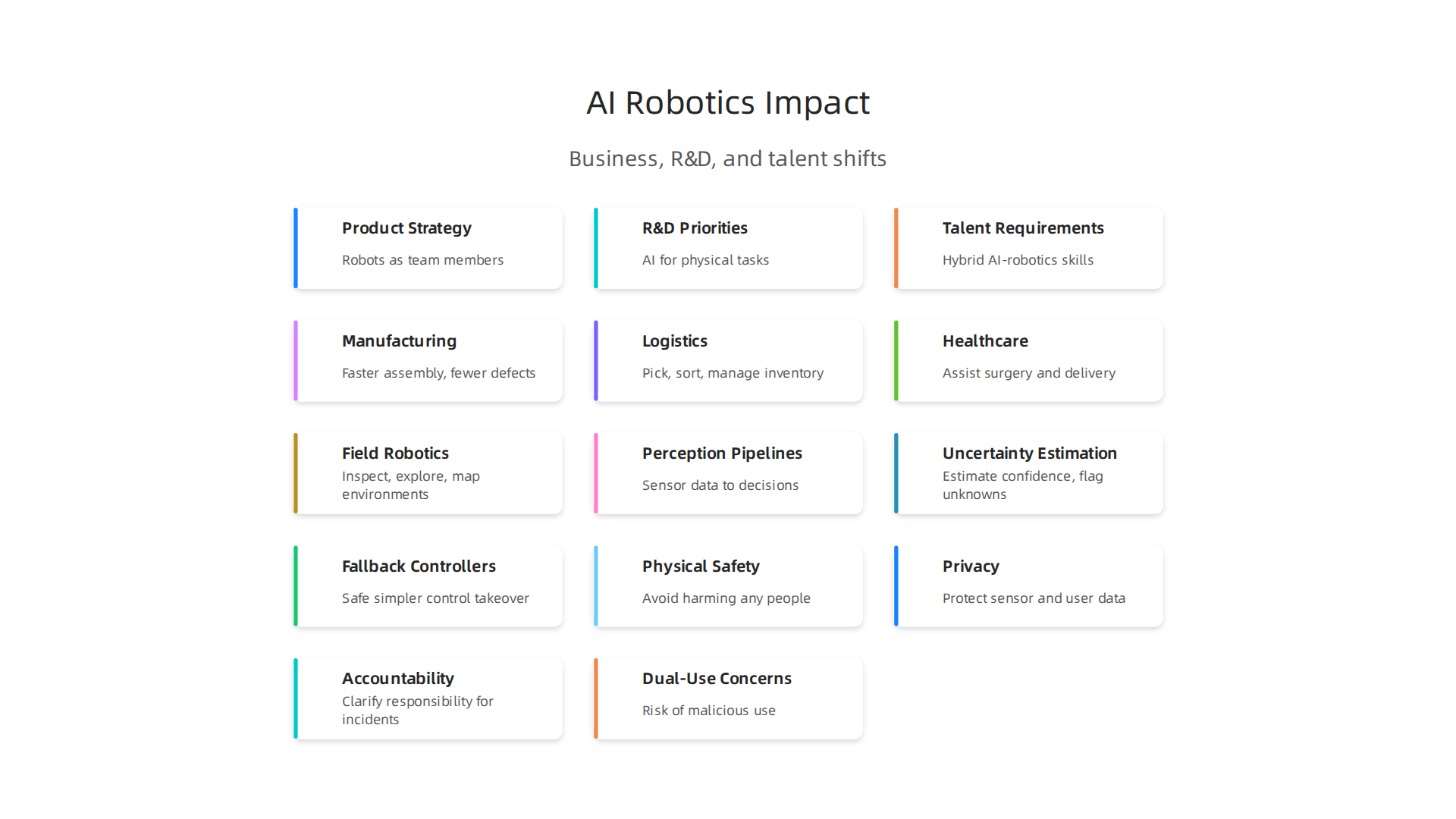
- Product Strategy: Companies are now thinking about new kinds of smart products that can learn and adapt. This means building robots that aren’t just tools, but almost like helpful team members. For example, a robot might learn how you like your coffee and make it just right, or a factory robot might learn new assembly steps on its own.
- R&D Priorities: Research and development teams are focusing on making AI even better at physical tasks. They want to improve how robots learn from humans, how they move smoothly, and how they make smart decisions in real-world settings. Understanding these key areas is important for anyone working on an AI Development Roadmap for 2026.
- Talent Requirements: Because of these changes, the kinds of skills needed by teams are also shifting. It’s not enough to be just a robotics engineer or just an AI expert anymore. Teams need people who understand both worlds, who can make the AI brains and robot bodies work together perfectly. This creates exciting new roles and means professionals need to keep learning. If you’re looking to grow your skills in this field, check out resources on Career Progression for Data Specialists.
The ability to apply AI to physical tasks and the growing need for smart automation means that everyone from product managers to engineers must understand this new landscape of AI integration.
The exciting changes in artificial intelligence and robotics are happening because of new ways machines can sense, think, and move. These advancements are what truly drive the coming together of AI and robots, creating what we call physical ai. This isn’t just about making robots do simple tasks; it’s about giving them smart "brains" so they can understand and react to the world around them in real time.
How Robots "See" and "Understand" (Perception)
For robots to work well with AI, they first need to "see" and understand their surroundings. This is called perception.
- Advanced Sensors: Robots now use much better sensors. Think of these like super eyes and ears. They can be cameras that see in 3D, sensors that measure distance with sound, or even ones that feel pressure. These advanced tools help robots gather a lot of information about their environment Advanced Sensors for Intelligent Robotic Systems. This helps
ai integrationbecome smoother. - Large Models and Self-Supervised Learning: A big step forward is using "large models," also known as foundation models. These are powerful AI programs that have learned from huge amounts of data. They help robots make sense of what their sensors pick up, like recognizing different objects or understanding complex scenes Foundation Models in Robotics: A Comprehensive Review. Also, robots can now learn on their own without constant human help. This is called self-supervised learning. Imagine a robot watching other robots do a task and figuring it out by itself, or practicing a movement thousands of times in a digital world until it gets it right. This type of learning makes robots much more independent and able to adapt.
How Robots "Think" and "Move" (Planning and Control)
Once a robot perceives its world, it needs to think about what to do next and then actually do it. This involves planning and control.
- Smarter Planning: AI helps robots plan their actions more wisely. Instead of just following a set path, learning-based planners allow robots to figure out the best way to complete a task, even if things change unexpectedly. They can learn from past mistakes and improve their plans over time.
- Precise Control: "Differentiable control" is a fancy way of saying robots can fine-tune their movements very precisely. It’s like a robot knowing exactly how much force to use to pick up a fragile egg without breaking it, or how to walk across uneven ground without falling. This is crucial for safely bringing
artificial intelligence and roboticstogether in real-world settings Safely Integrating Perception, Planning, and Control. - Real-time Thinking: Robots need to think fast, right where the action is happening. This is called real-time inference on edge hardware. It means the robot’s "brain" (the computer running the AI) is built into the robot itself or very close by. This allows the robot to make quick decisions without having to send data far away to a cloud server and wait for a reply. This speed is vital for tasks like self-driving cars or robots working in factories. Also, getting robots to perform tasks learned in computer simulations in the real world is a big deal, and new methods like "sim-to-real transfer" are making this much easier Survey on Sim-to-Real Transfer Methods for Robotic Manipulation.
These advancements in perception, planning, and control are essential for robots to apply ai effectively in complex, changing environments. To deepen your understanding of the core concepts behind these intelligent systems, you might want to read a guide on how to Master the Elements of AI: A Practitioner’s Guide for 2026. As AI and robotics continue to grow and change, staying informed is key.
Get clear daily AI updates from The AI Newsletter Worth Reading.
The advancements in how robots see, think, and move have opened up many exciting ways to use artificial intelligence and robotics in the real world. In 2026, we see physical ai making a big difference in many industries.
Industrial Applications and High-Impact Use Cases
Let’s look at some key areas where robots are now using AI to do amazing things:
- Making Things (Manufacturing): Factories are a prime example. Robots powered by AI can put things together faster and with fewer mistakes. They can inspect products for flaws, handle dangerous jobs, and even learn new tasks on the factory floor without needing a lot of reprogramming. This
ai integrationhelps factories make more things better. The global market for industrial robot installations reached over $16.7 billion in 2026, showing how important they are becoming in manufacturing Top 5 Global Robotics Trends 2026. - Moving Things Around (Logistics): Think about warehouses and shipping centers. AI robots can pick up packages, sort them, and load them onto trucks much faster than before. They can plan the most efficient routes for delivery and manage inventory. This makes sure your online orders get to you quickly. In fact, professional logistics robots are seeing a lot of growth, with over 133,700 units expected in 2026 Robotics – 2026 Stats and Summary Report (Mid-Year).
- Helping People Stay Healthy (Healthcare): In hospitals, AI robots can help in many ways. They can assist with surgeries, deliver medicines, clean rooms, and even help care for older people. These robots make healthcare safer and more efficient, letting doctors and nurses focus more on patients. Medical robot sales grew by 91% in 2026 alone, highlighting their increasing role AI in Robotics Statistics 2026: Investment, Workforce & Future Forecast.
- Working in Tough Places (Field Robotics): Some robots are designed to work outside or in dangerous spots. This includes robots that explore other planets, drones that inspect pipelines or crops, and underwater robots that map the ocean floor. AI helps these robots navigate tricky environments and make smart decisions when human help isn’t possible. An example is the development of multi-platform marine robotics datasets for tracking and mapping, making these field robots even smarter A Multi-Platform Marine Robotics Dataset for Tracking and Mapping.
- Everyday Help (Service Robots): You might also see service robots in hotels, restaurants, or even homes. They can clean, serve food, or provide information. AI helps them understand human requests and move safely in public spaces. The global robotics market is growing fast, with vision-language-action robots, which can understand and act based on what they see and hear, tripling in adoption in 2026 [State of Robotics 2026 | Robotics Center of Silicon Valley].
How to Know if AI and Robotics Are Right for a Task
Before a business decides to apply ai with robots, it needs to think about a few important things:
- Rules and Limits (Operational Constraints): Can a robot actually do the job? Are there special rules or safety concerns? For example, a robot might be great for lifting heavy boxes, but not suitable for very delicate tasks that need a human touch. You need to look at how a robot would fit into the current workflow and what changes might be needed.
- Is It Worth It? (ROI Calculus): Companies want to know if spending money on robots will bring back more money later. This is called Return on Investment (ROI). They look at how much the robot will save in labor costs, how much faster it will make things, and how it will improve quality. Many businesses see big returns from using AI, especially in areas like customer service and data processing, where ROI can be very high AI Automation Statistics 2026.
- How Hard Is It to Set Up? (Integration Complexity): Putting new robots into an existing system can be tricky. It’s not just about buying a robot; it’s about making sure it talks to other machines, understands company data, and fits smoothly into daily operations. This is where good planning for
ai integrationcomes in. Learning how to properly select, deploy, and manage these systems is key. If you are looking to understand more about setting up these systems, you might find a guide on Mastering AI Automation Tools Selection, Deployment, and Governance 2026 very useful.
By carefully considering these points, businesses can make smart choices about where and how to best use artificial intelligence and robotics to improve their work and reach their goals.
When businesses decide to use artificial intelligence and robotics for tasks, it’s not enough to just put them to work. We also need to make sure these systems are built to be safe and reliable. This means carefully designing how the AI controls the robot, especially when physical ai is working in the real world.
Designing Robust AI-to-Control Systems
Making sure robots with AI work well and safely involves two main parts: how we build them (architectural patterns) and how we check them (testing strategies).

How to Build for Safety
When we talk about how a robot is put together, we think about how its "brain" connects to its "body" to make it move.
This is known as ai integration.
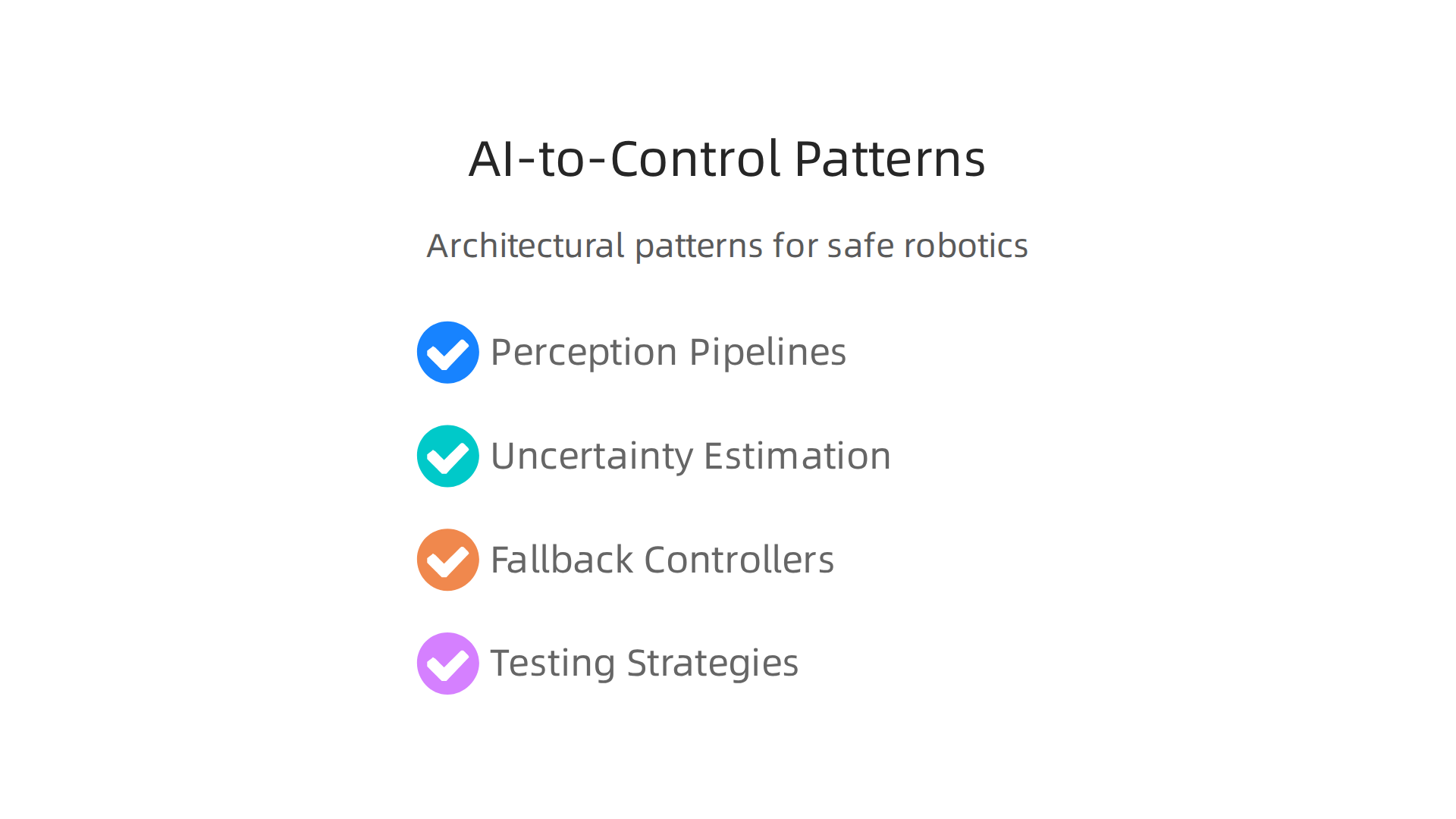
- Perception Pipelines: Robots need to understand their surroundings, just like we use our eyes and ears. A "perception pipeline" is how a robot collects information from its sensors (like cameras or radar) and figures out what’s around it. This information is then used by the AI to make decisions. Making this pipeline strong and accurate is the first step to safe operation.
- Uncertainty Estimation: Even the best AI can sometimes be unsure. Imagine driving in fog; you’d slow down because you’re less certain about what’s ahead. Robots need to do the same. "Uncertainty estimation" means the AI knows when its information might not be perfect. This helps the robot act more carefully or ask for help when it’s uncertain. Building systems that can account for this uncertainty helps make them more robust Uncertainty quantification and robustification of model-based controllers.
- Fallback Controllers: These are like a robot’s safety net. If the main AI system has a problem or can’t make a decision, a simpler, safer "fallback controller" takes over. This might mean the robot stops moving, returns to a safe spot, or waits for human input. This ensures that even if something unexpected happens, the robot won’t do anything dangerous. Ensuring safety through combined perception, planning, and control pipelines is a core focus in robust design Safely Integrating Perception, Planning, and Control for Robust Robotics. You can learn more about how AI systems are put together in our guide on Master the Elements of AI: A Practitioner’s Guide for 2026.
How to Test for Reliability
Once a robot is built with these safety features, we need to test it thoroughly.
- Simulation-to-Reality Validation (Sim-to-Real): It’s safer and cheaper to first train and test robots in computer simulations. This "sim-to-real" method involves teaching the robot in a virtual world and then moving that learned behavior to the real world. However, the real world is messy! Bridging this "reality gap" is a big challenge. Researchers are constantly finding new ways to make what robots learn in simulations work well in real life, like by randomizing how the simulator works during training Sim-to-Real Transfer of Robotic Control with Dynamics Randomization. Many different techniques help with this transfer, including using accurate simulations and various control models A Survey of Sim-to-Real Transfer Techniques Applied to Robotics.
- Safety Envelopes: Think of a robot working in a factory. A "safety envelope" is a defined space where the robot can move safely without hitting anything or anyone. If the robot tries to move outside this virtual boundary, the system stops it. This helps to prevent accidents.
- Failure-Mode Analysis: This is about planning for what happens if things go wrong. What if a sensor breaks? What if the internet connection drops? By thinking about all possible ways a robot could fail, and what the system should do in each case, we can design for safer operations. This kind of careful planning is key when you want to
apply aiin critical situations.
Designing robust AI-to-control systems is crucial for the safe and effective use of artificial intelligence and robotics. It’s a continuous process of building in safety features and testing them rigorously to handle the complexities of the real world.
To stay on top of all the exciting new developments in AI and learn more about how to design and apply these intelligent systems, consider subscribing to a trusted source.
Get clear daily AI updates from The AI Newsletter Worth Reading.
When we talk about making artificial intelligence and robotics safe and reliable, we also need to think about how these smart machines learn. Just like kids need good teachers and lots of practice, AI robots need lots of good data and smart ways to practice their skills. This brings us to data, simulation, and training.
Data, Simulation, and Training at Scale
For robots to work well, especially physical ai that moves in the real world, they need the right "food" for their brains: data. They also need a safe place to learn before they go out into the real world.
Getting Good Data to Robots
Robots learn from data, which is like all the information they collect about the world.
- Data Pipelines for Robotics: Imagine a robot trying to see, hear, and feel all at once. It uses different sensors, like cameras to see, and radar to sense how far things are. "Sensor fusion" is how the robot puts all this information together to get a clear picture of its surroundings. It’s like combining all your senses to understand what’s happening around you. After gathering this data, it needs to be sent to the AI in a smooth, steady flow, like water through a pipe.
- Annotation Workflows: Sometimes, robots need a little help understanding what they see. This is where "annotation workflows" come in. Humans might look at robot pictures and draw boxes around cars or people, telling the AI, "This is a car," or "This is a person." This labeled data helps the AI learn what things are in the world. It is a very important part of making AI successful, and many people even have careers in data annotation quality.
- Continuous Data Collection: The world is always changing. New cars come out, places get rebuilt, and weather changes. So, robots can’t just learn once and be done. They need to keep collecting new data all the time to stay smart and updated. This constant gathering of fresh information helps the
ai integrationstay strong and useful.
Learning in Make-Believe Worlds
Before physical ai robots go out and interact with people or drive on roads, they often practice in a make-believe world.
- Simulation Environments and Synthetic Data: A "simulation environment" is like a giant computer game where robots can practice endlessly without any real danger. This is a safe and cheap way for them to learn. Sometimes, we even create "synthetic data" which is fake data that looks real. This helps the AI learn about many different situations, even ones that don’t happen often in real life.
- Closing the Reality Gap: The tricky part is making what the robot learns in the make-believe world work just as well in the real world. This difference is called the "reality gap." It’s like learning to drive in a video game versus driving a real car. Researchers use many methods to bridge this gap, like making the simulation a bit random during training so the AI gets used to unexpected things Transferring policy of deep reinforcement learning from simulation to reality for robotics. There are surveys that explore different ways to get robots to transfer skills from simulation to reality A Survey on Sim-to-Real Transfer Methods for Robotic Manipulation.
Training at Scale: Making it All Work Smoothly
To truly apply ai in artificial intelligence and robotics at a large scale, we need special ways to manage all this data and training.
- MLOps and Automated Pipelines: This is where MLOps comes in. MLOps stands for Machine Learning Operations. It’s about having special "pipelines" that automatically handle the data, train the AI, and then put the new, smarter AI into the robot. This means collecting data, labeling it, training the models, and checking them are all part of an ongoing, automated process. This kind of automation is very important for using AI in a bigger way and keeping it updated, as outlined in best practices for MLOps pipelines in 2026 MLOps Pipeline Automation Best Practices in 2026.
This careful handling of data and smart use of simulations are key steps in building powerful and safe artificial intelligence and robotics systems for 2026 and beyond. To learn more about setting up these automated systems, you can look into an AI development roadmap for 2026.
Moving from training AI models in a controlled environment to having them work in the real world is a big step. This is where we talk about putting these smart systems into action, a process often called "operationalizing" them. For artificial intelligence and robotics, this means using MLOps, but specially tailored for robots. We sometimes call this RLOps, which stands for Robotics Learning Operations.
The global market for AI robotics is growing fast, reaching about $6.24 billion in 2026, showing just how important it is to get these systems running smoothly and safely AI Robotics Statistics 2026.
Deploying and Managing Robot AI
For robots, especially physical ai that moves and interacts with the world, MLOps means careful planning for how their AI brains are deployed, watched, and updated.
- Deployment Pipelines: Just like software, robot AI needs to be delivered from the training ground to the actual machine in a smooth way. This involves "deployment pipelines." These are automated steps that take a newly trained AI model, check it for problems, package it up, and then install it onto a robot. This ensures that only well-tested and safe AI gets into service. Think of it like a quality control process before a robot can start its job.
- Monitoring and Lifecycle Management: Once a robot is out in the field, its AI needs constant monitoring. We need to check if it’s performing as expected, if the data it’s seeing still makes sense, and if its behavior is safe. This "monitoring" helps spot any issues, like if the robot starts acting strangely because its environment has changed (called "data drift"). When problems are found or improvements are ready, the robot’s AI might need to be retrained or updated. This whole process, from first deployment to eventual updates or replacement, is called "model lifecycle management." It’s about keeping the robot’s brain fresh and reliable for its entire working life, as highlighted in guides for setting up MLOps pipelines MLOps Learning Road: Step by Step Guide (2026). This also means making sure that these systems can reliably run their AI code once they are in place Reliably Run Python Code in Production for Machine Learning Systems.
Teams and Safety for Physical AI
Because physical ai robots work in the real world, the way we manage them also involves people and plans for unexpected situations.
- Cross-Functional Teams: Making robots work means many different kinds of experts need to work together. It’s not just about AI engineers. You need people who understand how robot hardware works, safety experts, operations managers, and even user experience designers. These "cross-functional teams" ensure that all parts of the robot system, from its brain (AI) to its body (hardware) and how it affects people, are handled well.
- Runbooks and Incident Response: Even with the best planning, robots can run into unexpected problems. What if a robot gets stuck, sees something it doesn’t understand, or even gets damaged? This is where "runbooks" come in. These are clear, step-by-step instructions for what to do when something goes wrong. Having strong "incident response" plans means a dedicated team can quickly step in, fix the problem, and learn from it. This helps keep both the robots and the people around them safe.
Getting these advanced artificial intelligence and robotics systems to work well in the real world means having clear plans for deployment, constant monitoring, and skilled teams ready to handle anything. This continuous ai integration is crucial as we continue to apply ai in more places across 2026. For those who want to dive deeper into making AI systems efficient and governed, understanding how to manage these tools is key.
To stay on top of all the latest changes and insights in AI, you might find a daily update helpful.
The AI Newsletter Worth Reading
Moving artificial intelligence and robotics from labs to real-world jobs means we must also think about important rules and safety.

It’s not just about how well robots work. It’s also about making sure they are fair, safe, and that someone is responsible when things go wrong.
Risks with Robot AI in the Real World
When physical ai robots work around people, new kinds of worries come up.
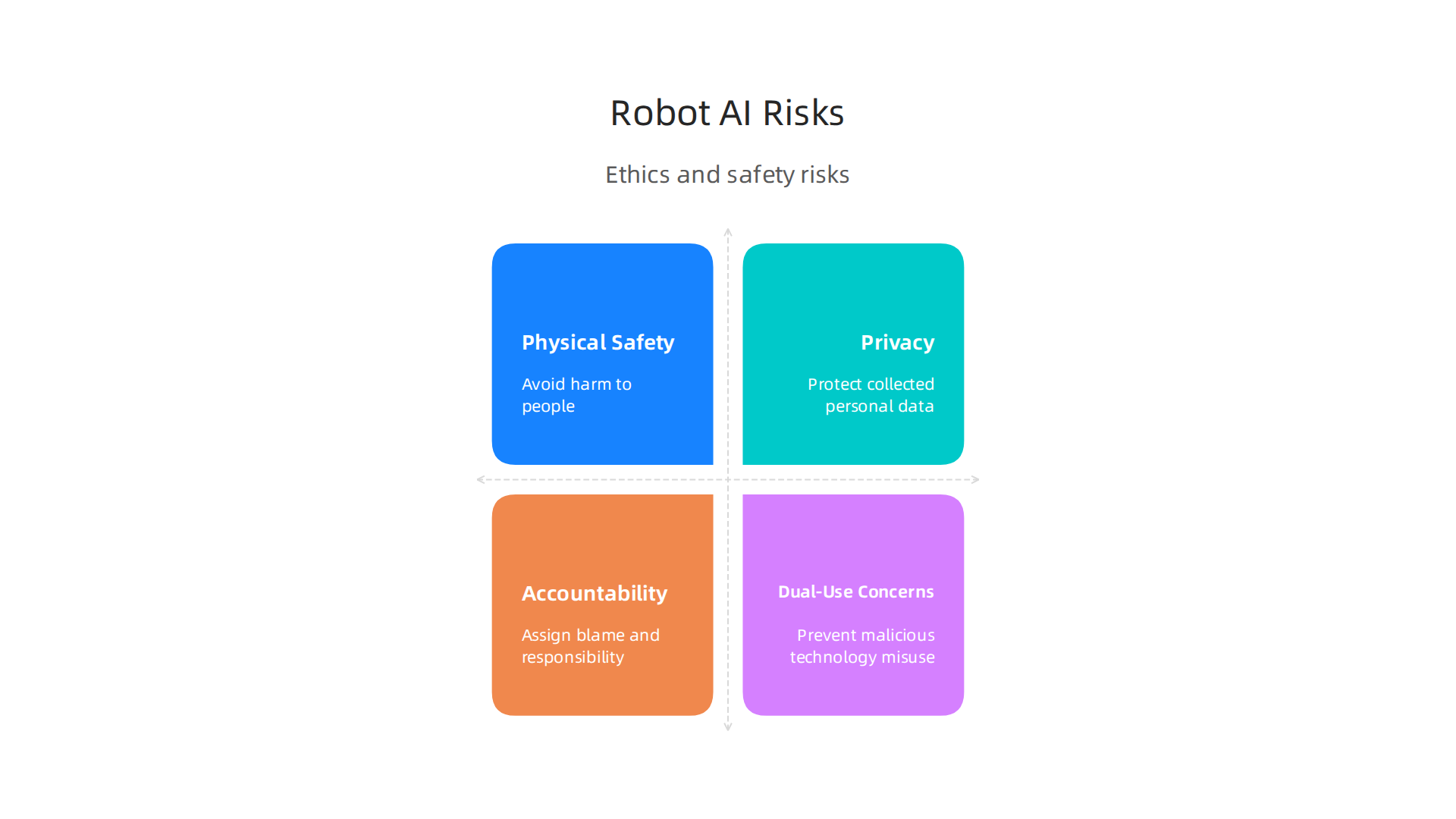
- Physical Safety: Robots move and can be powerful. We need to make sure they do not hurt anyone. This means robots must be built and programmed in ways that avoid accidents. For example, robots that work next to people, called collaborative robots, need special safety features to stop them if a person gets too close. Getting these safety features right is a big part of how we
apply aito real tasks. - Privacy: Many robots use cameras and other sensors to understand their surroundings. This means they might collect pictures or sounds of people and places. We need to be careful about how this information is collected, stored, and used. Protecting people’s privacy from these smart machines is very important.
- Accountability: If a robot makes a mistake and causes harm, who is to blame? Is it the robot’s maker, the person who programmed it, or the person using it? Figuring out who is responsible is key to building trust in
artificial intelligence and robotics. This is a challenge that experts discuss when thinking about how machines make choices. For more on these issues, you can learn about the dangers of AI bias deepfakes job loss and other critical risks in 2026. - Dual-Use Concerns: Sometimes, technology made for good reasons could also be used for bad ones. Robots with advanced
physical aicould be used in ways that are not helpful or even dangerous. We need to think about these "dual-use" issues and try to stop them before they happen.
Rules and Standards for AI Robots
To handle these risks, many groups are working on rules and ways to make sure robots are safe and ethical. This is a big part of ai integration.
- Industry Standards: Different groups around the world create "standards." These are like rulebooks for how robots should be built and tested to be safe. For example, there are ISO standards for different kinds of robots, like those in factories or those that help people. These standards cover things like how strong a robot can be or how fast it can move when people are near it AI and Robotics: Governance, Safety. In 2026, new US robot safety rules are also focusing on how robots are actually used every day.
- Government Regulations: Many countries are also making laws about
artificial intelligence and robotics. The European Union has its "AI Act" which sets strict rules for how AI systems, including robots, can be used. Other countries like China and Japan are also creating their own guides and standards to ensure robot safety. These rules help make sure companies design robots with safety and ethics in mind from the very start. - Designing for Compliance: This means that when companies build robots, they should think about all these rules and standards from the beginning. It’s about building "design-for-compliance" into the robot, so it meets all the safety and ethical requirements before it even leaves the factory. Understanding the right way to act with AI is called AI ethics for machine learning teams building public trust and navigating regulation. This way, as we
apply aimore widely, we can do so safely and responsibly.
Summary
The article explains why the 2026 convergence of artificial intelligence and robotics—what practitioners call physical AI—is a turning point for industry and product teams, and gives technical leaders a practical guide to building, testing, and operating these systems. It covers the core building blocks (advanced sensors, perception pipelines, large foundation models), the planning-and-control advances that enable safe, real-time behavior, and the data and simulation strategies (including sim-to-real) needed to train robots at scale. The piece also explains how to deploy and govern robot AI with MLOps/RLOps practices, how to assemble cross-functional teams and runbooks for safe operations, and how to evaluate ROI and task suitability. Finally, it highlights key safety, privacy, and accountability risks and points to standards and design-for-compliance approaches that reduce harm while enabling real-world value. After reading, leaders will know which technical gaps to prioritize, how to structure teams and pipelines, and what testing and governance steps are required to move prototypes into production.