
Secondary Data Analysis for Machine Learning: Boost Performance, Cut Costs

Why secondary data analysis matters for ML teams today
In today’s fast-moving world, machine learning (ML) teams need to work smart and fast. This is where secondary data analysis becomes a huge help. It is all about using information that someone else already collected for a new goal. Think of it as finding a treasure chest of data that’s already waiting for you.
Simply put, secondary data analysis means you analyze data that was gathered by others, maybe for a different purpose than yours. For example, a government might collect data on how people shop, but your ML team could use that same data to predict what products will be popular next year. This is different from primary data analysis, where you collect brand new data yourself to answer a specific question you have in mind today Secondary Data Analysis Explained (2026). This approach can be a game-changer for speeding up ML projects.

For ML teams, using existing data offers big wins. First, it saves a lot of time. You do not have to wait for new surveys or experiments to finish.
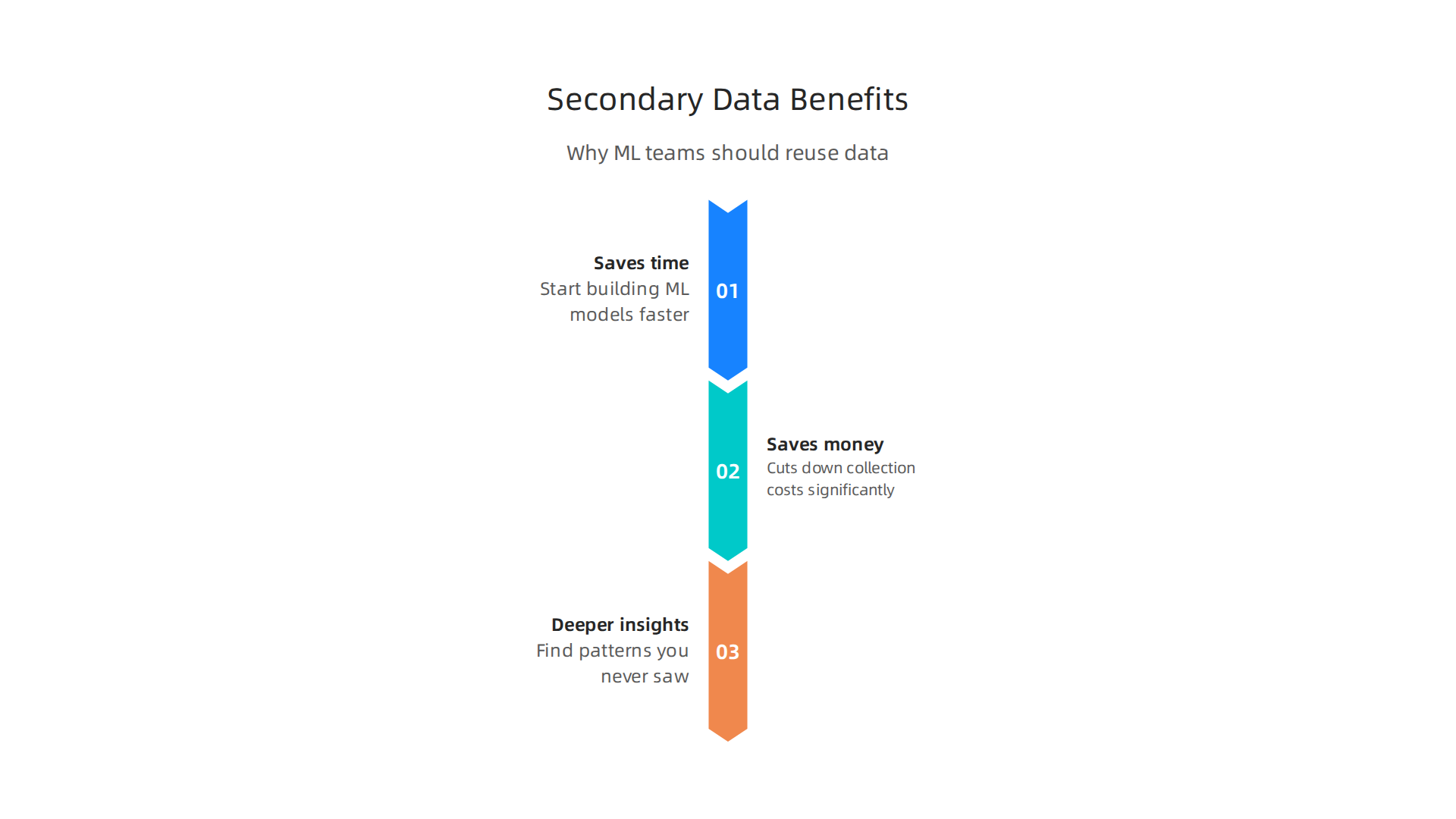
The data is already there. This means your team can start building and training machine learning models much faster. Second, it saves money. Collecting new data can be expensive, needing staff, tools, and a lot of effort. Secondary data analysis cuts down on these costs significantly, letting you focus your budget on other important things.
Beyond saving time and money, this type of data analysis helps you get deeper insights. You might combine different sets of old data to find patterns you never would have seen otherwise. This can give your business a wider view and help you make better decisions. Plus, with the right business analytics tools and skills in areas like python for data engineering, teams can really uncover new value from these existing datasets. It is about getting more mileage out of what’s already available.
To stay on top of all the latest advancements in AI and machine learning, you will want to keep learning.
Get clear daily AI updates from The AI Newsletter Worth Reading.
The previous section helped us see how valuable secondary data analysis is. Now, let’s look at all the different places you can find this ready-to-use information. When you do secondary data analysis, you are working with data someone else gathered. These sources can be grouped into a few main kinds, and each has its own good points and things to consider for your machine learning projects.
Types of Secondary Data Sources
Knowing about the different types of secondary data is important for any ML team. Each type has its own feel and may be just right for your project or come with its own set of challenges.
- Public Datasets: These are often put out by governments, schools, or research groups for free. Think about facts from a census, old weather reports, or details about the economy. They usually cover a lot of ground or many people (good coverage), but they might not have super specific details (granularity). The rules for using them (licensing) are usually clear, and they are often known for good quality. But they might not always be exactly what your ML project needs.
- Proprietary Commercial Datasets: These are sold by companies whose main job is to collect data. They include things like market research results, how customers act on certain apps, or money reports. These often give you very specific information (high granularity) and are made for certain uses. But they can cost a lot to get or use (licensing), and you need to trust the company for good quality. For many business analytics tools, these datasets can be very helpful.
- Aggregated and Curated Repositories: These are places where data from many different spots is brought together, often cleaned up, and made ready to use. Websites like Kaggle or special data libraries from research places are good examples. They can offer a lot of different kinds of data (good coverage). The quality can be different from one dataset to another, so you should always check where the data came from. The rules for using them (licensing) are usually easy to find.
- Internal Legacy Datasets: This is data your own company or group has saved over time. It was likely collected for other reasons. Examples include old sales numbers, notes from customer service calls, or data from experiments done in the past. This data is special to your business and can give you very detailed insights (high granularity and relevance). You already own this data, so licensing is not an issue. The main hurdles here are often making sure the data is clean, whole, and in a format that works for new ML tasks (quality can be hard to figure out).
When you choose a source for your secondary data analysis, always think about these trade-offs. What level of detail do you really need? How much data is enough? Can you get the data, and do its rules fit what you want to do? Asking these questions will help you pick the best data to make your machine learning models strong and useful.
Assessing data quality, provenance, and bias in reused datasets
After picking the right type of secondary data, the next big step is to make sure that data is good enough to use.

This means looking at its quality, where it came from (provenance), and if it has any unfair leanings (bias). These checks are super important for making sure your machine learning models work well and are fair. Remember, secondary data is information collected by someone else for a different main purpose Secondary Data Analysis Explained – CASRAI.
Key Things to Check for Data Quality
When you’re doing secondary data analysis, you need to think about a few key things to know if the data is reliable:
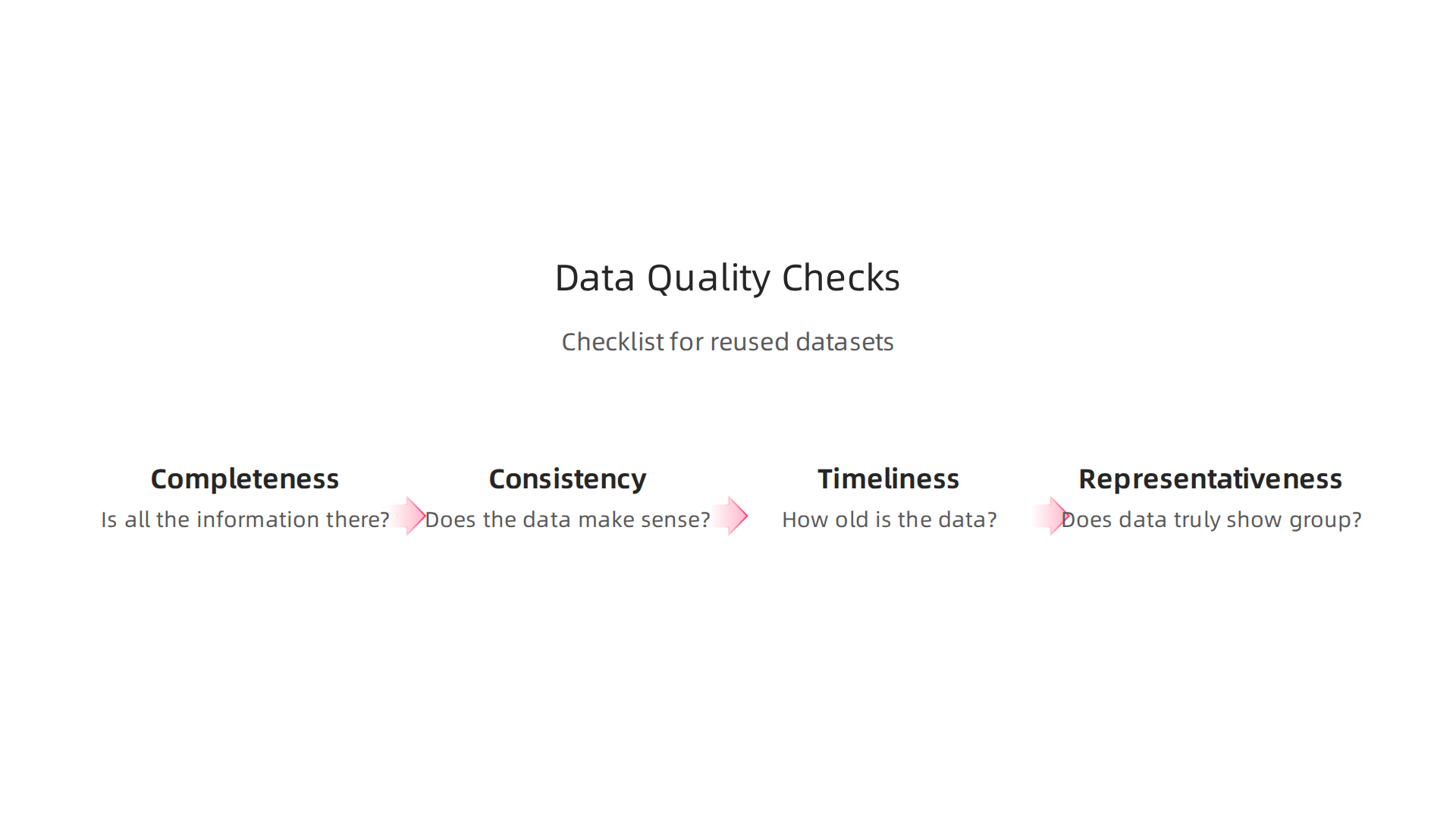
- Completeness: Is all the information there that you need? Sometimes parts of the data are missing, like empty spaces in a form. Incomplete data can make your models less accurate.
- Consistency: Does the data make sense across the board? For example, if dates are written in different ways, or if the same kind of information is sometimes a number and sometimes text, that’s not consistent. You might need to use tools for Python for data engineering to fix these issues.
- Timeliness: How old is the data? Data from 2010 might not tell you much about today’s world in 2026, especially for fast-changing topics like customer behavior or technology. Newer data is usually better.
- Representativeness: Does the data truly show the group or problem you want to study? If you want to train a model for everyone, but your data only comes from one small city, it might not be a good fit. This is a crucial part of the data analysis definition for your project.
Tracking Where Data Comes From (Provenance)
Knowing the story behind your data, or its provenance, is very important. This means understanding:
- Who collected the data?
- When was it collected?
- How was it collected? What methods did they use?
- Why was it collected in the first place?
This information helps you decide how much you can trust the data and if it’s right for your machine learning task. Good provenance tracking can help reduce problems later on. For example, laws like the Data (Use and Access) Act 2025 in the UK are changing how personal data can be reused in 2026, showing how important tracking data origins has become The Data (Use and Access) Act 2025 (Commencement No.). The European Health Data Space also has strict rules for reusing health data, needing approval from special bodies and careful steps to protect privacy Reuse of health data.
Finding and Dealing with Bias
Bias in data means the data shows a leaning or unfairness towards certain groups or ideas. This can happen without anyone meaning for it to. For instance, if a dataset about health only includes information from certain age groups, it might be biased and lead to an unfair model for other age groups.
When doing secondary data analysis, you need to actively look for bias. You can do this by:
- Asking who the original data was meant for.
- Checking if any groups are missing or underrepresented.
- Thinking about how the original data collection might have shaped the results.
If your models are built on biased data, they can make unfair choices, which is bad for everyone. Fixing or accounting for bias helps make sure your machine learning models are fair and work for all people. This is a big part of ethical AI, a topic that machine learning teams think about a lot in 2026. For more on this, consider reading about AI ethics for machine learning teams.
After you have checked your secondary data for quality, where it came from, and any unfair leanings, the next step is to get it ready for deep study.

This means using special methods to make the data useful for your machine learning models. These techniques help you get the most out of data that was collected by someone else.
Practical Methods for Diverse Data Sources
When you work with secondary data, it often comes from many different places. This means the data might not look the same or be organized in the same way. Here are some key methods to help:
- Data Harmonization: Imagine you have sales data from two different stores. One store records prices in dollars, and the other in euros. Data harmonization is like changing all prices to one currency so you can compare them fairly. It’s about making sure data from different sources can be understood together Data Harmonization for Heterogeneous Datasets: A Systematic Review.
- Record Linkage: This is how you connect records that belong together, even if they are in different datasets. For example, if you have customer data from an online store and also from a physical store, record linkage helps you figure out which records belong to the same person.
- Imputation: Sometimes, parts of your data are missing. Imputation is the process of filling in these gaps with good guesses. This helps make your dataset complete so your models can work better. Modern methods, like those using large language models, are being used in 2026 to help with missing data and create new features Leveraging Large Language Models to Address Data Scarcity in Machine Learning for Graphene Synthesis.
- Feature Engineering: This is about creating new, useful pieces of information from the data you already have. For example, if you have a customer’s birth date, you can create a new "age" feature. This often gives your machine learning models more clues to learn from. Learning these skills can greatly improve your analytical power. For more tips on this, explore how to master Python data analysis tools for machine learning in 2026.
Advanced Approaches for Reused Data
Beyond the basics, some advanced techniques can help you find deeper insights in secondary data analysis:
- Meta-Analysis: This is a way to combine the results from many different studies that looked at the same thing. By putting all these findings together, you can get a stronger overall picture than any single study could offer.
- Transfer Learning: This is like teaching an old dog new tricks. You take a machine learning model that has learned a lot from one task or dataset and use that knowledge to help it learn a new, but similar, task faster and better. It helps improve how well models work, especially when you don’t have a lot of new data Transfer learning for improved generalizability in causal inference.
- Causal Inference: This technique helps you understand cause and effect. Instead of just seeing that two things happen together, causal inference tries to figure out if one thing actually causes the other. This is really powerful for making good decisions based on your secondary data analysis Causal Inference Meets Deep Learning: A Comprehensive ….
By using these practical and advanced analytical techniques, you can turn raw secondary data into valuable insights, making your machine learning projects stronger and more reliable.
After understanding the clever ways to prepare and study secondary data, you need the right tools to do the job. In 2026, many smart tools, platforms, and special code libraries help make secondary data analysis faster and better. They help you handle data from different places and get it ready for your machine learning models.
Tools, platforms, and libraries that speed secondary data workflows
Working with secondary data involves a whole set of digital helpers. These helpers make sure your data is easy to find, clean, and ready for use. Let’s look at some important ones.
Finding and Preparing Your Data
- Data Catalogs: Think of a data catalog as a library for all your data. It helps you find out what data you have, where it came from, and what it means. This is super helpful when doing secondary data analysis, as you often get data from many different sources. Tools like Atlan are popular choices for data cataloging in 2026, helping users find and understand their data better 16 Best Data Catalog Tools in 2026: A Complete Buyer’s Guide. Open-source options like Marquez also help track how data moves, which is called lineage Openlineage + Marquez (open….
- ETL/ELT Tools: These tools are like data movers and shapers. ETL stands for Extract, Transform, Load. ELT is similar but changes the order. They pull data from different places, clean and change it to fit your needs, and then put it where your machine learning models can use it. Many modern ETL platforms now have built-in ways to keep track of data movement and rules, making data analysis much safer and clearer Best ETL Platforms With Built-In Data Governance and Lineage (2026). This is key for robust business analytics tools.
- Data Versioning: Just like you save different versions of a document, data versioning tools save different versions of your data. This helps you keep track of all changes and go back to an older version if needed. It’s like having a "undo" button for your whole dataset.
- Feature Stores: Once you’ve created useful features (the smart pieces of information from your data, as discussed earlier), a feature store is where you keep them. It makes sure these features are ready and consistent for all your machine learning models, no matter when you need them.
If you’re interested in building these kinds of data workflows, learning how to master your Python stack for data science in 2026 can give you a big advantage.
How to Pick the Right Tools
When choosing tools for your secondary data analysis, here are some things to think about:
- Scalability: Can the tool handle more and more data as your projects grow? You want something that can grow with you.
- Metadata Support: Does the tool keep good notes about your data? This "data about data" helps you understand what you have and how it can be used.
- Compliance Features: Does the tool help you follow important rules and laws about data privacy and safety? This is crucial for many businesses.
- Integration with MLOps: MLOps is about making sure your machine learning models work smoothly from start to finish. Good tools fit well into this process, helping you build, deploy, and manage models easily.
Staying updated with the latest tools and best practices is important in the fast-moving world of machine learning and secondary data analysis.
For clear daily updates on AI and broader technology trends, consider checking out The AI Newsletter Worth Reading.
Moving from just picking tools to actually using them every day in a stable way is a big step. This is where MLOps, which is like DevOps for machine learning, becomes very important. It’s all about making sure your machine learning models work well from start to finish, especially when using secondary data analysis.
Making Your Data Pipelines Repeatable
When you use secondary data, you want to be sure that your results can be trusted and checked again later. This is called reproducibility. Here’s how you can make sure your data pipelines are solid:
- Versioning Data: Remember how we talked about saving different versions of your data? This is super important in MLOps. When your models are running, you need to know exactly which version of the secondary data they used. This helps you track changes and fix problems if something goes wrong. It’s like having a clear history book for all your data.
- Tracking Transformations: Secondary data often needs cleaning and changes. You must keep a record of every single step you take to change the data. This means knowing where the data came from, what tools like ETL platforms changed it, and why those changes were made. Tools that track data lineage help a lot with this, showing how data moves and changes across your systems. Knowing this helps you explain how your data analysis led to certain business outcomes. You can find many useful options in the market for Data Lineage Tools – Key Features & 8 Solutions to Know in 2026.
- Continuous Validation: Your data and models need constant checking. This means running tests to make sure the data coming in is still good quality and fits the rules you set. For example, if you expect numbers, you don’t want text. This helps catch problems early, so your models don’t make bad predictions. Staying on top of data quality is a big competitive advantage in 2026, especially with more AI-generated data floating around Market research trends in the tech industry 2026.
These steps help build a strong foundation for any Python for data engineering task.
Challenges with Reused Data
Even with good design, putting secondary data into live machine learning systems has its own set of problems:
- Data Drift: This happens when the real-world data changes over time, and your model isn’t ready for it. For example, if your model was trained on old sales data, and suddenly customer buying habits change a lot, your model might stop working well. This is a common challenge for secondary data analysis because the data might not be collected for your exact current purpose.
- Retraining Cadence: Because of data drift, you can’t just train a model once and forget about it. You need a plan for how often to retrain your models with newer, fresh secondary data. This "retraining cadence" is key to keeping your models accurate.
- Resource Costs: Running these systems costs money. You need powerful computers, lots of storage, and skilled people to manage it all. When using secondary data, you also need to think about how much it costs to clean, process, and store data that might come from many different places. Making your machine learning workflow efficient is crucial to control these costs.
Learning to handle these challenges helps you create truly useful business analytics tools and keep your systems running smoothly.
For clear daily updates on AI and broader technology trends, consider checking out The AI Newsletter Worth Reading.
Making your machine learning systems run well is a big task. But it is not just about the technical parts. When you use data that was collected before, especially for secondary data analysis, you also need to follow rules about privacy and what is allowed. This is called governance, and it helps make sure everything is fair and legal.
Rules for Using Data Again
When you use data that someone else collected, there are often strict rules. These rules are put in place by laws or by agreements you make. Here are some key things to think about:
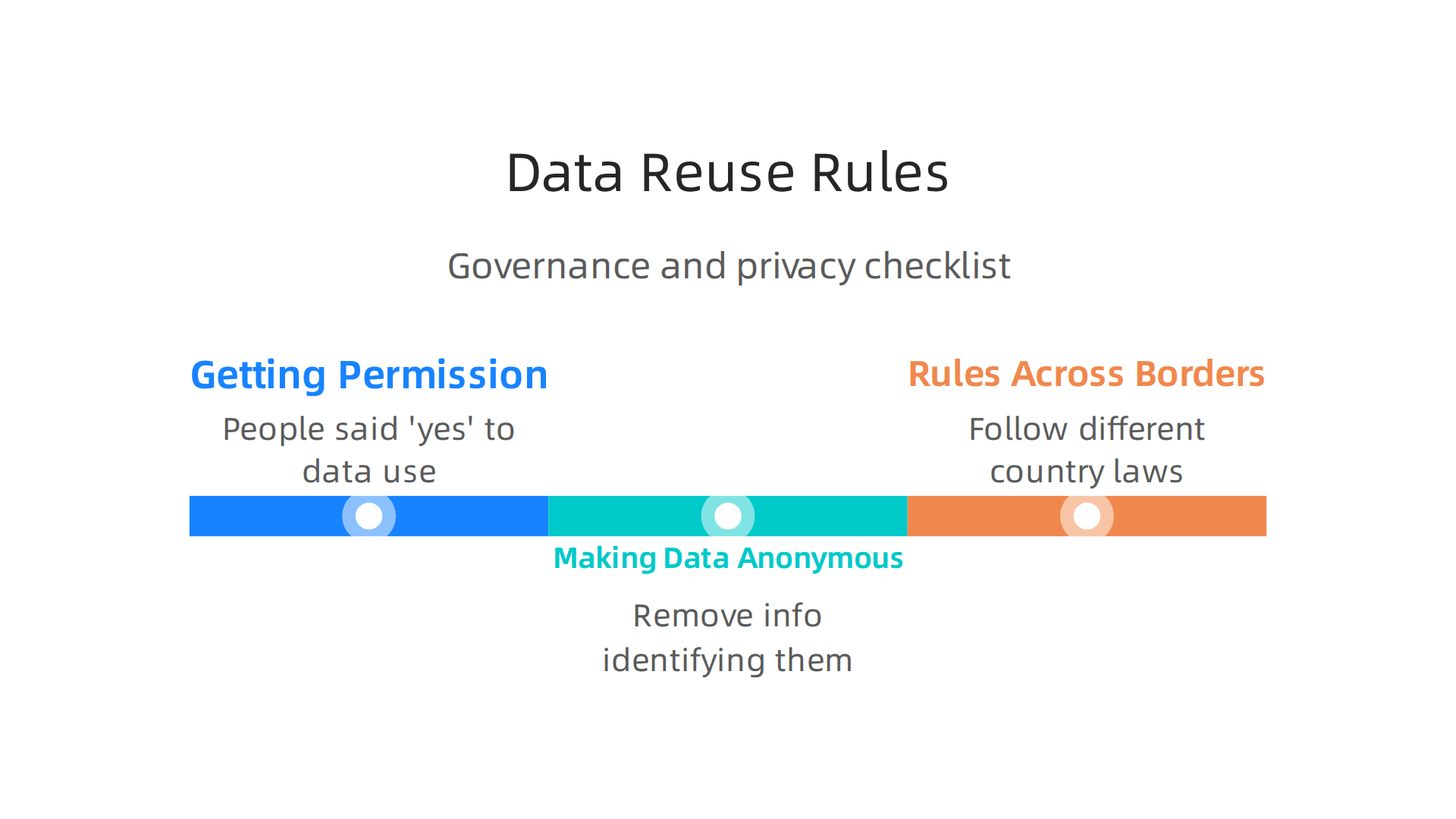
- Getting Permission: This means making sure people said "yes" to their data being used. If you are using personal information, you need to be very careful. Sometimes, the original permission might not cover what you want to do with your secondary data analysis now. In 2026, many places have updated guidance on when it’s okay to reuse personal data for new reasons ICO publishes updated purpose limitation guidance.
- Making Data Anonymous: To protect people’s privacy, you often need to remove any information that could identify them. This is called anonymization. Or, you might change the data so it’s harder to link back to a person, which is called pseudonymization. These steps are very important when dealing with sensitive information, like health data, to make sure you follow the law Reuse of health data – Public Health – European Commission.
- Rules for Data Across Borders: If your data comes from different countries, you might have to follow different laws. Moving data from one country to another can be tricky because each place has its own rules for privacy and data protection. You need to know these rules to avoid problems.
These rules help build public trust and are a big part of AI Ethics for Machine Learning Teams Building Public Trust and Navigating Regulation.
Good Ways to Manage Data
Beyond just following laws, having good practices for how you manage data helps a lot. This is what we mean by governance.
- Who Can See What: You need to control who can look at or change the data. Not everyone in your team needs to see all the data, especially if it’s personal. Setting up clear "access controls" means only the right people have permission to use certain parts of the data.
- Keeping Records of Everything: It’s super important to keep a log of who accessed the data, when, and what they did with it. This is like having an audit trail. If there’s ever a question about how data was used, you can look back at these records. This also links back to tracking data lineage, showing the full journey of your secondary data from start to finish Access Control and Redaction for Lineage Records.
- Clear Policies: Your team needs clear rules about how to handle reused data. These policies should cover everything from how you get data to how you store it and use it for things like making business analytics tools. Having these rules helps everyone know what to do and keeps you safe from legal issues. This is a key part of your overall AI Development Roadmap for 2026 Research MLOps and Governance.
By putting these rules and practices in place, you make sure your secondary data analysis is not only useful but also responsible and compliant.
After making sure your secondary data analysis follows all the rules, the next step is to show how much good it actually does. It’s not enough for data to be "useful" or "compliant" if it doesn’t also help the business grow or save money. You need to measure the real impact and show how your projects give a good return on investment (ROI).

How to Build a Business Case for Data Projects
When you want to start a new secondary data analysis project, you need a plan that shows its value. This plan is like a story that explains why the project is a smart move. Here’s what it should include:
- Inputs: Start by explaining what existing information you will use. This means detailing your secondary data sources, like industry reports or customer surveys that have already been done. Showing how you will use these to gain new insights is key.
- What You Expect to Improve: How will using this data make things better? Maybe it will help you understand customers more, make better products, or find new markets. For example, using this type of data analysis definition can help predict what customers want.
- How Much Money You’ll Save: Data projects can cut costs in many ways. You might find more efficient ways to do things or stop wasting money on ideas that don’t work. Reports from 2026 show that companies using smart data solutions can see big savings. For instance, some companies have achieved millions in net savings and hundreds of percent ROI by reducing duplicate efforts and getting insights faster The 2026 ROI Survey Report.
- How Quickly You’ll See Results: Businesses want to see benefits fast. Show how soon your project will start to pay off. This is called "time-to-value." Many projects can start showing positive returns quickly, which is a big plus for any company.
By putting these parts together, you create a clear picture of why your secondary data analysis project is a good investment.
Real-World Success Stories
Seeing how other companies have used secondary data analysis can give you ideas. Many businesses use this kind of data to make smart choices and see measurable results.
For example, a big information technology company used expert market research, which relies heavily on secondary data, to find new high-growth areas. This helped them change their plans and recover a lot of money they might have lost Expert Market Research for Information Technology …. This shows how understanding the market through existing data can directly affect a company’s direction and earnings.
Another common use is in marketing. When companies use AI with secondary data for personalized marketing, they can see a big jump in sales and better results from their marketing efforts. This also means they spend less money to get new customers. It’s all about using existing customer data to make smarter choices.
To make sure your data analysis is as effective as possible, you need the right data analysis tools and practices. These tools help you dig deeper into the data and turn raw numbers into clear actions. When you can show these clear benefits, it makes a strong case for investing in more data-driven projects.
Understanding the newest trends and insights in AI can further enhance how you apply secondary data analysis for measurable impact.
Get clear daily AI updates from The Deep View Newsletter. The AI Newsletter Worth Reading
Summary
This article explains why secondary data analysis is a practical, high‑value approach for modern ML teams, showing how reusing existing datasets can speed projects, cut costs, and deliver deeper insights. It reviews the main types of secondary sources—public, commercial, curated, and internal legacy data—and lays out how to weigh tradeoffs in coverage, granularity, licensing, and quality. The piece explains essential checks for completeness, consistency, timeliness, provenance and bias, then offers concrete preparation methods such as harmonization, record linkage, imputation and feature engineering. It also covers advanced techniques like transfer learning, meta‑analysis and causal inference, and describes tools and platforms (data catalogs, ETL/ELT, versioning, feature stores) that streamline workflows. The article highlights MLOps practices to ensure reproducibility, addresses common operational challenges like data drift and retraining cadence, and outlines governance steps to stay compliant and build trust. Finally, it shows how to create a business case and measure ROI so teams can justify and scale secondary‑data projects effectively.