Guide to Python Machine Learning Libraries for 2026 Success

Why mastering Python machine learning libraries matters in 2026
If you’re working with machine learning today, you know things change really fast. New tools and ways of doing things pop up all the time. It can feel like a big job just to keep up, especially when you need to pick the best python machine learning libraries for your projects. You might be doing research or building something for people to use every day, and choosing the right python libraries is key.
Actually, Python is super important in this field. As of 2026, a lot of developers, about 41%, use Python for machine learning tasks. This number keeps growing because Python makes it easier to use smart pre-made models and tools, even for people who are new to this area, according to a report on Python statistics for 2026. This shows just how central Python is to machine learning.
The real challenge is figuring out which of the many python machine learning libraries to use. Should you go with TensorFlow, PyTorch, or maybe Scikit-learn?

Each one has its own strengths. Knowing when to use each one and how to make them work well together in your projects is a big step towards success.
This guide will give you a clear roadmap. We will show you the most important python machine learning libraries out there in 2026. You’ll learn when to use them and how to build them into real-world projects that work well. We aim to help you understand the tools needed to build strong ML systems. If you want to learn more about setting up your Python projects for this kind of work, check out our guide on Python for Data Science and Machine Learning in 2026.
Understanding these tools will help you build great machine learning models, whether you’re just starting or looking to make your work better.
For a broader view on what’s happening in AI every day, including the latest tools and breakthroughs, you can also Get clear daily AI updates from The Deep View Newsletter.
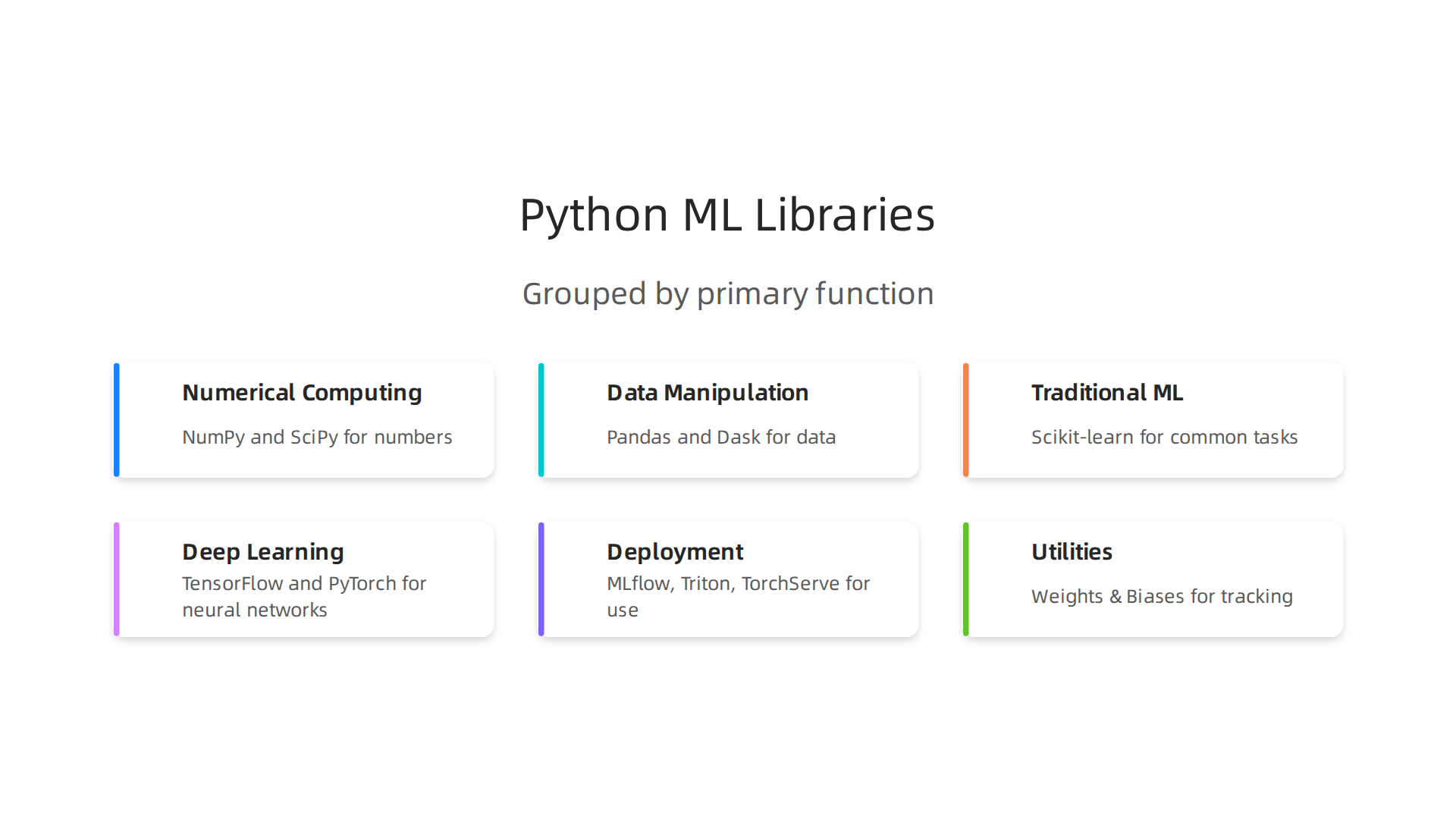
To build great machine learning models, you first need a clear map of the main tools. Let’s look at the core python machine learning libraries that help make smart systems in 2026. These libraries can be grouped by what they do, from handling numbers to running complex AI.
Building Blocks: Numerical Computing and Data Handling
Think of these as the basic tools you need before you even start building models.
- Numerical Computing: When you deal with lots of numbers, like in science or math, you’ll often use libraries like NumPy and SciPy. NumPy is super fast for working with big lists of numbers called arrays. SciPy builds on NumPy and gives you more tools for common science and engineering tasks.
- Data Manipulation: Raw data is rarely neat. You need tools to clean it, change it, and get it ready.
- Pandas is a favorite here. It helps you work with data in tables, much like spreadsheets. It’s great for most everyday tasks. In fact, a 2026 report showed Pandas or Polars are used by 68% of developers for data processing tasks, showing how popular these
python librariesare for handling data Python Statistics 2026: Usage, Trends, and What They Mean. - For really huge datasets, Dask comes in handy. It works like Pandas but can spread the work across many computer parts, making it faster for big jobs. Actually, Dask can sometimes be much quicker than NumPy for large data, especially for bigger problems Dask Vs Numpy. If you want to learn more about preparing your data, check out our guide on Exploratory Data Analysis Techniques for Machine Learning in 2026.
- Pandas is a favorite here. It helps you work with data in tables, much like spreadsheets. It’s great for most everyday tasks. In fact, a 2026 report showed Pandas or Polars are used by 68% of developers for data processing tasks, showing how popular these
The Heart of ML: Modeling and Deep Learning
This is where the actual learning happens.
- Traditional Machine Learning: Scikit-learn is the go-to
python machine learning libraryfor many common tasks like making predictions or finding patterns. It’s known for being easy to use and having lots of different tools already built-in. A lot of people trust it because it’s stable and well-tested. Scikit-learn was downloaded more than 2 billion times in the last year, showing how widely it’s used Data deep dive #1: Scikit-learn was downloaded 2B times in the last year. - Deep Learning: For more complex things like teaching computers to see or understand language, you need powerful tools like TensorFlow and PyTorch. These are often used for neural networks, which are like very complicated computer brains.
- TensorFlow, made by Google, is known for being strong in production, meaning it’s good for making real-world applications.
- PyTorch, backed by Facebook, is often loved by researchers because it’s flexible and easier to experiment with. A survey from 2025 showed that PyTorch and TensorFlow were among the top four
python machine learning librariesused in the ML field, with Scikit-learn also leading Python survey 2025: key trends, tools, and takeaways.
Bringing Models to Life: Deployment and Utilities
Once you’ve built a model, you need to make it available for others to use and keep an eye on it.
- Deployment: Tools like MLflow help you manage your experiments, save your models, and make them ready to be used by others. For serving models quickly, especially deep learning ones, platforms like NVIDIA Triton Inference Server and TorchServe are often used.
- Utilities: Weights & Biases is another great tool that helps you track how well your models are doing and see what’s happening inside them. This helps make sure your models are working as they should.
Choosing Your Tools: Stability vs. Innovation
When picking python machine learning libraries, you’ll often think about how stable they are versus how new and cutting-edge they are.
- Stable and Mature Tools: Libraries like Scikit-learn, Pandas, and NumPy are "battle-tested." They’ve been around for a while, have a lot of users, and are very reliable. They are often easier to learn and great for many everyday tasks. If you’re looking for a solid foundation, a good
python crash coursewould definitely cover these. - Innovative and High-Performance Tools: TensorFlow, PyTorch, and Dask for very large datasets are at the forefront. They offer new ways to solve tough problems and can handle huge amounts of data or very complex models. While they might be a bit harder to learn at first, they unlock new possibilities for advanced projects, including those in areas like
amazon machine learning.
Choosing the right mix of these python machine learning libraries depends on your project’s needs. Sometimes, a mix of stable and innovative tools works best. To really succeed, you’ll want to build production ML systems with advanced Python. You can find more details on how to do that in our guide on how to build production ML systems with advanced Python.
When working with machine learning, how you handle your numbers and data is very important.

Let’s look closer at some key python machine learning libraries for these tasks.
When to Use NumPy, Pandas, and xarray
Each of these python libraries is great for different types of data:
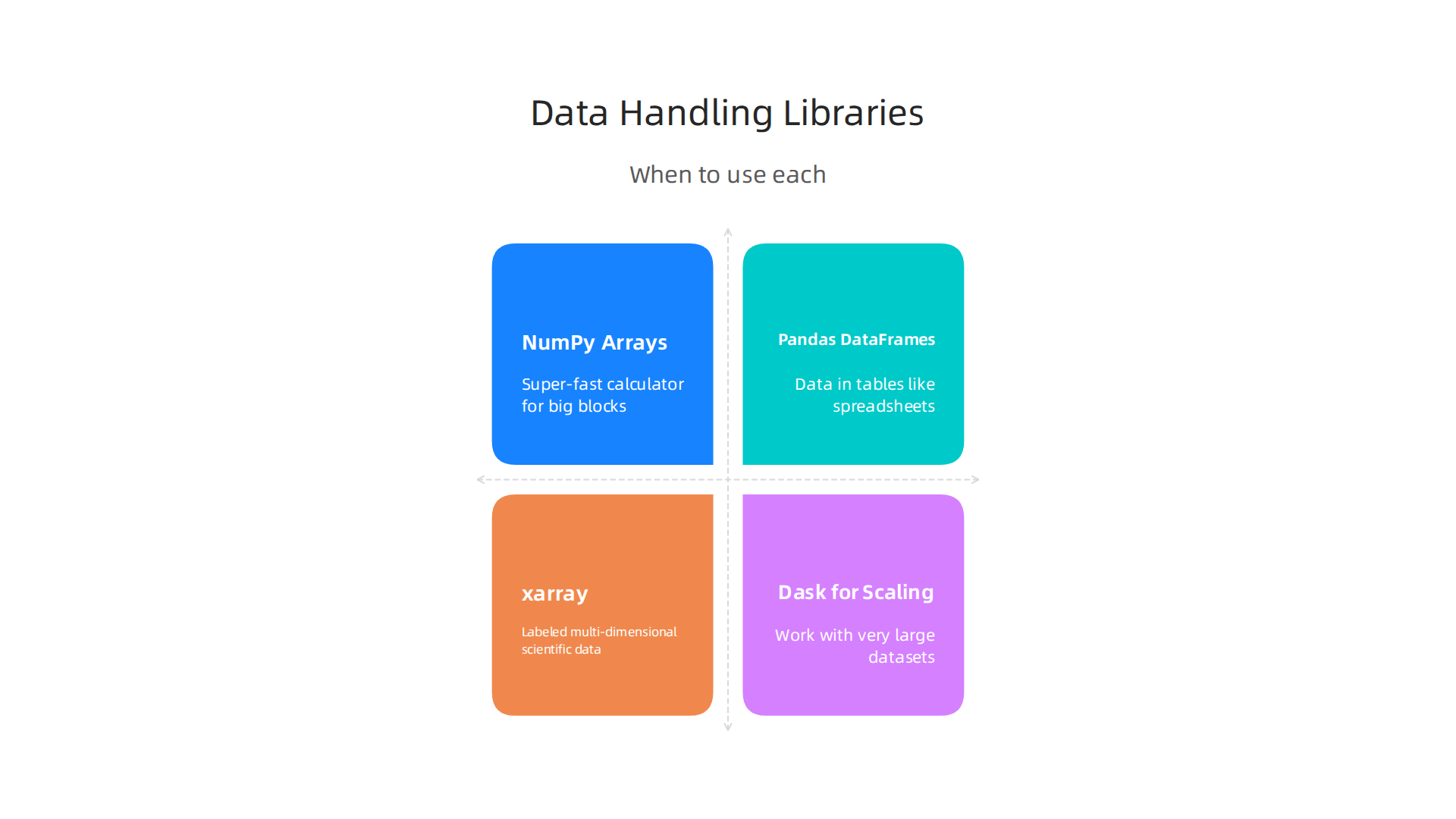
- NumPy Arrays: Think of NumPy as the super-fast calculator for big blocks of numbers. If your data is just a grid of numbers, like pixels in an image or a list of measurements without special labels, NumPy is your best friend. It’s super efficient for math operations on these number grids, called arrays. Actually, for pure number crunching, NumPy is a core part of many high-performance computing setups, sometimes even having special versions to speed it up on large systems Legate NumPy: Accelerated and Distributed Array Computing.
- Pandas DataFrames: When your data looks more like a spreadsheet, with columns having names (like ‘age’, ‘city’, ‘income’) and rows representing different items, you’ll want to use Pandas DataFrames. Pandas adds labels to your data, making it much easier to read, clean, and work with. It’s ideal for most everyday data tasks, like preparing data for a
python machine learningproject or simple business analysis. - xarray for Labeled Multi-dimensional Data: Sometimes, data isn’t just a simple grid or a flat table. Imagine weather data that has dimensions like time, latitude, and longitude, plus variables like temperature and humidity. This is where xarray shines. It takes the best parts of NumPy (fast calculations on arrays) and Pandas (labels and easy handling) and combines them for multi-dimensional data. This makes it perfect for scientific data, like from satellites or climate models, where data comes with many different labels and dimensions Xarray: multi-dimensional data analysis in Python. It’s a common tool when dealing with complex datasets in scientific programming Lecture 12: Libraries, Geopandas, and Xarray.
Handling Huge Datasets with Dask
What happens when your data is too big to fit into your computer’s memory? This is a common challenge, especially in advanced machine learning, including areas like amazon machine learning where you might deal with massive amounts of information.
- Dask for Scaling: Dask is a special
python librarythat helps you work with very large datasets. It breaks down big tasks into smaller ones that can run in parallel (at the same time) or be processed piece by piece. This means you can use Dask with NumPy-like arrays or Pandas-like DataFrames, but for data that’s much larger than your computer’s RAM. Dask is especially good for these "out-of-core" tasks, where not all data is loaded at once.- For smaller datasets, Pandas might actually be quicker because Dask has a small overhead in setting things up. But for really large datasets, Dask wins by a lot because it can spread the work out Intro To Dask. It’s like having many helpers instead of just one. Dask also works well with xarray for analyzing huge multi-dimensional files Working with Large Data Files.
- I/O Considerations: When dealing with large datasets, how quickly you can read data from storage (like a hard drive) and write it back is very important. This is called I/O (Input/Output). Dask helps manage this by smartly loading only the parts of the data it needs, which saves time and computer power.
Choosing the right data handling tool from these python machine learning libraries depends on the size and structure of your data. For more tips on making your data workflows smooth, consider our guide on how to Master Python Data Analysis Tools for Machine Learning in 2026.
Want to stay informed about the latest breakthroughs in AI and broader technology trends? Get clear daily AI updates from The AI Newsletter Worth Reading.
After handling and preparing your data, the next big step in python machine learning is to build models. This involves picking the right tools to create, train, and test your predictive systems. Just like with data, different python libraries are best for different modeling jobs.
Modeling libraries: scikit-learn, statsmodels, and modern lightweight toolkits
When it comes to building machine learning models in Python, you have some great choices. The most famous one is scikit-learn.
Scikit-learn: Your Go-To for Practical Machine Learning
Scikit-learn is a favorite among python machine learning libraries because it’s easy to use and has many tools for common tasks. It helps you with things like:
- Classification: Sorting items into groups, like deciding if an email is spam or not.
- Regression: Predicting numbers, like house prices or how much a customer might spend.
- Clustering: Finding hidden groups in your data, like customers who buy similar things.
It’s a strong choice for most projects because it’s simple to learn and works well for many different types of models. Many people use scikit-learn for everything from small tests to big projects. Tools like MLflow make it easier to keep track of your scikit-learn experiments, manage your models, and get them ready for use in the real world MLflow Scikit-learn Integration. You can also use other platforms like Weights & Biases to track and compare how well your scikit-learn models are performing Scikit-Learn – Weights & Biases Documentation.
Statsmodels: For Deep Statistical Insights
While scikit-learn is great for making predictions, sometimes you need to understand why things are happening. This is where Statsmodels comes in. It’s another important python library that focuses on statistical models. With Statsmodels, you can:
- See relationships: Understand how different parts of your data affect each other.
- Test ideas: Check if certain patterns in your data are truly meaningful.
- Get detailed reports: It gives you a lot of information about your models, which is helpful for research or when you need to explain your findings very clearly.
Statsmodels helps you dig deeper into your data to gain a better understanding, rather than just making a prediction. You can even use MLflow to save your Statsmodels for later use ML Models | MLflow AI Platform.
Lightweight Toolkits and Production Readiness
The world of python machine learning libraries is always growing. Beyond scikit-learn and Statsmodels, new, smaller tools are coming out. These lightweight toolkits are often made for:
- Quick tries: Letting you test new ideas very fast.
- Special tasks: Doing one thing really well, like working with certain kinds of data or specific model types.
These tools can be super helpful, especially in fast-paced environments like amazon machine learning where you need to build and change models quickly. When you’re ready to use your models in a real application, you’ll also think about tools that help with "MLOps" or Machine Learning Operations. These are practices and tools that make sure your models run smoothly and reliably in production. Building robust systems for these models is key to their success. If you’re looking to put your models to work, learning how to build production ML systems with advanced Python for teams can be a great next step.
Making sure your machine learning projects are well-organized from the start also helps. Following a good structure, like that found in a Cookiecutter Data Science project structure for reproducible ML, means your work is clear and easy for others to understand and use.
After looking at common python machine learning libraries like scikit-learn and Statsmodels, we now turn to more powerful tools. These are needed for deep learning, which is a special kind of machine learning that uses big neural networks.

These networks are great for very complex tasks like understanding pictures, speech, or language.
Deep learning frameworks and high-performance alternatives: PyTorch, TensorFlow, JAX, and CuPy
When you’re working with deep learning, you need special python libraries that can handle huge amounts of data and complex math very quickly. These tools are often called frameworks, and they help you build, train, and run deep learning models. The main ones you’ll hear about are PyTorch, TensorFlow, JAX, and sometimes CuPy for super-fast math.
PyTorch and TensorFlow: The Big Players
PyTorch is very popular with researchers. People like it because it’s easy to use and feels more like regular Python code. This makes it good for trying out new ideas quickly. It’s often chosen for its "developer ergonomics," meaning it’s comfortable and straightforward for people to write code in.
TensorFlow, on the other hand, has been around a bit longer and is known for being very strong for big projects in the real world. It’s great for getting models ready for "production," which means using them in actual applications that many people rely on. It has many tools to help manage models from start to finish. Both of these frameworks are powerful python machine learning libraries for deep learning. If you want to see how they stack up, you can check out some recent JAX vs PyTorch in 2026: Performance Benchmarks and When … analysis.
JAX: For Speed and Flexibility
JAX is a newer tool that’s gaining a lot of attention. It’s built for very high performance, especially with a special trick called Just-In-Time (JIT) compilation. This means JAX can make your code run super fast on special computer chips. It’s very flexible and great for advanced research, especially when you need to experiment with new model types quickly. For example, JAX has shown great results in Optimizing Ling-2.6-1T on TPU with SGLang-JAX, which helps improve performance on specific hardware called TPUs.
CuPy: Supercharging Python with GPUs
Sometimes, you need to do basic math operations even faster than what the main deep learning frameworks offer out of the box. That’s where CuPy comes in. CuPy is a python library that looks and feels like NumPy (a basic Python math library) but runs all its calculations on Graphics Processing Units (GPUs). GPUs are special computer parts that are excellent at doing many calculations at once. This makes CuPy an important tool for boosting speed, especially in areas like amazon machine learning where every bit of speed matters. Many tools that speed up deep learning use helper libraries like NVIDIA cuDNN, which is designed to make deep neural networks run faster on NVIDIA GPUs. You can see how various versions of cuDNN support different hardware setups in the Support Matrix — NVIDIA cuDNN Backend.
Choosing the Right Tool
Picking the best deep learning framework means thinking about a few things:
- Developer Ergonomics: How easy is it for you and your team to write and understand the code?
- Research Adoption: Is the tool widely used in the latest research? This means you’ll find more examples and help online.
- Production Performance: How well does it work when your model is actually being used by people, not just in testing?
The role of JIT compilation, accelerators (like GPUs and TPUs), and their ecosystems (the software and hardware that work together) is very important. These help your models run much faster. If you’re building complex models, learning to master Python data workflows for peak performance will be key.
Staying up-to-date with these fast-changing tools is important for anyone in machine learning.
Get clear daily AI updates from The AI Newsletter Worth Reading.
After you pick powerful deep learning tools like PyTorch or TensorFlow, your work isn’t done. You also need special tools to help you manage the whole process of building, testing, and using your machine learning models. These tools help keep everything organized and make sure your work can be checked and repeated by others. They are very important for turning good ideas into real, working solutions.
Tooling for training, experiment management, and reproducibility: MLflow, Weights & Biases, and alternatives
Imagine you are building many different models to solve a problem. You try different settings, use different data, and get different results each time. Without good tools, it’s easy to get lost. That’s why you need tools for experiment management and reproducibility. These python libraries help you keep track of everything you do.
Here are the main things these tools help you with:
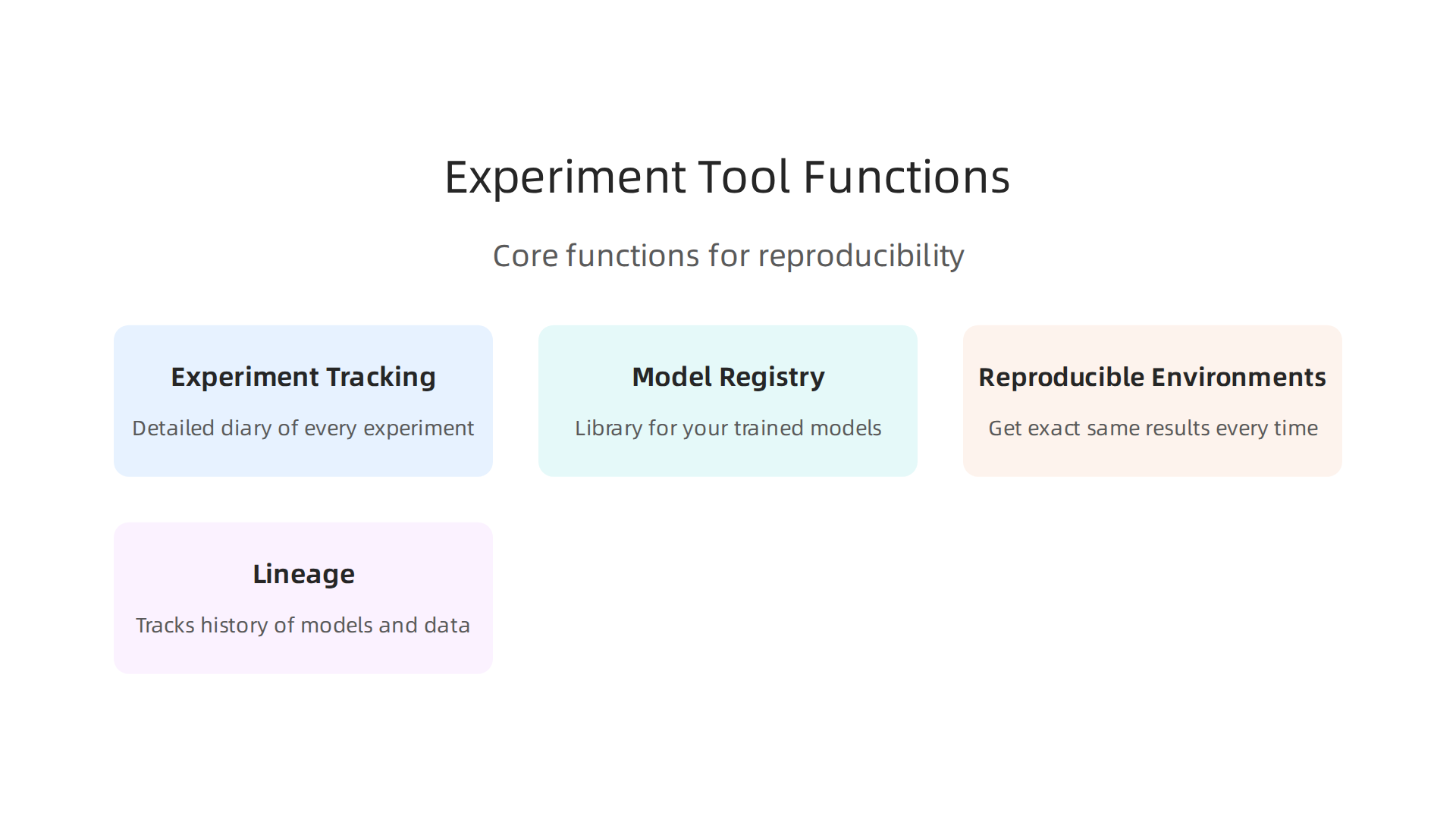
- Experiment tracking: This means keeping a detailed diary of every experiment you run. It records what settings you used, what data went in, and what results came out. This helps you compare different tries and see what worked best.
- Model registry: Think of this as a library for your trained models. Once you have a model that works well, you save it here. You can add notes about how good it is and what it’s for. This makes it easy to find and use the right model later. As models are served in actual applications, using a model registry helps manage them, and tools like Ray Serve can load models from registries easily for production use cases Train And Register A Model.
- Reproducible environments: This is about making sure that if you or someone else wants to run your model again, they can get the exact same results. This often means saving the exact computer code, data, and software versions used. It’s key for trust and sharing work.
- Lineage: This tracks the history of your models and data. It shows where your data came from, how it was changed, and which model was built using it. This helps you understand everything from start to finish.
MLflow: Your Project Organizer
MLflow is a popular open-source tool that helps you manage the machine learning lifecycle. It works really well with many python machine learning libraries, including traditional ones like scikit-learn. For example, MLflow can automatically track your experiments, help you manage your models, and even get them ready to be used in real applications when you’re working with scikit-learn MLflow Scikit-learn Integration. This means it logs things like your model’s settings, performance numbers, and the trained model itself.
Weights & Biases: Visualizing Your Progress
Weights & Biases (W&B) is another widely used tool, especially good for visualizing your machine learning experiments. It helps you see how your models are learning and performing with easy-to-understand charts and graphs. W&B also integrates well with popular python libraries for machine learning. You can use it to track metrics and models from tools like scikit-learn, helping you log important details and see how different models compare Scikit-Learn – Weights & Biases Documentation – Wandb.
How These Tools Work Together
These experiment management tools are often used hand-in-hand with the training frameworks we talked about before, like PyTorch and TensorFlow. They fit into your machine learning "pipelines," which are like assembly lines for building models. For example, you might use PyTorch to train a model, and then MLflow or W&B will record all the details of that training session. This lets you keep track of hundreds or thousands of different tries. When it comes to managing all these parts, learning to optimize your machine learning workflow can make a big difference.
Choosing the right tools for experiment management is just as important as picking the right python machine learning libraries for training. They help you stay organized, compare results, and make sure your work is reliable for future use.
Now that you know about tools for training and tracking your models, the next big step is putting those models to work. This means making them available so people or other computer programs can use them. This is called deployment and inference. It’s like taking a car from the factory (training) and getting it onto the road (deployment) so it can drive (inference).
There are two main ways to use your trained models:
- Serving (Real-time Inference): This is when you need a quick answer right away. Imagine asking a smart assistant a question. It needs to give you an answer almost instantly. For this, we care a lot about "latency," which is how fast the system gives back an answer.
- Batch Inference: This is for when you have a lot of things to predict at once, but you don’t need the answers immediately. For example, if you analyze all the sales data from yesterday overnight. Here, we care more about "throughput," which means how many predictions the system can make in a certain amount of time.
Choosing the right tools depends on whether you need fast, single answers or many answers at once.
Getting Models Ready: ONNX and TorchScript
Before you can use a model, it often needs to be put into a special format. This helps it run faster and on different types of computers.
- ONNX (Open Neural Network Exchange): Think of ONNX as a universal language for machine learning models. It lets you save a model from one
python machine learning library(like PyTorch or TensorFlow) in a way that other tools can easily understand and run. This makes it easier to move models around and use them where they’re needed How to Eliminate Pipeline Friction in AI Model Serving. - TorchScript: If you use PyTorch, TorchScript is a way to make your models run faster and be ready for use in real products. It turns your regular Python code into a format that PyTorch can run very quickly, even without Python.
Tools for Delivering Predictions: Triton and FastAPI
Once your model is in the right format, you need tools to "serve" it, meaning making it available for others to use.
- NVIDIA Triton Inference Server (Triton): This is a very powerful tool, especially good for serving many models at the same time and making predictions very fast, often on special computer chips called GPUs. Triton can handle models from many different
python librariesand frameworks, including those saved with ONNX or TorchScript NVIDIA Triton Inference Server: Multi-Framework Model Serving. It’s built to keep latency low and throughput high, which is important for real-time uses. Some say that Triton is a top choice for GPU-heavy work in 2026, especially when serving PyTorch models ML Model Serving in Python (2026) | Python Data Bench. - FastAPI: This is a
python librarythat helps you build web "APIs" really fast. An API is like a menu that lets other programs ask your model for predictions. FastAPI is great for simpler tasks or when you don’t need super-high performance right away. It’s a popular choice for developers working withpython machine learning librariesto get models running quickly.
Orchestration and Monitoring: Keeping an Eye on Things
Just deploying a model isn’t the end. You also need to manage it well.
- Packaging Models: This means putting your trained model and all the things it needs to run (like special software versions or settings) into one neat package. This makes it easier to deploy the model in different places without problems MLOps Services: Deployment and Operations.
- Latency and Throughput: After deployment, you need to constantly check if your model is still giving quick answers (low latency) and handling enough requests (high throughput). Tools help you measure these things to make sure your model is performing as expected. For example, Triton is known for offering very high throughput, sometimes making thousands of predictions per second Triton vs TorchServe vs BentoML vs KServe | Neel Mishra. To get the best speed from tools like Triton, you might need to adjust settings, like making sure it handles one request at a time to reduce delay Optimization — NVIDIA Triton Inference Server.
- Observability: This means having good ways to watch your model after it’s deployed. You want to see if it’s working correctly, if it’s fast enough, and if the predictions are still accurate. This helps you fix problems quickly and keep your models reliable.
Mastering these deployment and inference tools is key to turning your machine learning ideas into real solutions that people can use every day. If you want to dive deeper into the world of AI and stay updated on the newest developments, there’s a great resource for you.
Get clear daily AI updates from The AI Newsletter Worth Reading.
The previous section talked about deploying your machine learning models so they can be used. But before you get to that stage, and even after, it is super important to make sure your models are built well and behave correctly. This means following some key best practices in your python machine learning libraries projects.
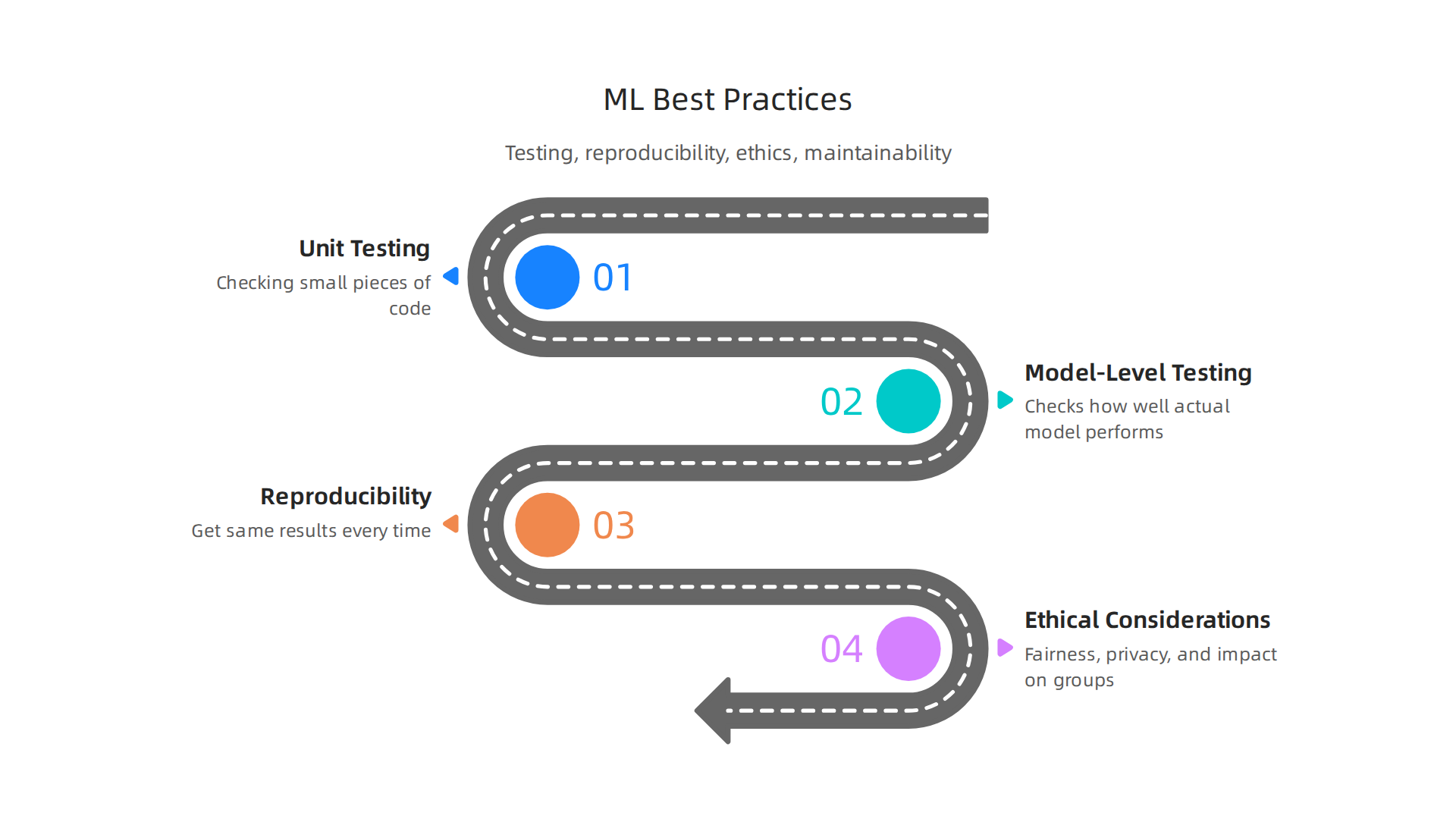
Many developers use Python for machine learning, with some reports saying as many as 41% do in 2026, a number that keeps growing 46 Python Statistics for 2026: Usage, Jobs & AI Trends. This makes good practices even more important.
Testing Your Machine Learning Models
Just like any other software, machine learning models need testing. But for models, testing is a bit different because they learn from data.
- Unit Testing: This is about checking small pieces of your code. For example, if you have a function that cleans up data, a unit test would make sure that function always works as expected. This is the first step to making sure your
python librariesare solid. - Integration Testing: This checks if different parts of your project work together correctly. For instance, does your data loading part connect smoothly with your model training part? It’s like making sure all the parts of a car fit together.
- Model-Level Testing: This is specific to ML. It checks how well your actual model performs. You want to see if it makes good predictions on new data. This includes checking things like how accurate it is, how fair its predictions are across different groups, and if it acts strange in certain situations.
- Continuous Integration (CI): Think of CI as a smart helper that constantly checks your project. Every time you make a change to your code, CI automatically runs your tests. If something breaks, it tells you right away. This helps catch problems early when working with
python machine learning libraries. To learn more about building robust systems, you might find this guide helpful: Build Production ML Systems with Advanced Python for Teams.
Keeping Your Projects Healthy: Licensing, Dependencies, and Ethics
Building models with python machine learning libraries involves more than just writing code. You also need to think about legal and ethical rules, and how your project fits with other software.
- Licensing: When you use other people’s
python libraries, they often come with rules about how you can use them. These rules are called licenses. It’s important to understand these to make sure your project is legal and fair. This is especially true when working with open-sourcepython librariesthat many developers rely on. - Third-Party Dependencies: Most
python machine learning librariesprojects use many other smallerpython librariesto do their work. These are called third-party dependencies. Keeping track of them and making sure they all work well together is key. If you are starting a new project, setting up a good structure from the beginning can save you a lot of trouble later. You can learn more about this by exploring a recommended project structure for reproducible machine learning: Cookiecutter Data Science Project Structure for Reproducible ML. - Reproducibility: This means being able to get the exact same results from your project every time, even if someone else runs it on a different computer. It involves keeping track of all your data, code, and the exact versions of all the
python librariesyou used. This is super important for science and for making sure your models are reliable. - Ethical Considerations: Machine learning models can have a big impact on people’s lives. It’s really important to think about fairness, privacy, and how your model might affect different groups of people.

For example, if a model is trained on biased data, it might make unfair predictions. Choosing the right python machine learning libraries and being careful with your data can help prevent these issues. For a deeper look into this topic, consider reading about AI Ethics for Machine Learning Teams Building Public Trust and Navigating Regulation.
By paying attention to these best practices, you can build machine learning projects that are not only powerful but also trustworthy and easy to maintain over time. This helps ensure your amazon machine learning projects or any other ML efforts are successful and responsible.
Summary
This article explains why mastering Python machine learning libraries is essential in 2026 and gives a practical roadmap for choosing and using them. It groups libraries by role — numerical computing and data handling (NumPy, Pandas, xarray, Dask), modeling (Scikit‑learn, Statsmodels, lightweight toolkits), deep learning (PyTorch, TensorFlow, JAX, CuPy) — and covers deployment and MLOps tools like ONNX, TorchScript, Triton, MLflow and Weights & Biases. The guide explains trade‑offs between stability and innovation, how to handle very large data, and when to favor research‑friendly or production‑ready frameworks. It also walks through best practices for testing, reproducibility, dependency management, and ethical considerations. After reading, you’ll understand which libraries to pick for common tasks, how to scale and deploy models, and what tooling and processes will keep your projects reliable and production‑ready.